

Eucalyptus fibrosa
 broad-leaved ironbark
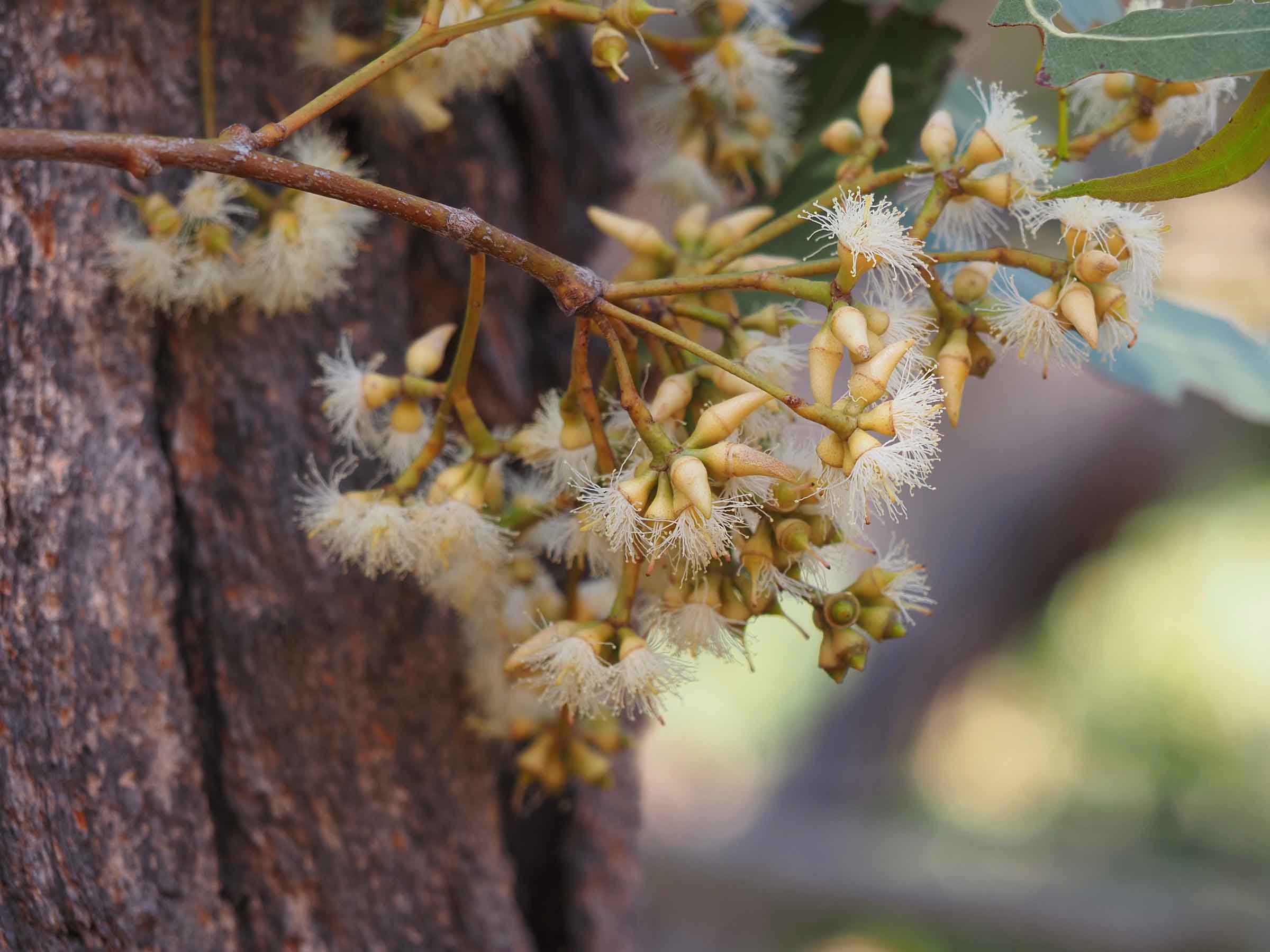
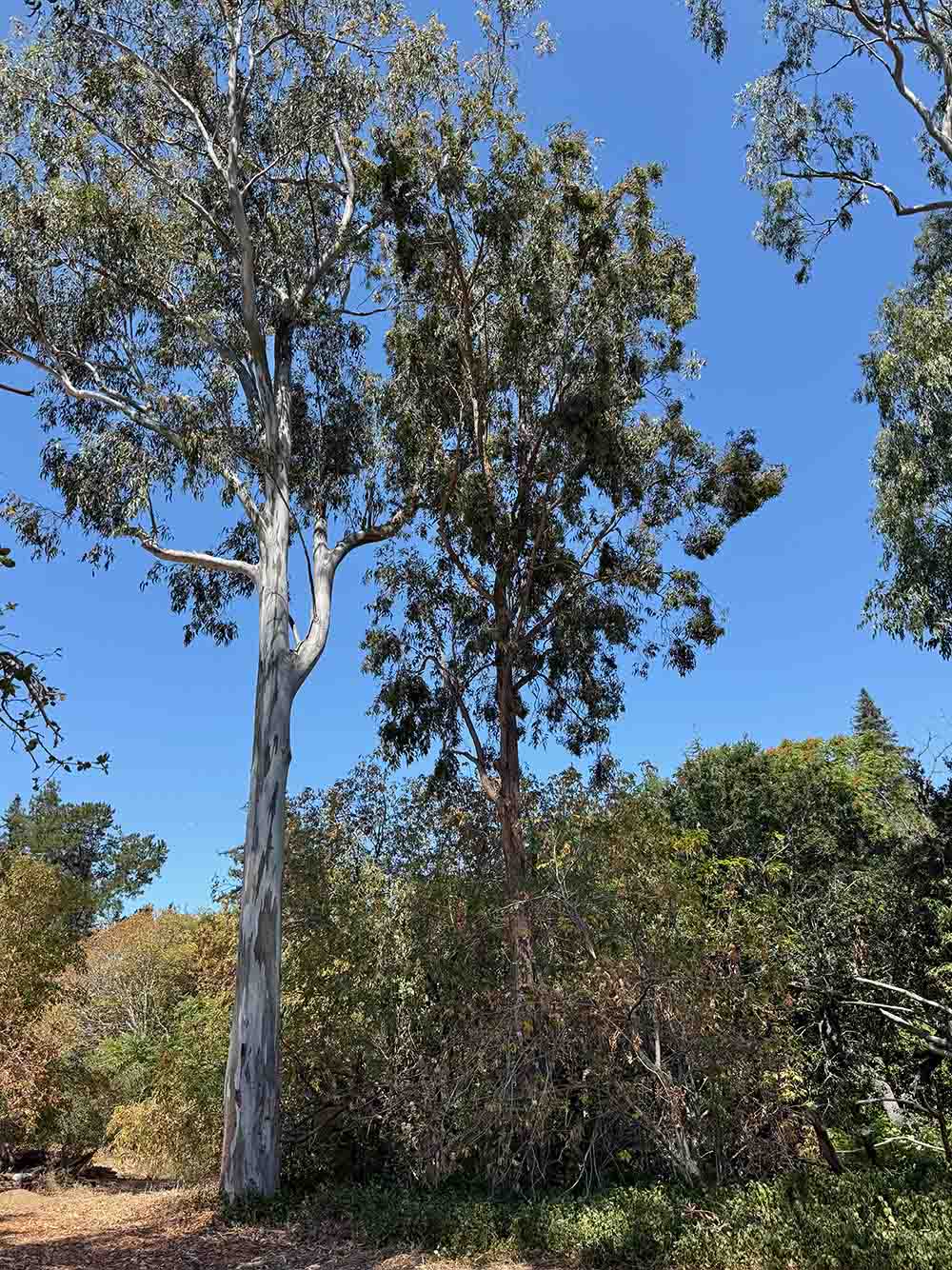
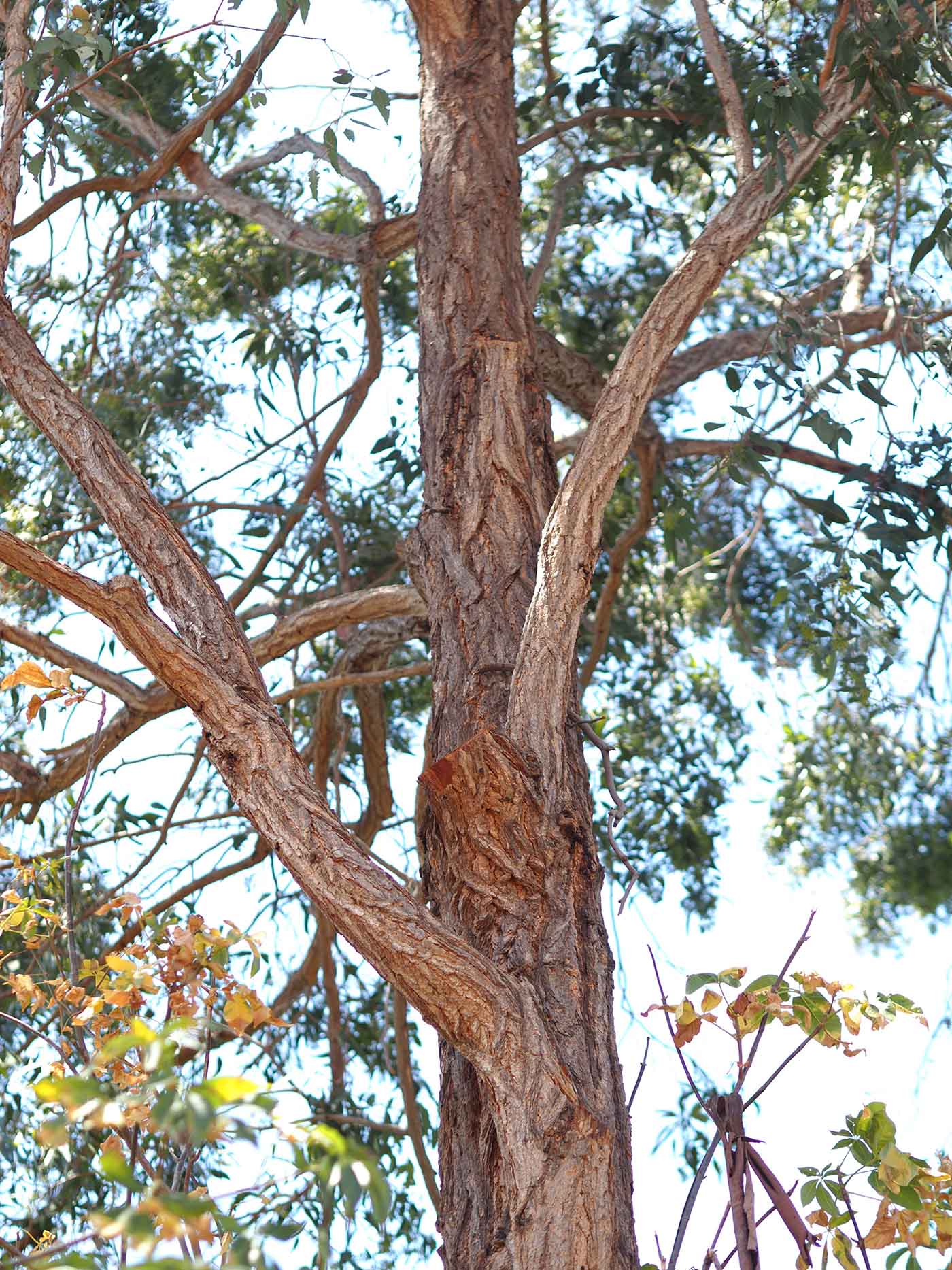
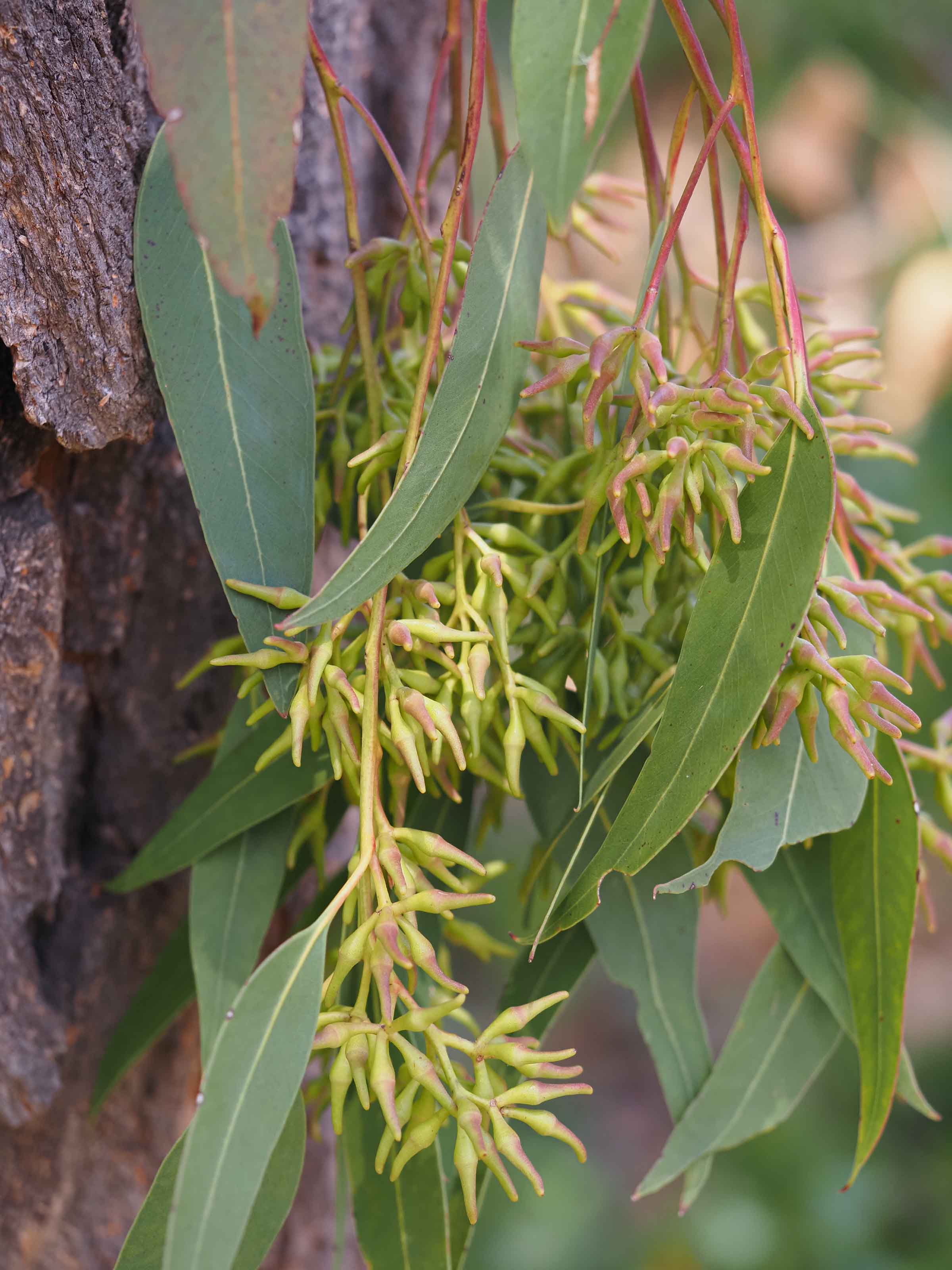
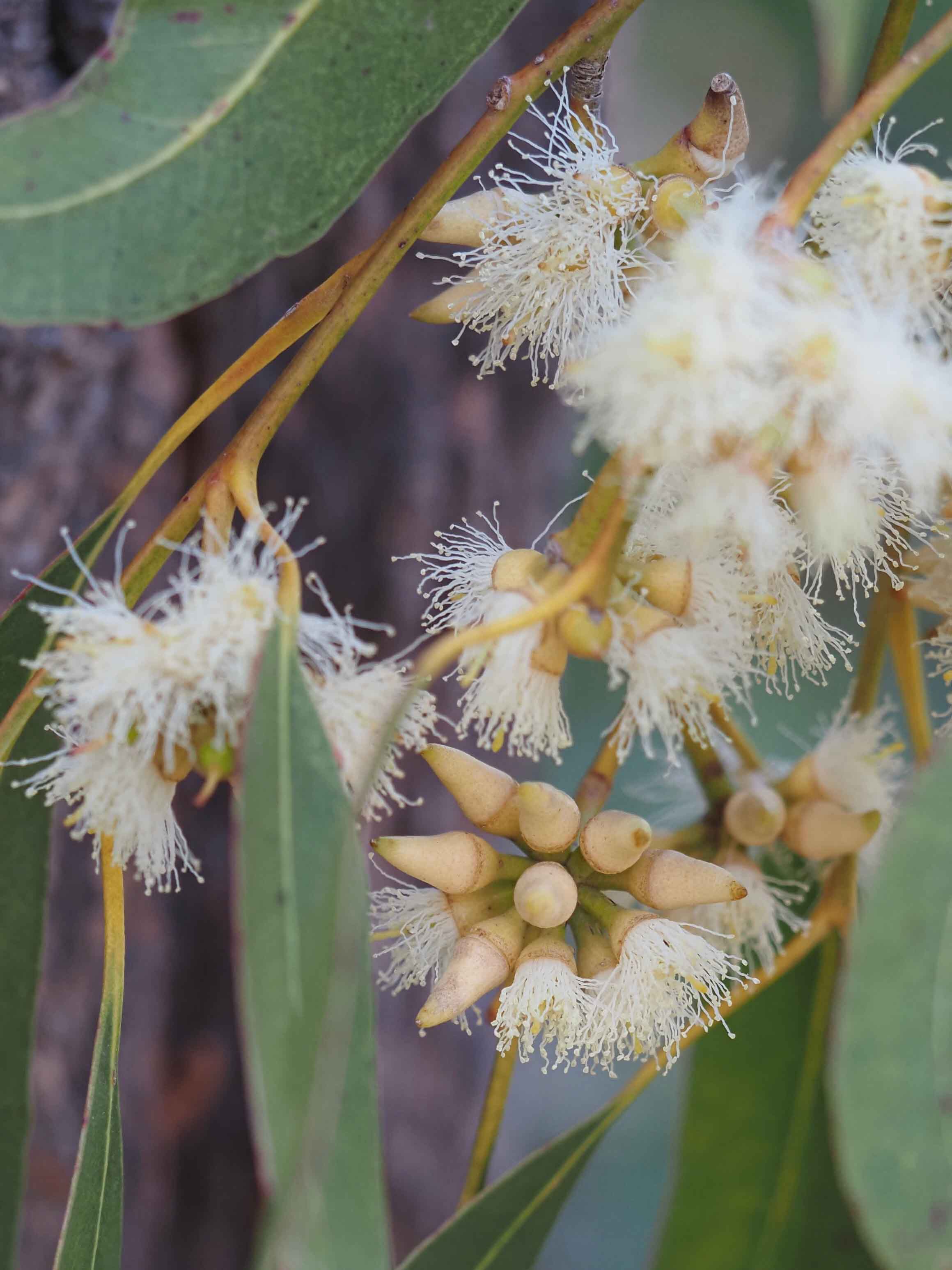
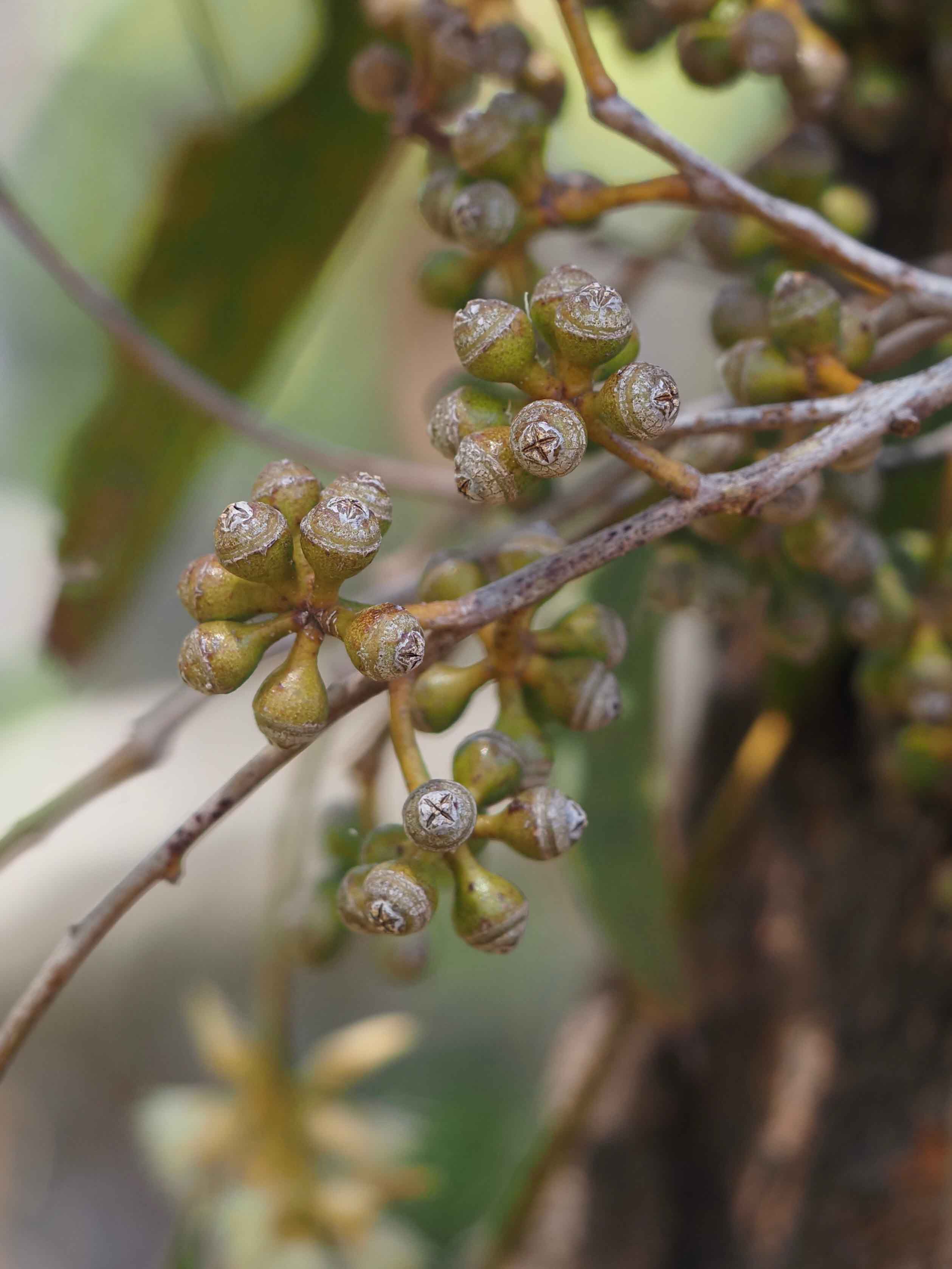
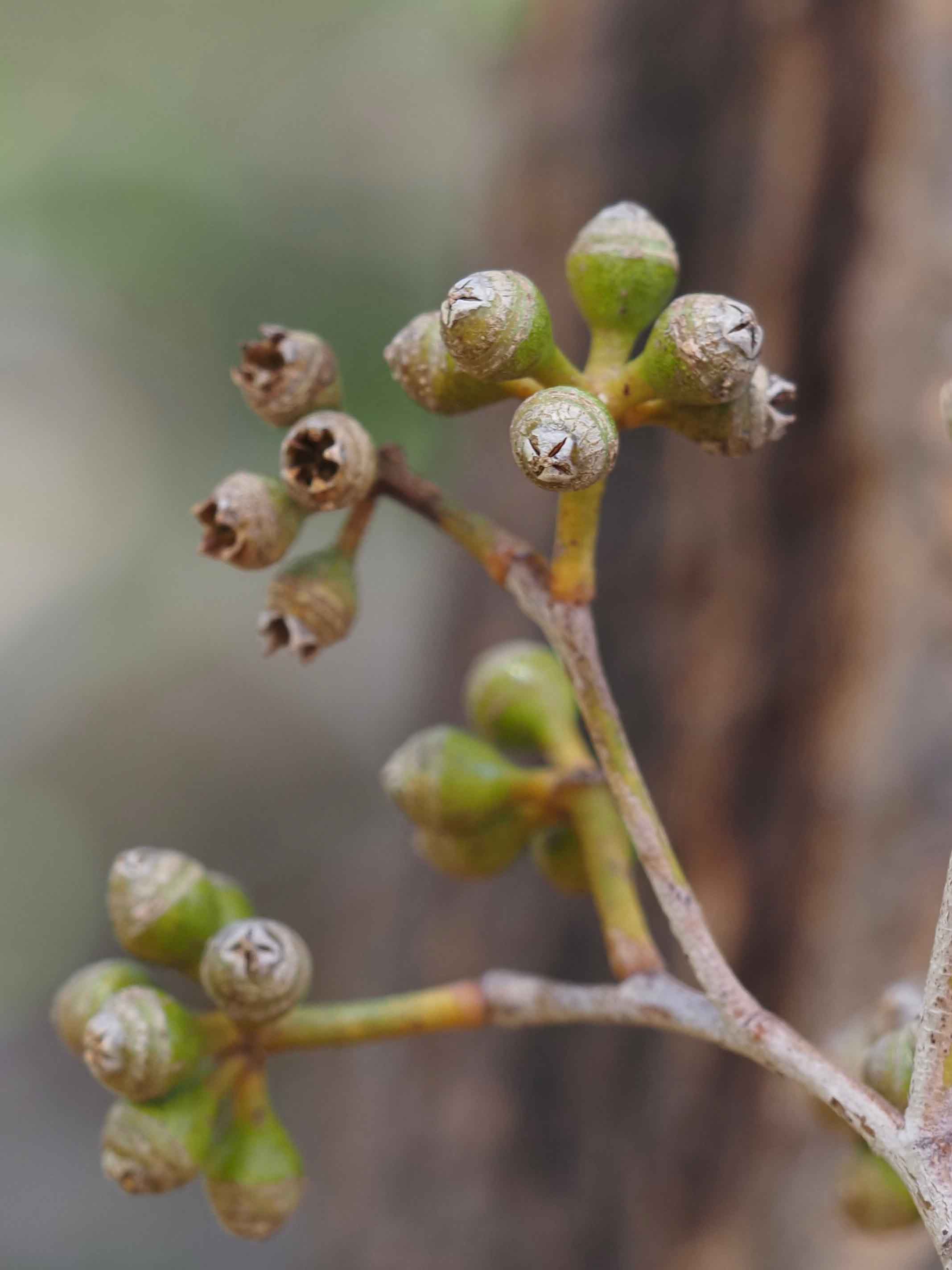
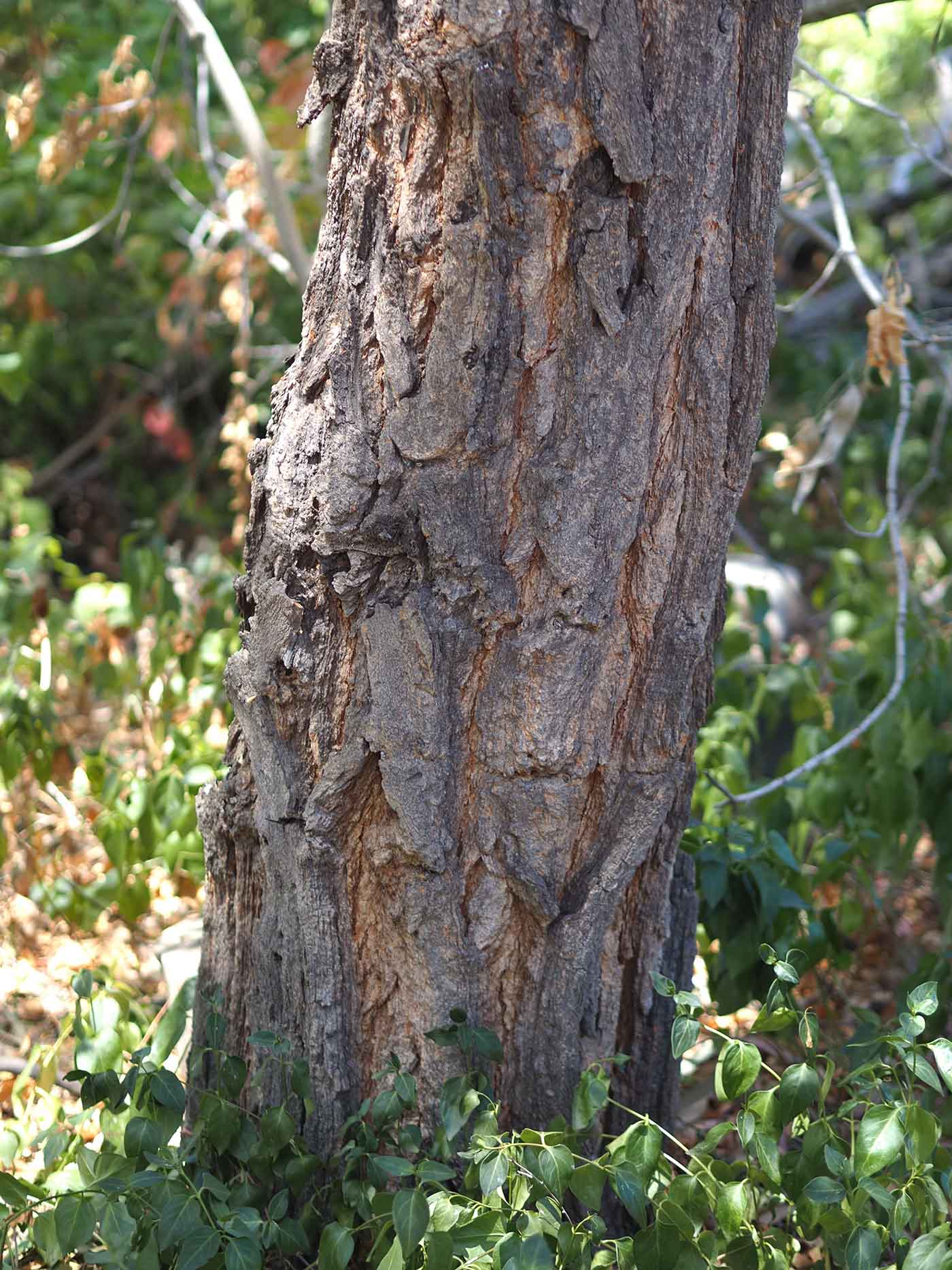
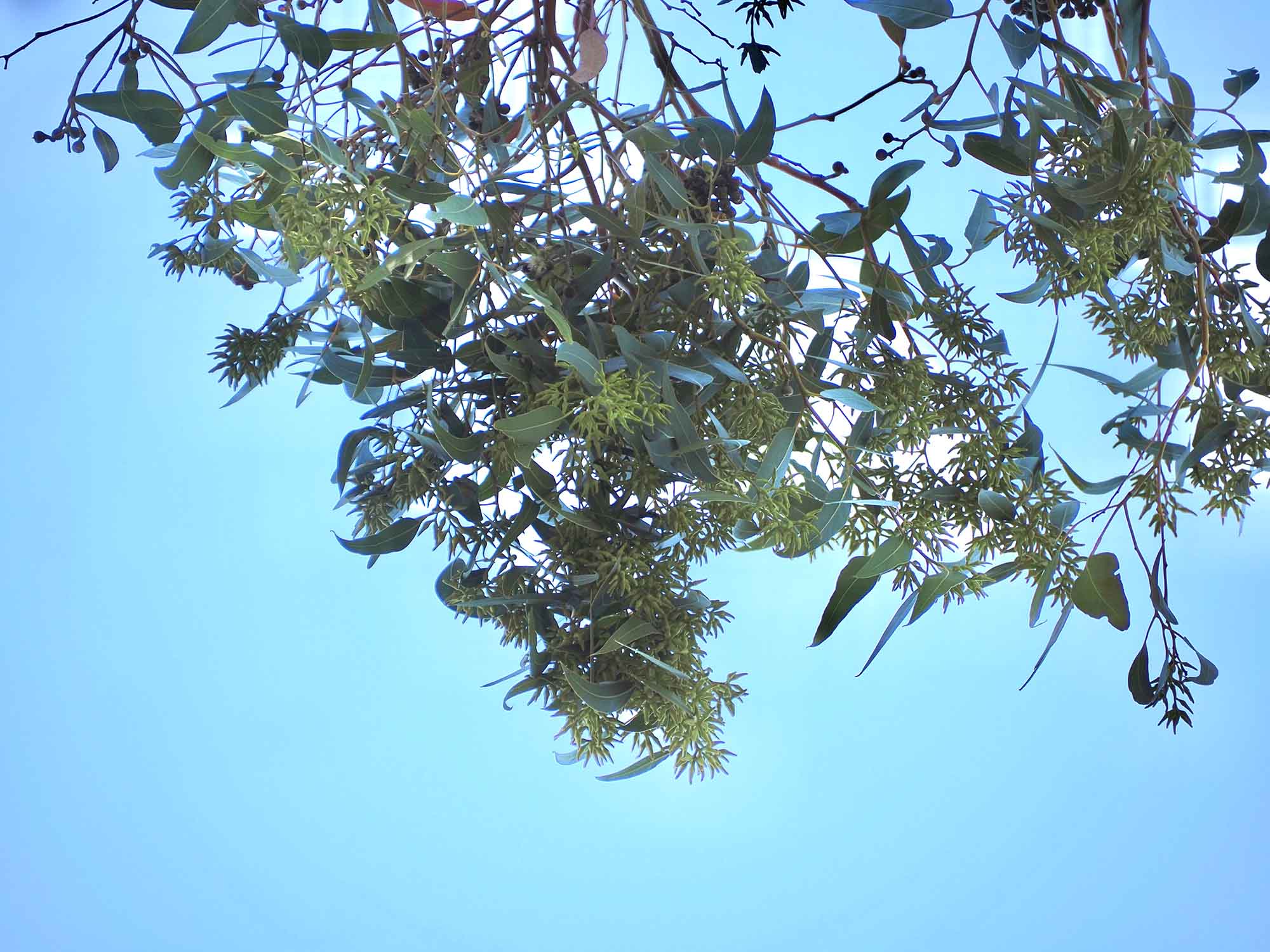
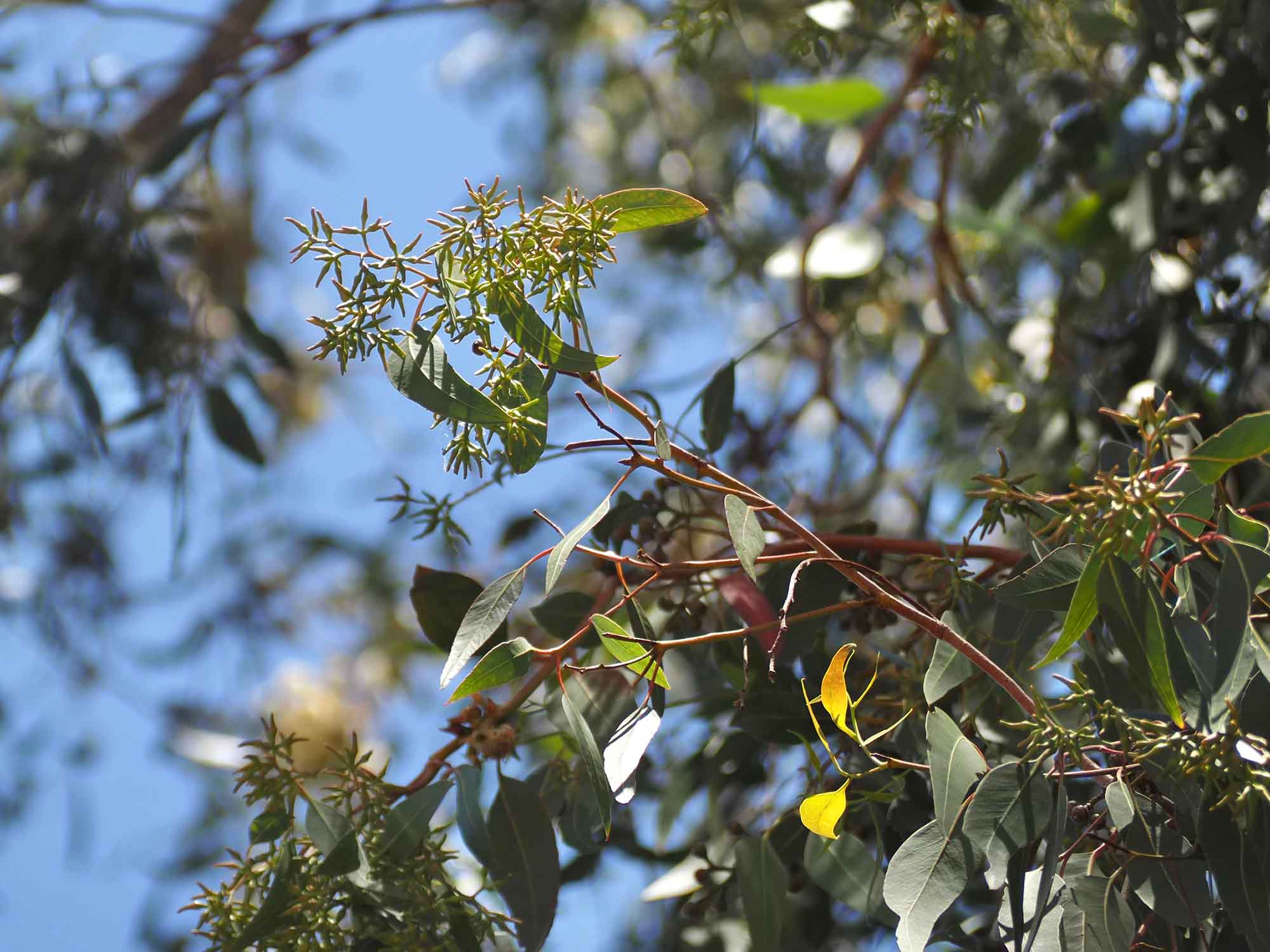
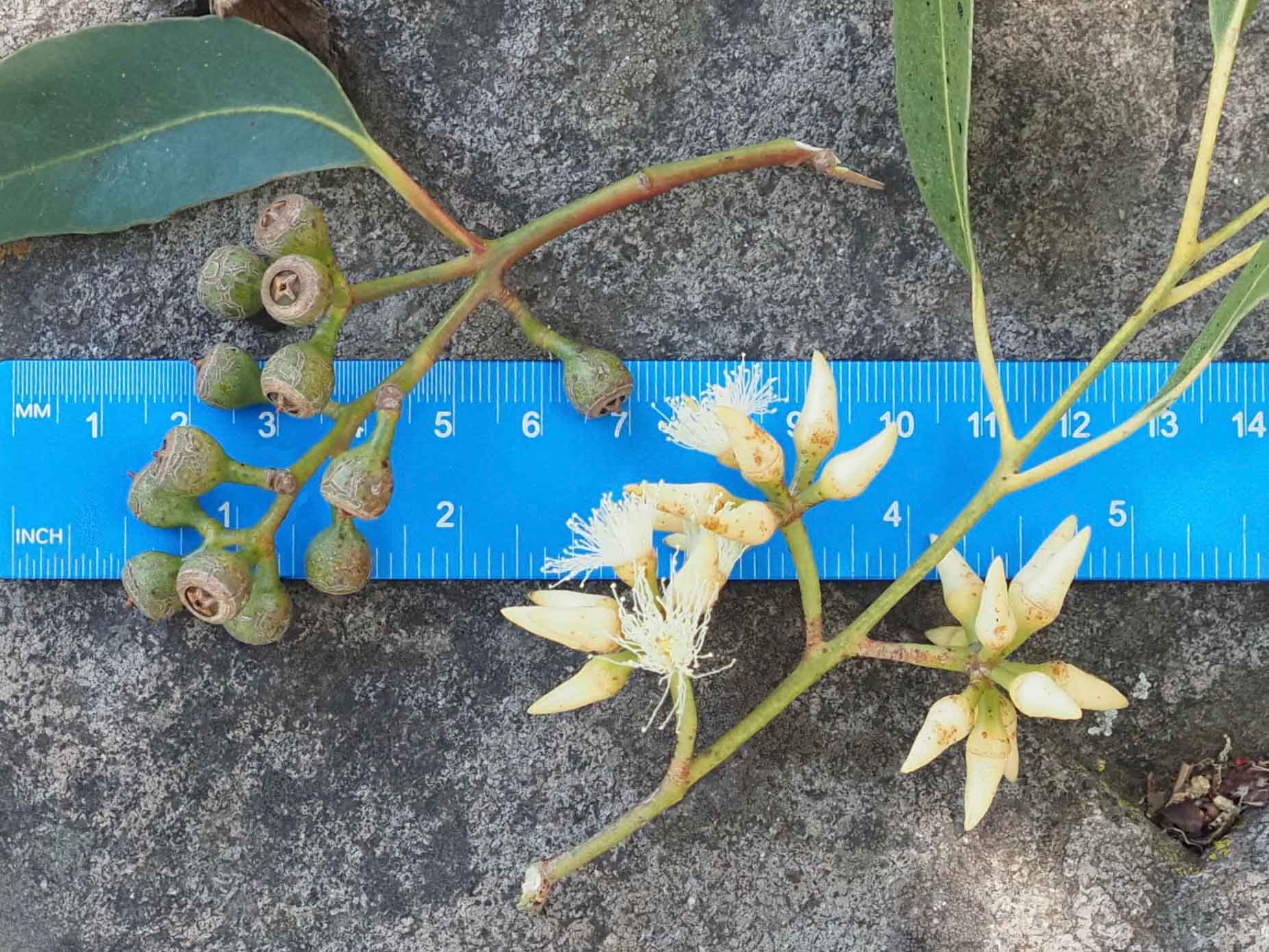
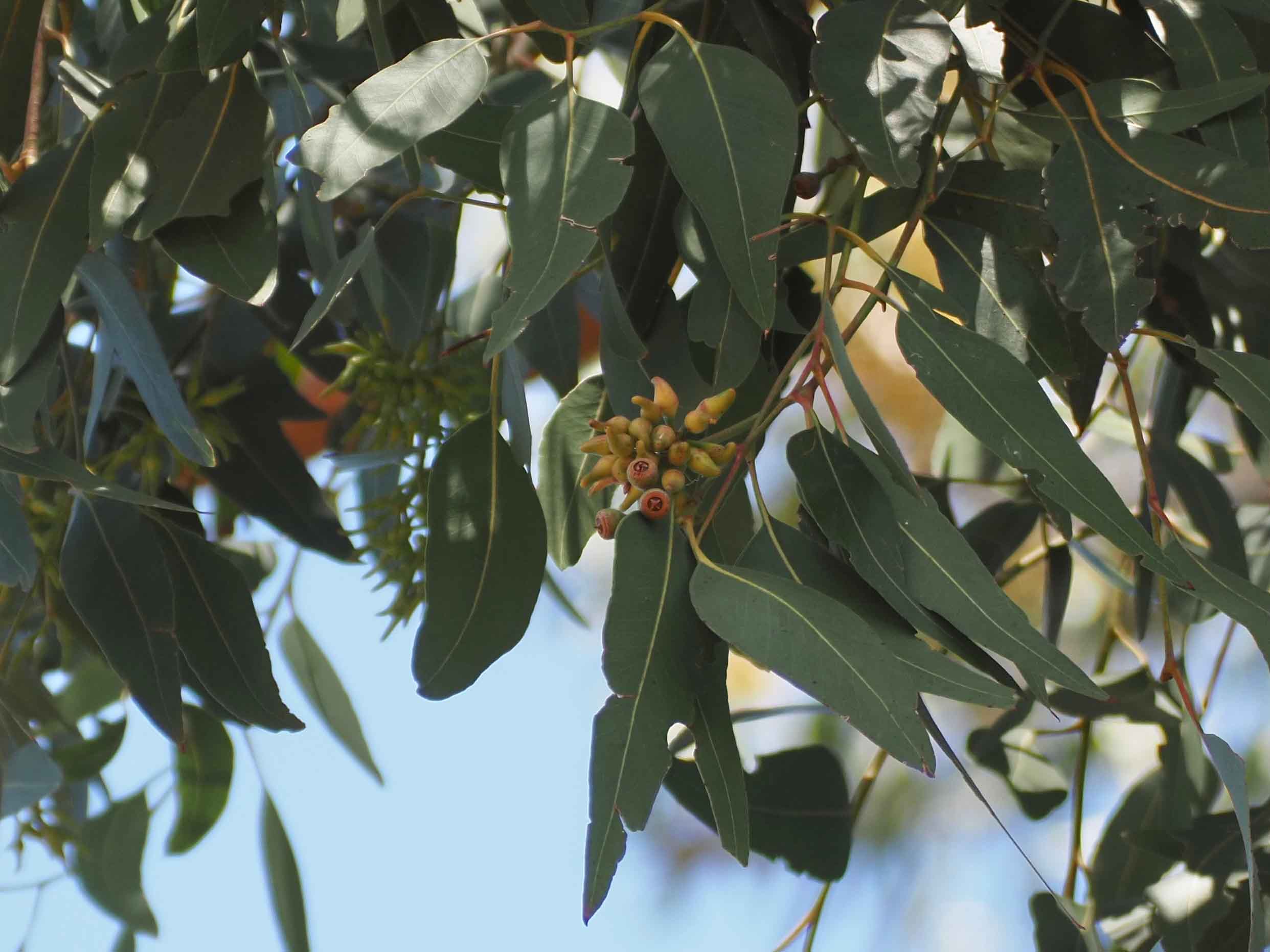
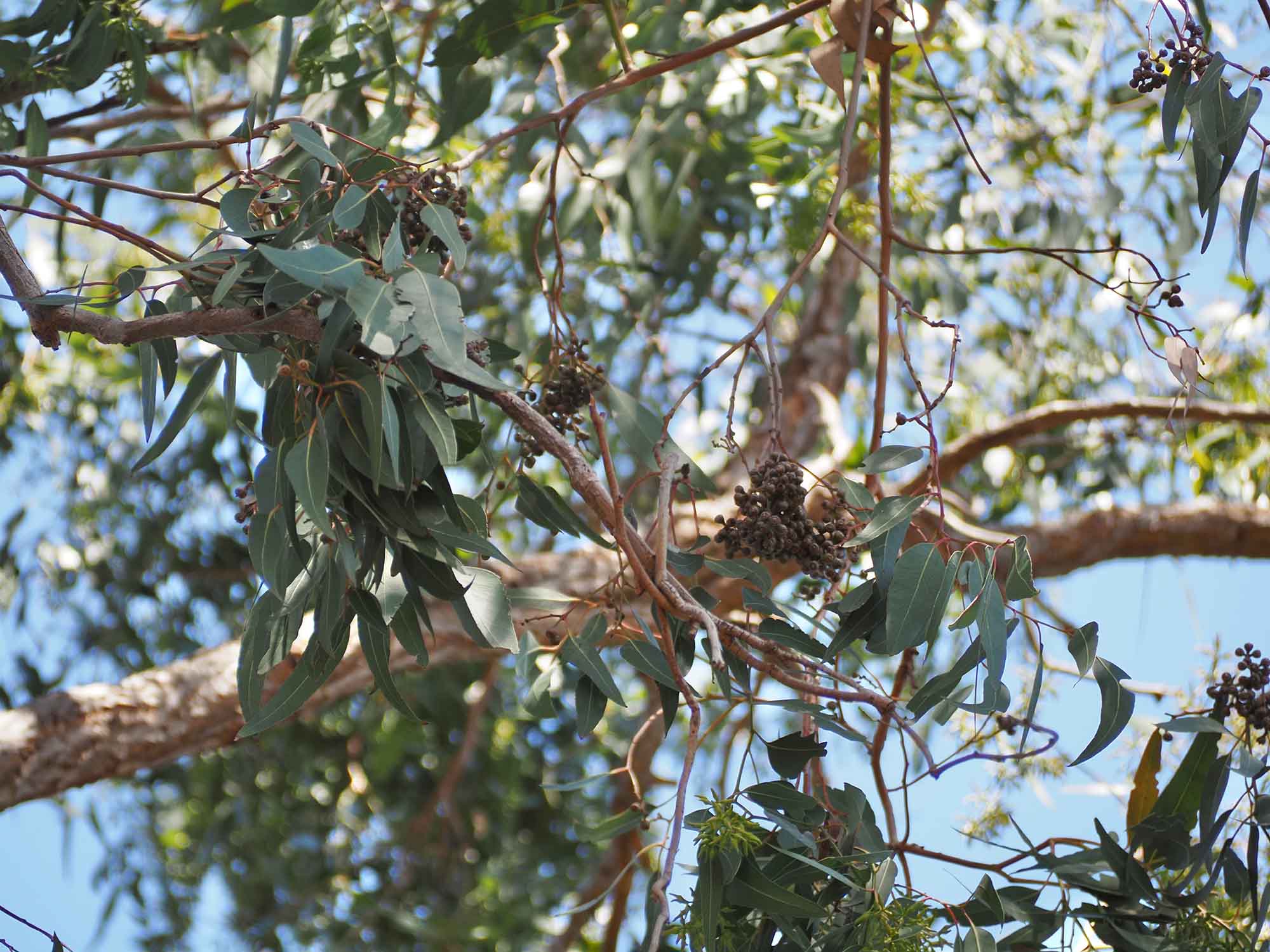
Stanford’s sole specimen of this rare ironbark stands in the greenbelt north of Ronald McDonald House, on the edge of the embankment of San Francisquito Creek, just north of the magnificent Quercus cerris nearby (map pin). The flower buds are in groups of 7–11 in complex, branched clusters at the ends of the branches. The horn-shaped opercula can be remarkably long, though this can vary, even on the same tree. The capsules bear valves that protrude when mature. A E. camaldulensis grows to its left, with strikingly similar flower buds and capsules, but its peeling bark at once distinguishes it from the dark, persistent bark of E. fibrosa (fibrous is hardly an apt reference for the species name, but so it is written).
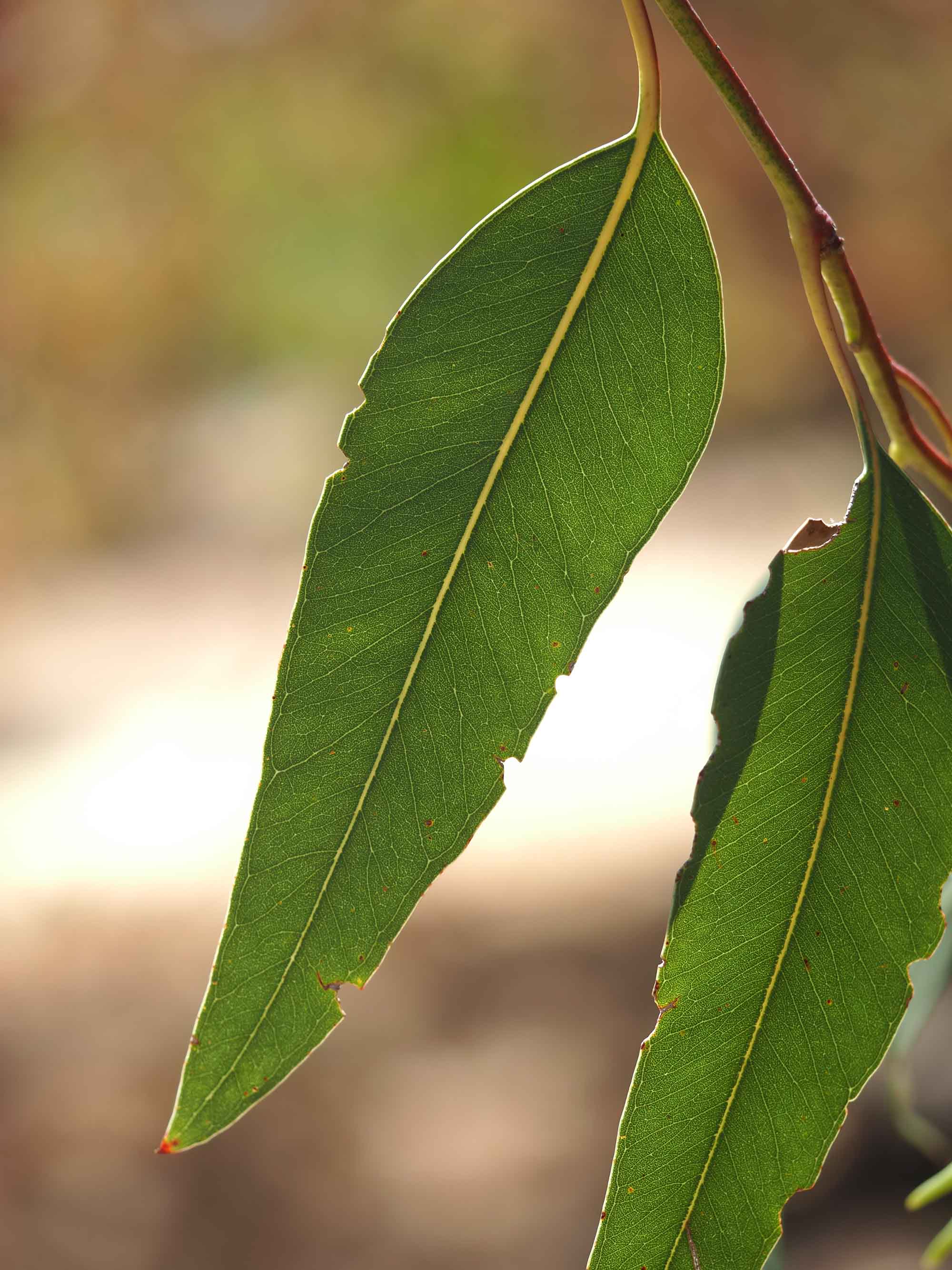
The bark is virtually indistinguishable from that of the narrow-leaved ironbark, E. crebra, though the latter’s fruit and buds are much smaller, differently shaped, and – true to its name – the leaves are smaller and narrower as well. All stamens on the white flowers have anthers; those of the gray ironbark, E. paniculata, as well as E. sideroxylon, are edged with numerous stamens lacking anthers.
Gallery
About this Entry: Authored Jun 2025 by Sairus Patel.

