

Afrocarpus falcatus
 Outeniqua afrocarp
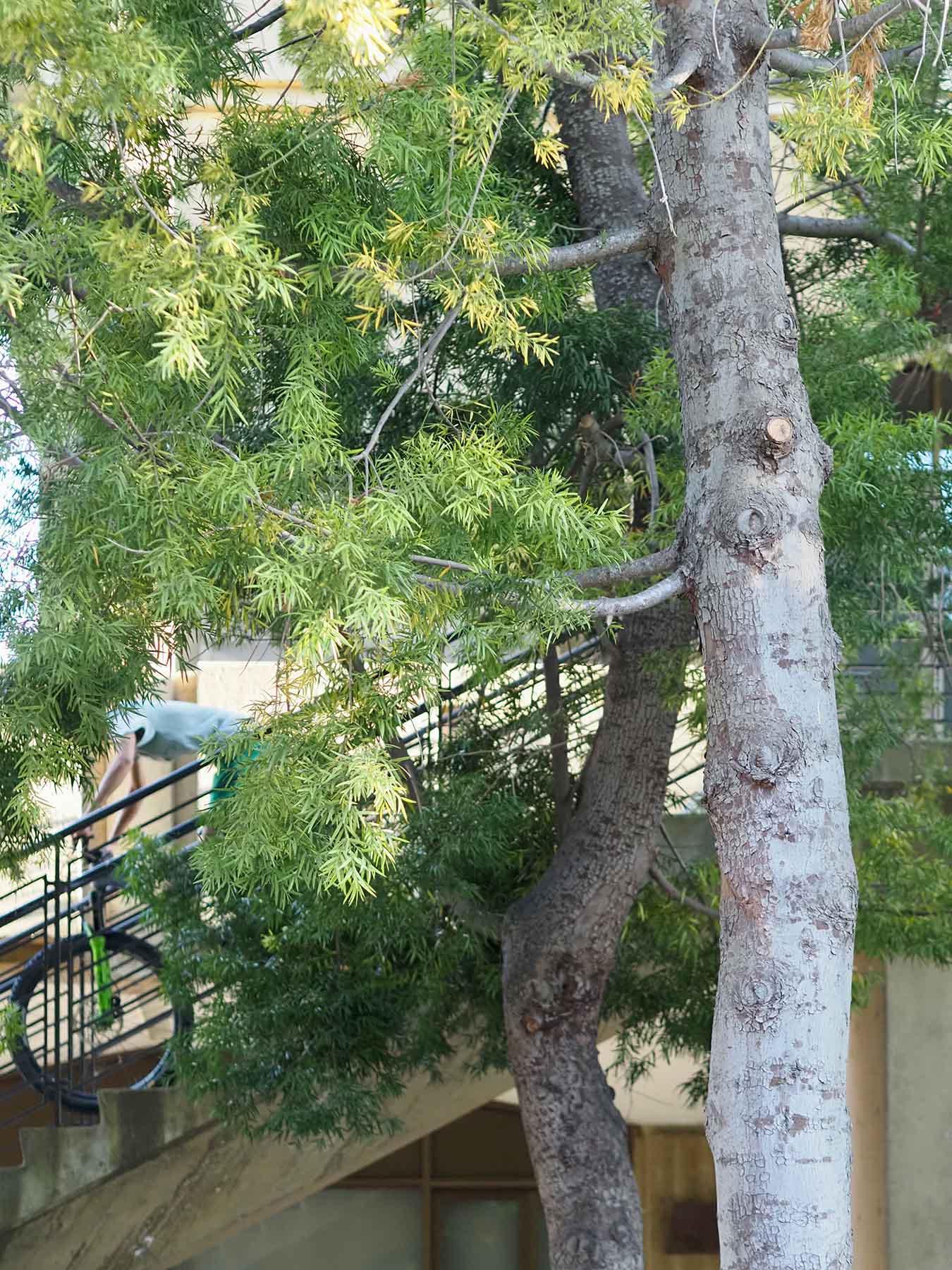
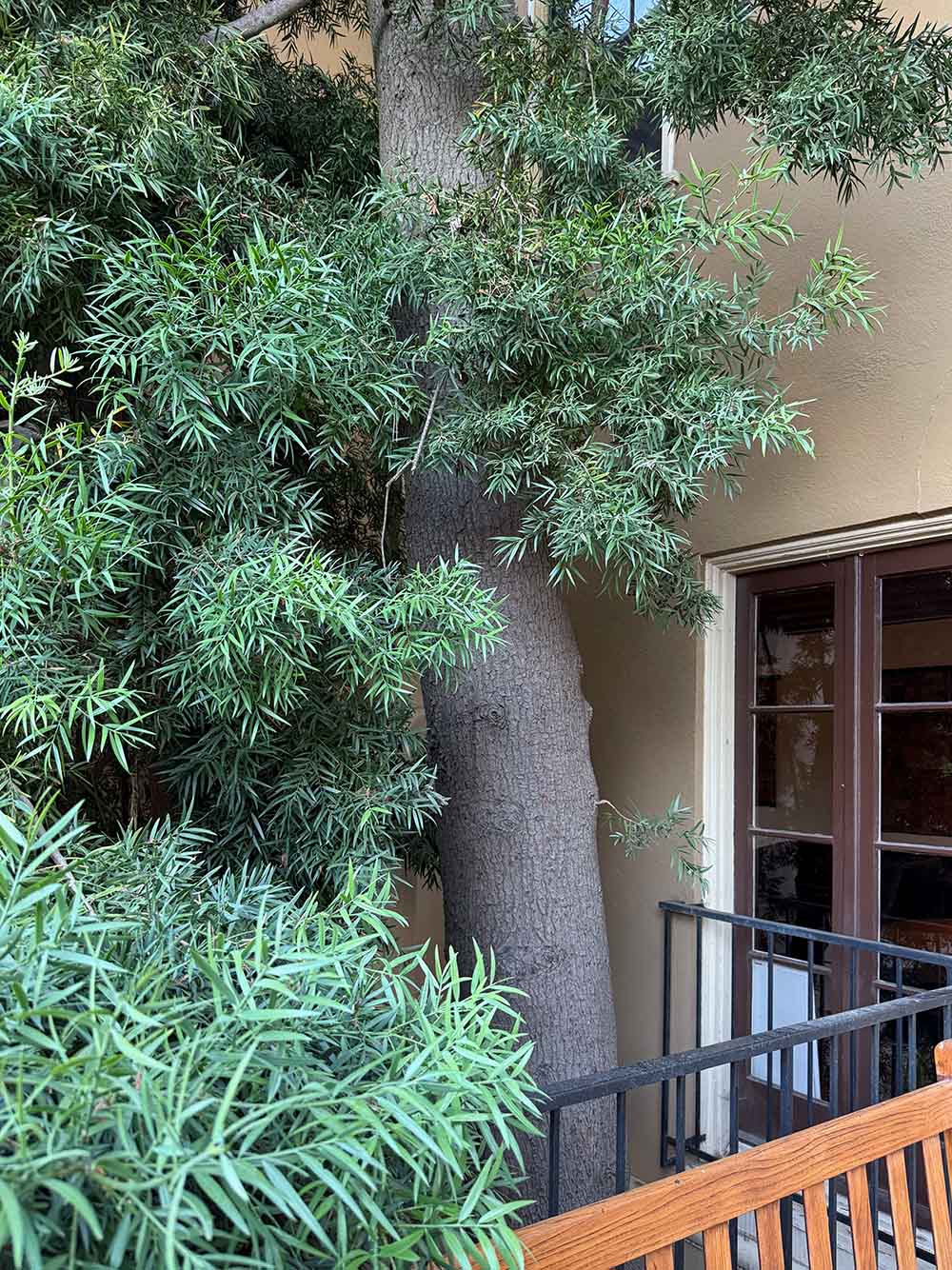
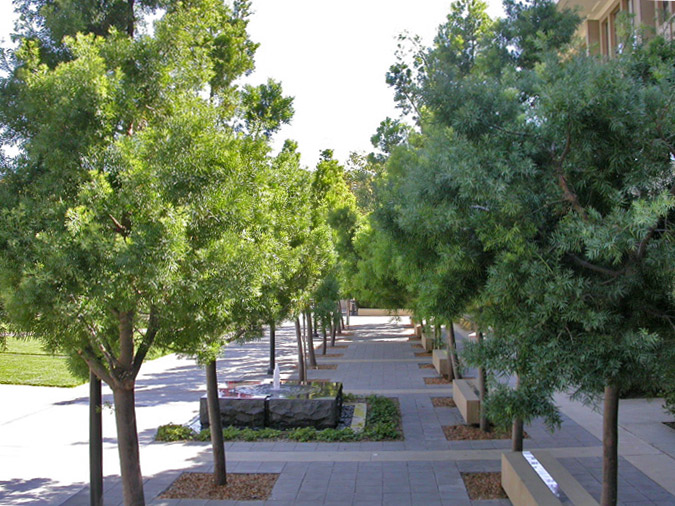
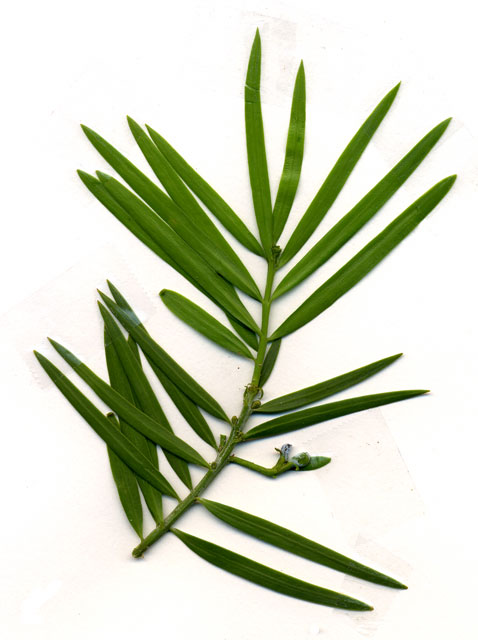
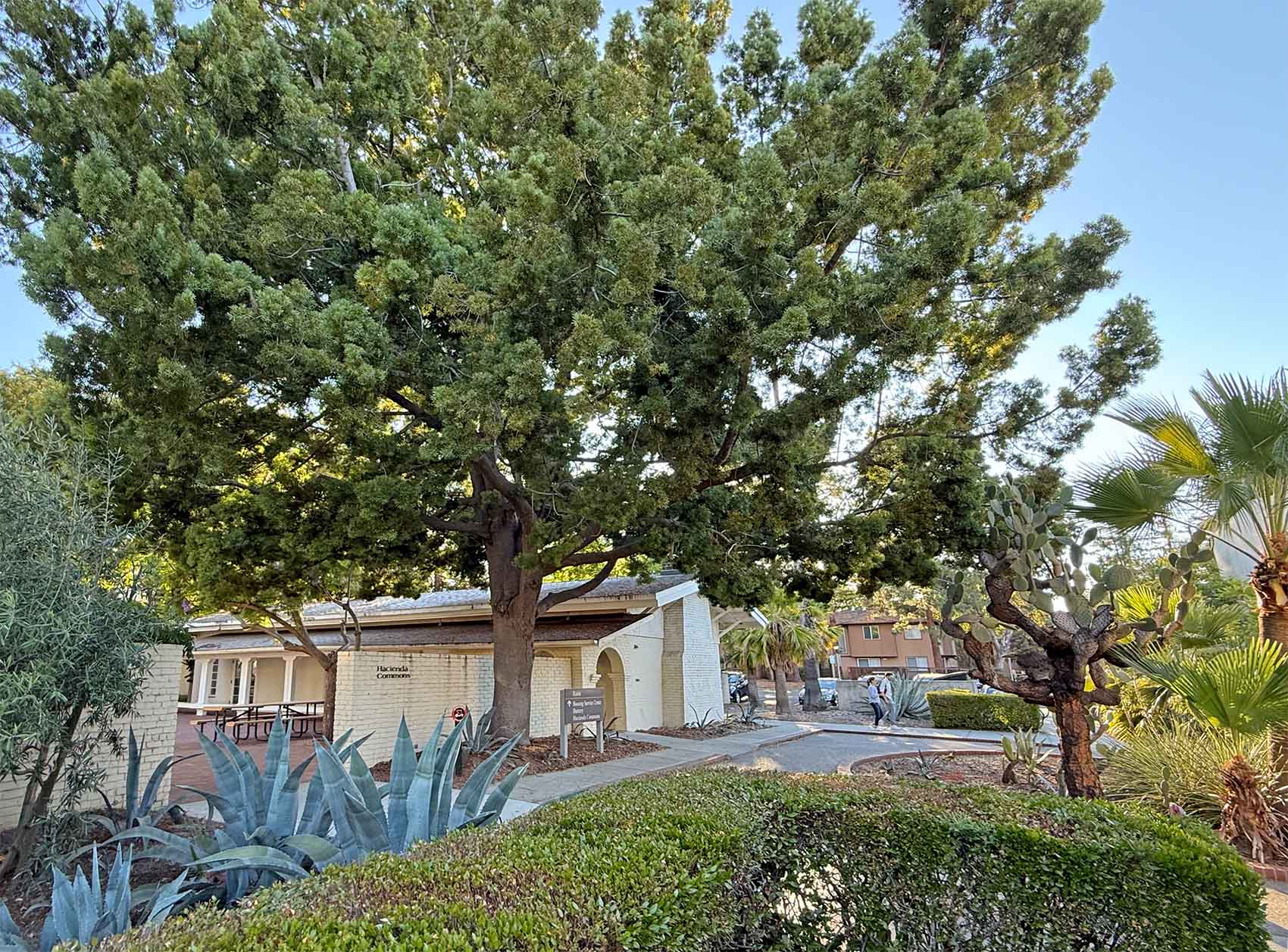
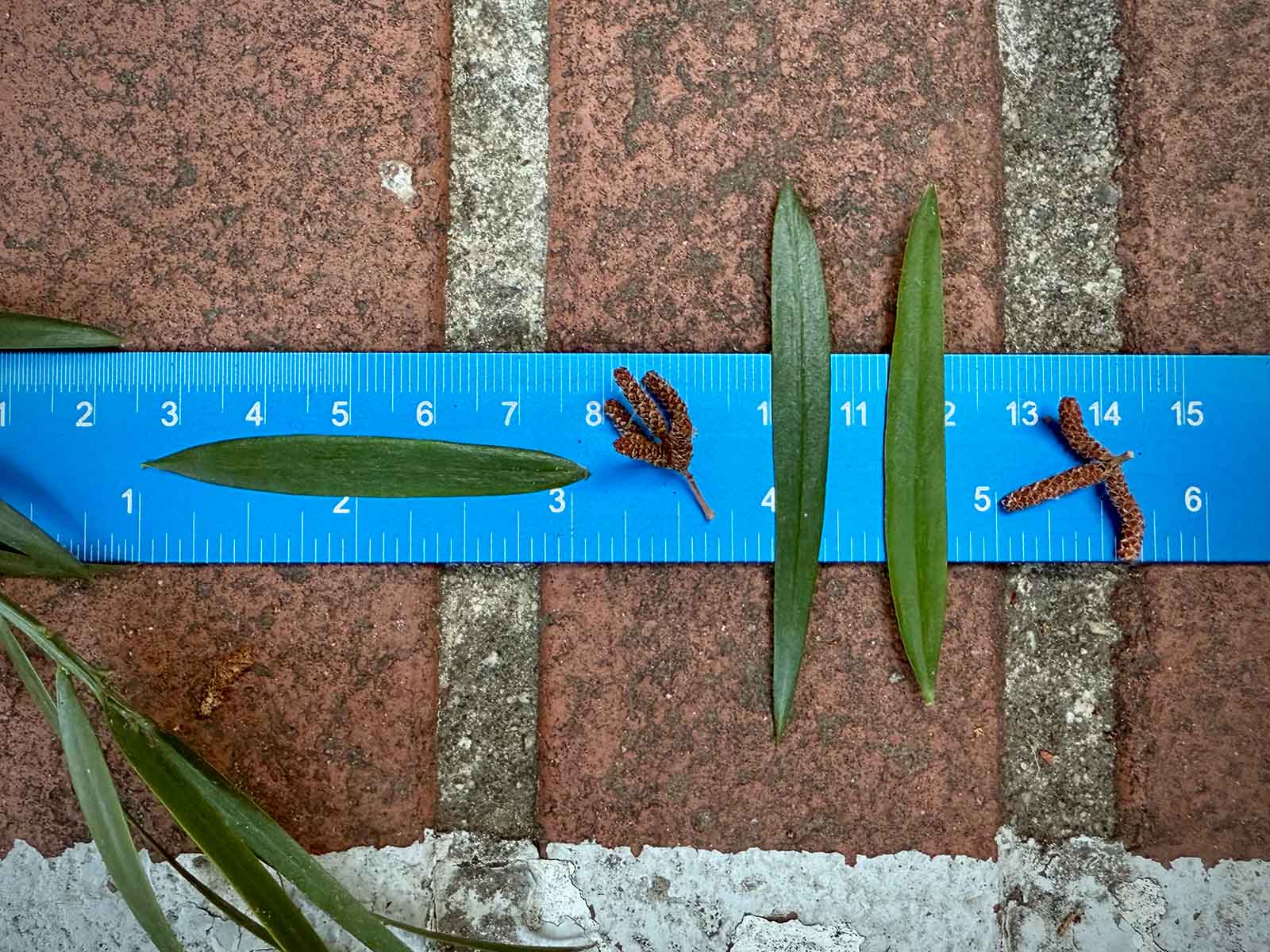
Commonly known in horticulture as “fern pine” – a lamentably misleading name on both fronts – this tall southern African conifer hails from moist forests in the Cape region, most famously in the Outeniqua Mountains, growing chiefly at elevation but also descending to near sea level. Several immense specimens there rise to great heights and may be 1000–1500 years old. It also inhabits similar forests eastward and northward. The stout bole rises straight upward, its branches ascending to form a distinctive dome-shaped crown densely clothed with very narrow, delicate-looking, flattened leaves about 2 inches long. A leaf here and there may be slightly sickle-shaped (falcate), hence the only weakly justified name falcatus. New growth emerges in soft, light green tufts that stand out against the darker foliage.
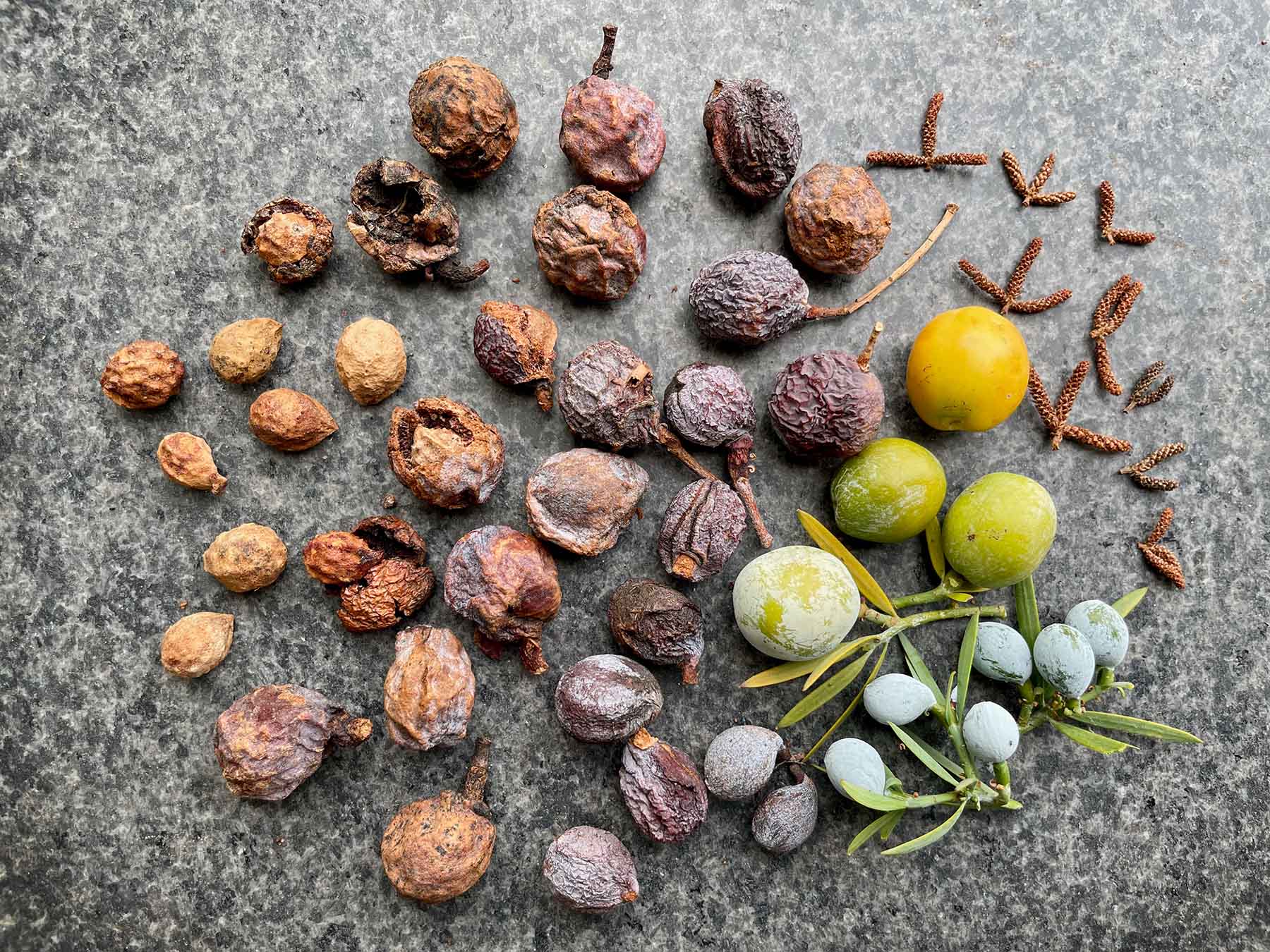
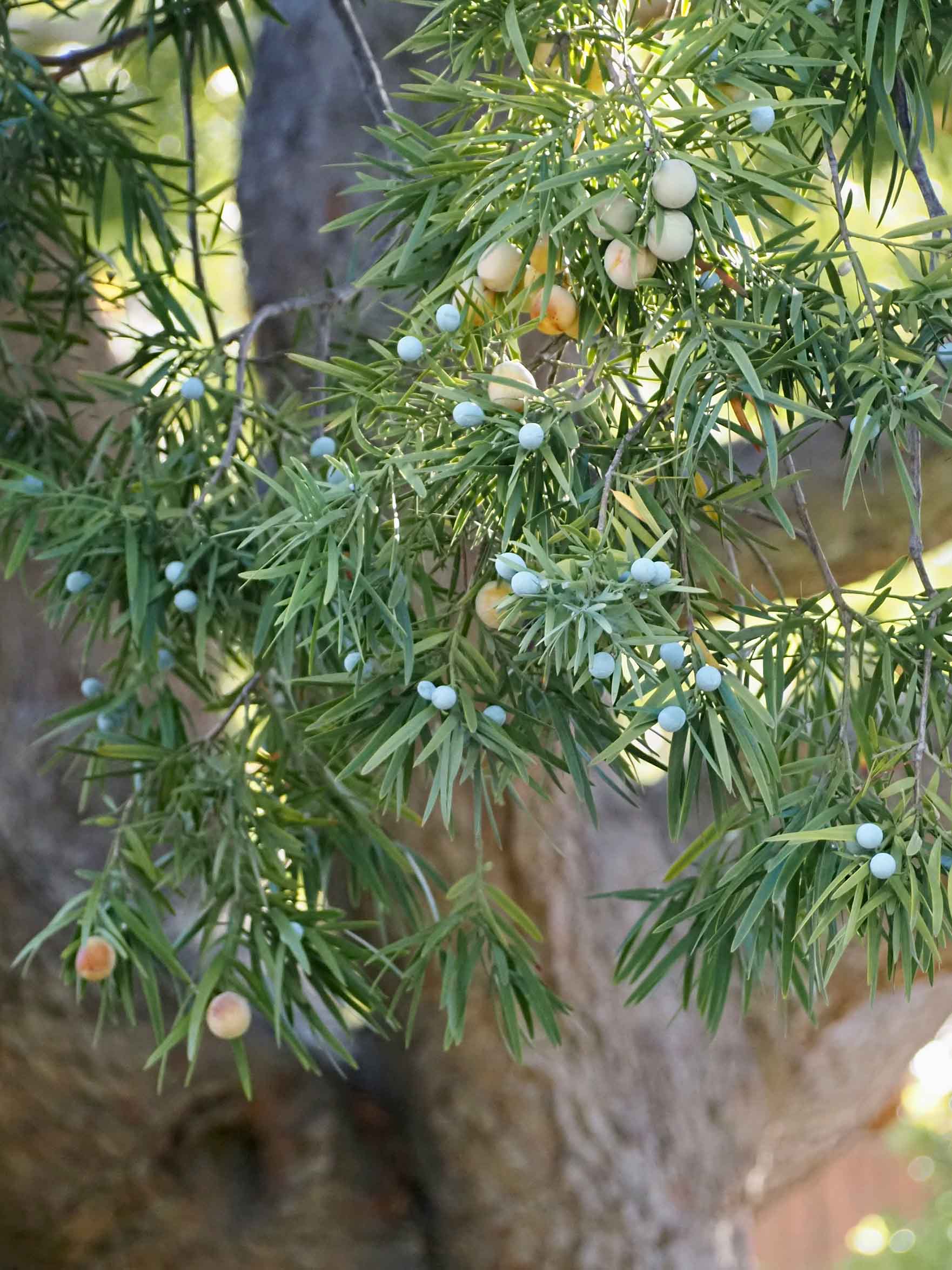
Female trees produce fleshy round cones that start off bluish-green and ripen to yellowish orange, resembling plums, skin and all, routinely reaching about 0.9 inches (23 mm) long on campus, significantly exceeding the bounds reported in botanical references. Inside the flesh is a single seed whose hard coat is covered in warty bumps. Unlike the cones of Podocarpus, the genus in which this species was formerly placed, these lack the colorful fleshy structure ballooning at the base – the “foot-fruit” that gives Podocarpus its name – a difference that helped justify recognizing Afrocarpus as a distinct genus.
Confusion has long attended every aspect of Outeniqua afrocarp’s identity and naming. It is frequently mistaken for the very similar east African species A. gracilior (formerly Podocarpus gracilior) – of which no specimens are known in California and whose seed coat is smooth rather than warty, and whose delicate pollen cones grow in groups of up to three rather than up to four. A. falcatus is still widely sold under the name Podocarpus gracilior – two taxonomic steps removed from the actual tree we have in California.
The choice of common name is vexing as well. As with Podocarpus, whose genus name has long been used colloquially and abbreviated to “podocarp,” so here “afrocarp” is adopted, concisely building in the continent of its origin. “Yellowwood” is likewise commonly applied to this species and to others in its family. That name is originally and most correctly applied to Podocarpus latifolius, the national tree of South Africa, but has also been used for entirely unrelated trees, the American yellowwood for example, leaving it of little value in a name for this species.
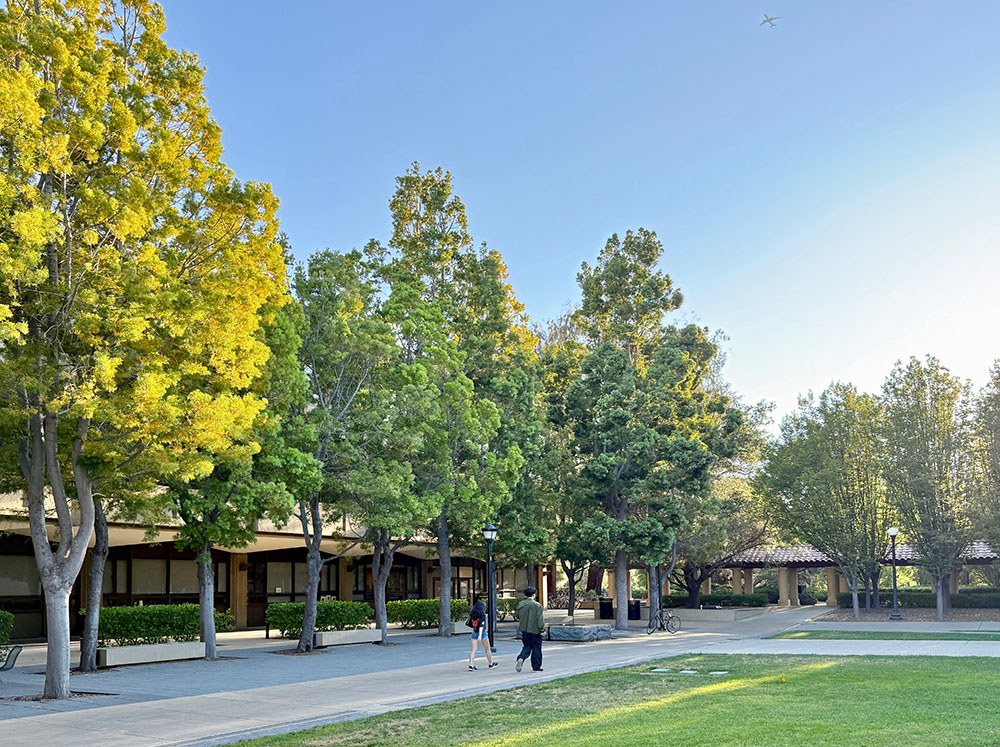
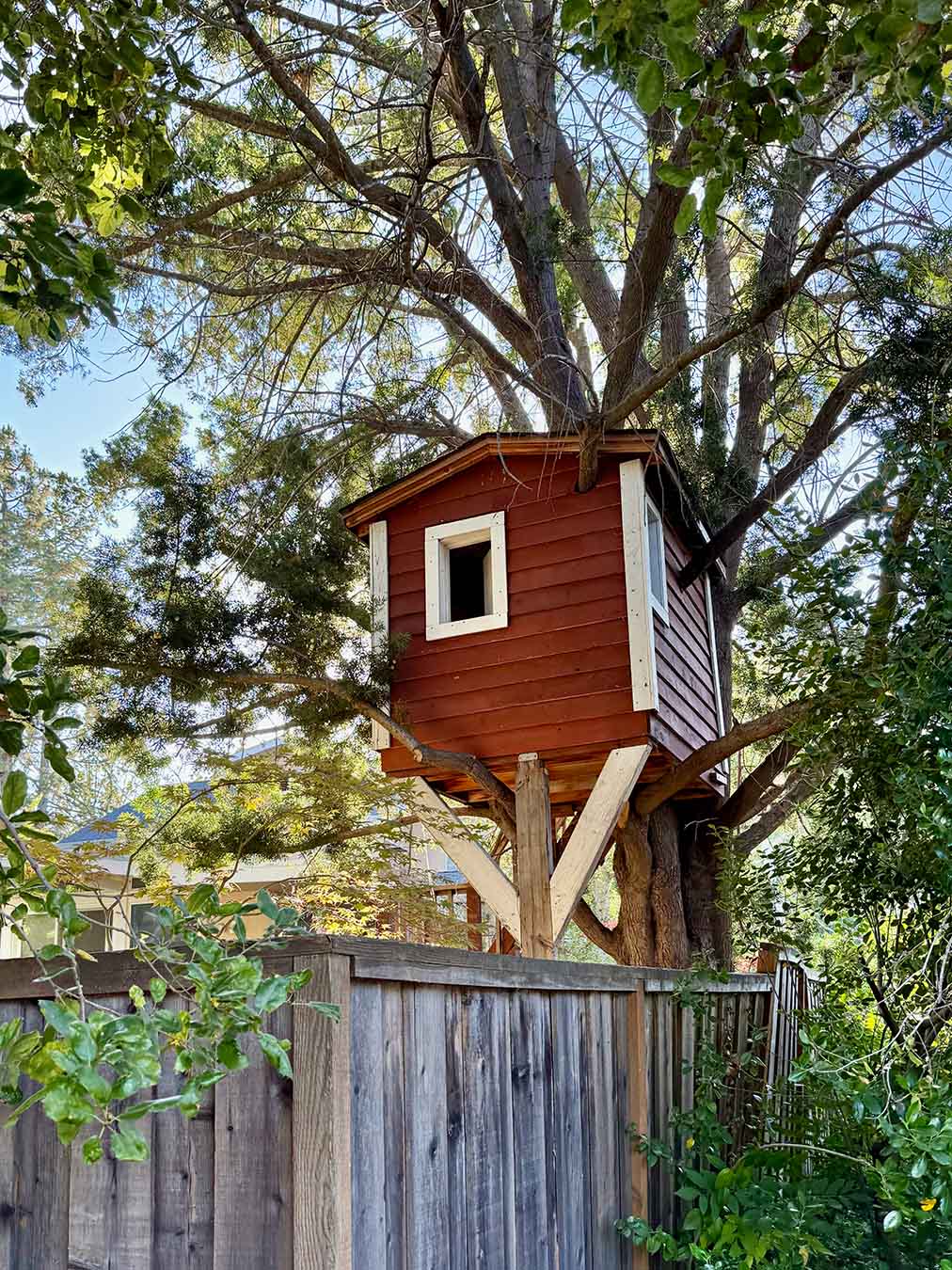
A. falcatus began to be widely planted on campus just before 1970, including in space-limited settings. Young plants can have leaves more than 4 inches long and can tolerate substantial shade for many years. Though its natural habitat is not summer-dry, the species – if given regular water – does remarkably well locally, remaining in good health and, as a bonus, producing the finest of leaf litter below. Most of the specimens on Dueña Street appear stunted, likely from compacted soils and insufficient moisture. Eighteen trees are arranged on the north side of Lathrop Library. A massive specimen is left of the Bechtel International Center entrance, with another hidden behind it. One grows at 817 Pine Hill Road. Street trees at 752 Tolman Drive and nearby include one entwined with a treehouse. A row of male and female trees stands at 711 Salvatierra Street; you can tell the females by plum-like stains on the sidewalk even after the cones have been swept away. (Select male trees if you don’t care for the mess.) In Palo Alto, large and handsome individuals can be seen at 1106 and 1181 Hamilton Avenue, as well as at 1543 Walnut Drive.
Gallery
Name derivation: see text above.
- Farjon reports seed cones are 12–18 mm long; campus cones routinely measure around 22 mm.
- Main References for New Tree Entries.
- Farjon, Aljos. 2017. A Handbook of the World’s Conifers, 2nd ed. Leiden and Boston: Brill.
About this Entry: Authored Jun 2025 by Sairus Patel. Updated Mar 2026, Jul 2026 (SP).

