

Acacia dealbata
 silver wattle
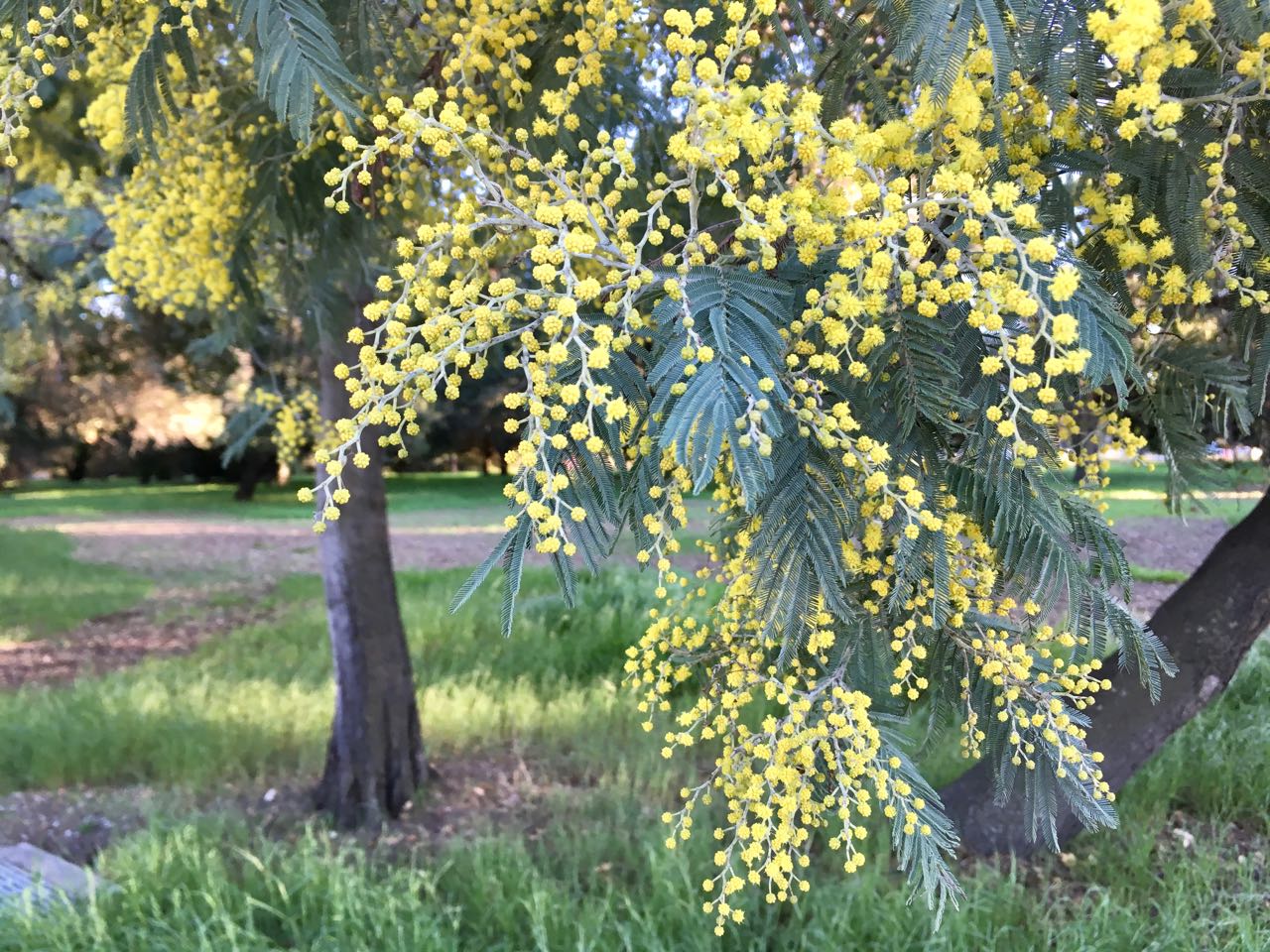
The predominant acacia of the breathtaking Route du Mimosa in the French Riviera, where you can drive for miles among the clouds of golden acacia (“mimosa”) blossoms in the winter season. This Australian import has overtaken native vegetation, including cork oak and strawberry tree, in much of the area but its floral display is a major attraction from January to March. The genus Mimosa has puffy heads of flowers similar to the yellow ones of acacia.
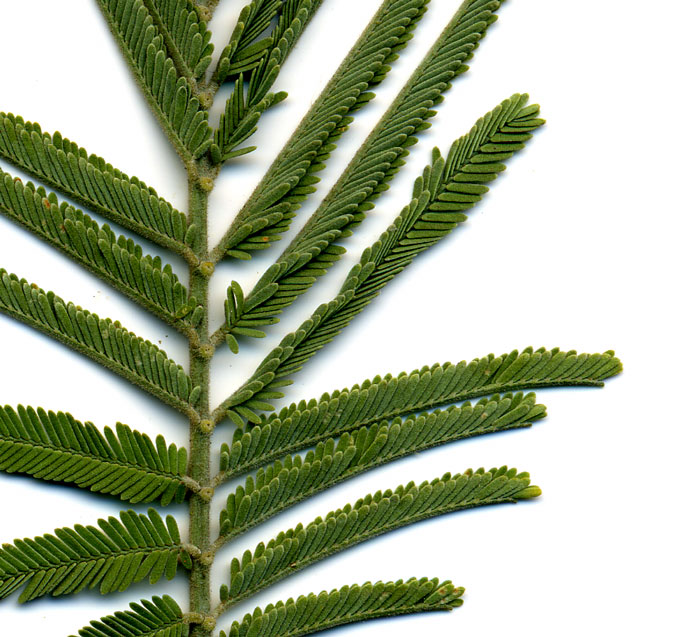
The silvery-gray leaves are bipinnately compound, divided into a dozen or so pinnae each with many more pinnules. There are raised glands on the upper surface of the leaf’s main axis at the point at which each pair of pinnae meet. See A. baileyana for comparison of these species. The leaf stalks run on as fine, angular ridges on the branch. The much rarer green wattle (A. decurrens), unknown in these parts, has dramatically angular or winged ridges; its leaves are not silvery but rather an ordinary green.
A large silver wattle is just north of Museum Drive, between Palm Drive and Lasuen Street, within the relocated pool from the old men’s gym; note the foundation stones of the columns nearby. One on Campus Drive at the southeast corner with Lomita Drive, near the Anderson Collection, fell down in 2023 and is resprouting. Substantial numbers can be found in the area of Frenchman’s and Gerona Roads.
Silver wattle is an invasive weed in Bear and San Francisquito creeks in Jasper Ridge Biological Preserve and along other local waterways.

Illustrations: Jasper Ridge plant photo archive.
Name derivation: Acacia – Greek akis, a sharp point; dealbata – whitened (young shoots and leaves).
About this Entry: Authored Feb 2025 by Sairus Patel.

