

Tipuana tipu
 tipu tree
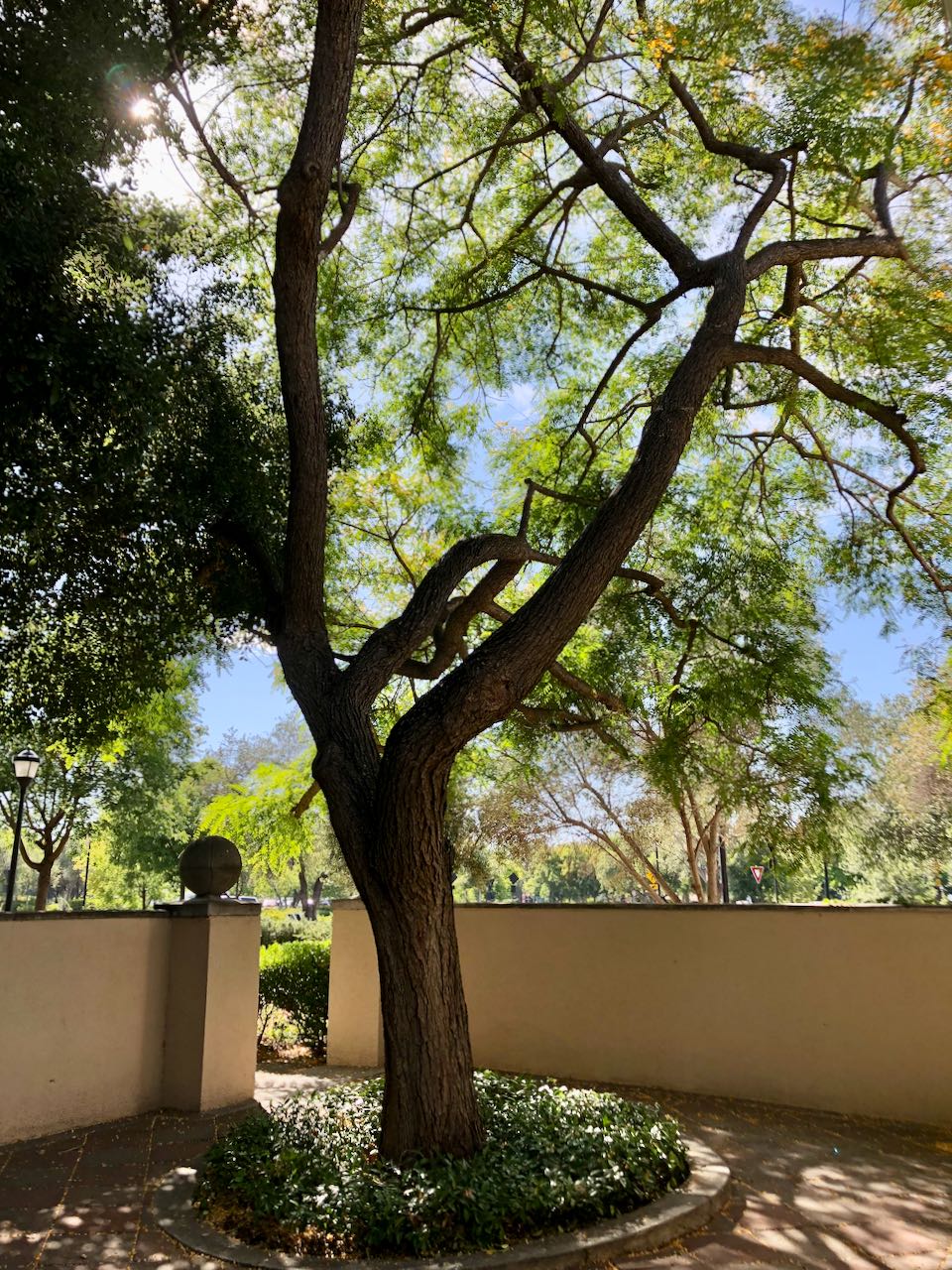
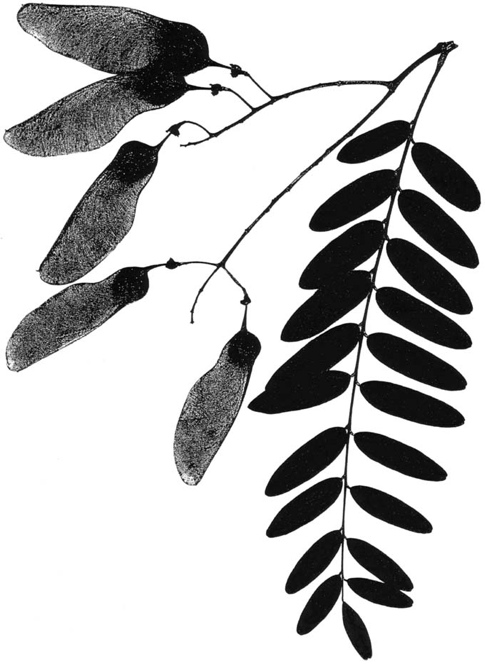
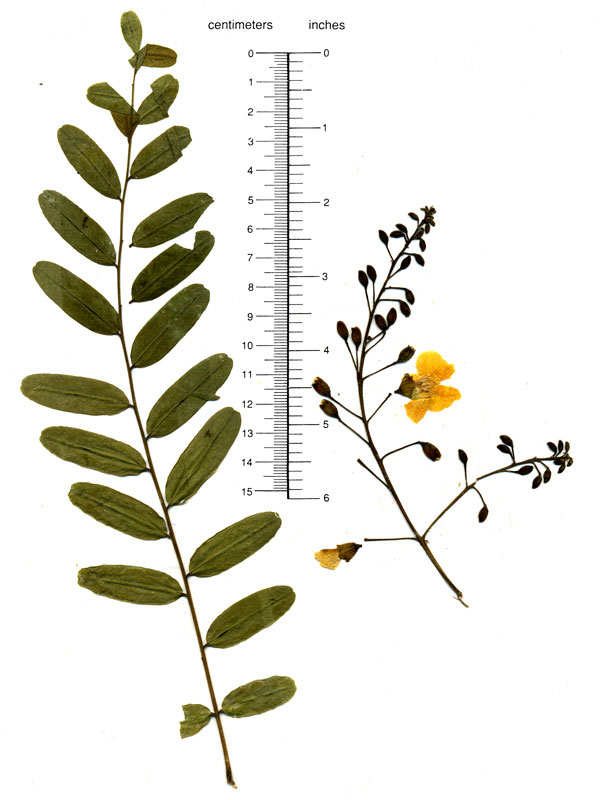
The closest Stanford has to the immense, wide-crowned leguminous trees of the tropics, such as rain tree (Samanea saman), is the trio of tipu trees in the lawn at Hacienda Commons at Rains Houses, whose crowns combine to form a vast canopy over the courtyard. The rounded leaflets on the pinnately compound leaves are similar to those of black locust, but the tipu tree distinguishes itself each July by yellow pea-shaped flowers with orange throats. These are followed by distinctive 2½-inch pods – legumes masquerading as a single-winged maple samaras, starting off a light green and aging to tan. A single tree soars upwards in each of the courtyards on the ends of Rains Building 238 on Campus Drive. In mid-summer, drifts of fallen yellow blossoms mingle with the purple blooms of nearby jacarandas, creating perhaps the loveliest floral litter on campus.
Further afield, tipu trees planted at 39 Circle Drive and 1885 East Bayshore Road in East Palo Alto extend their crowns over the freeway soundwall, and are recognizable instantly by their blooms even at freeway speeds. When you see this, keep your eyes on the road, but exclaim “Tipuana tipu!” – one of the most pleasing scientific names to utter; both parts derive from the same indigenous name for the tree.
Gallery
About this Entry: Authored Jul 2025 by Sairus Patel.

