

Quercus palmeri
 Palmer oak
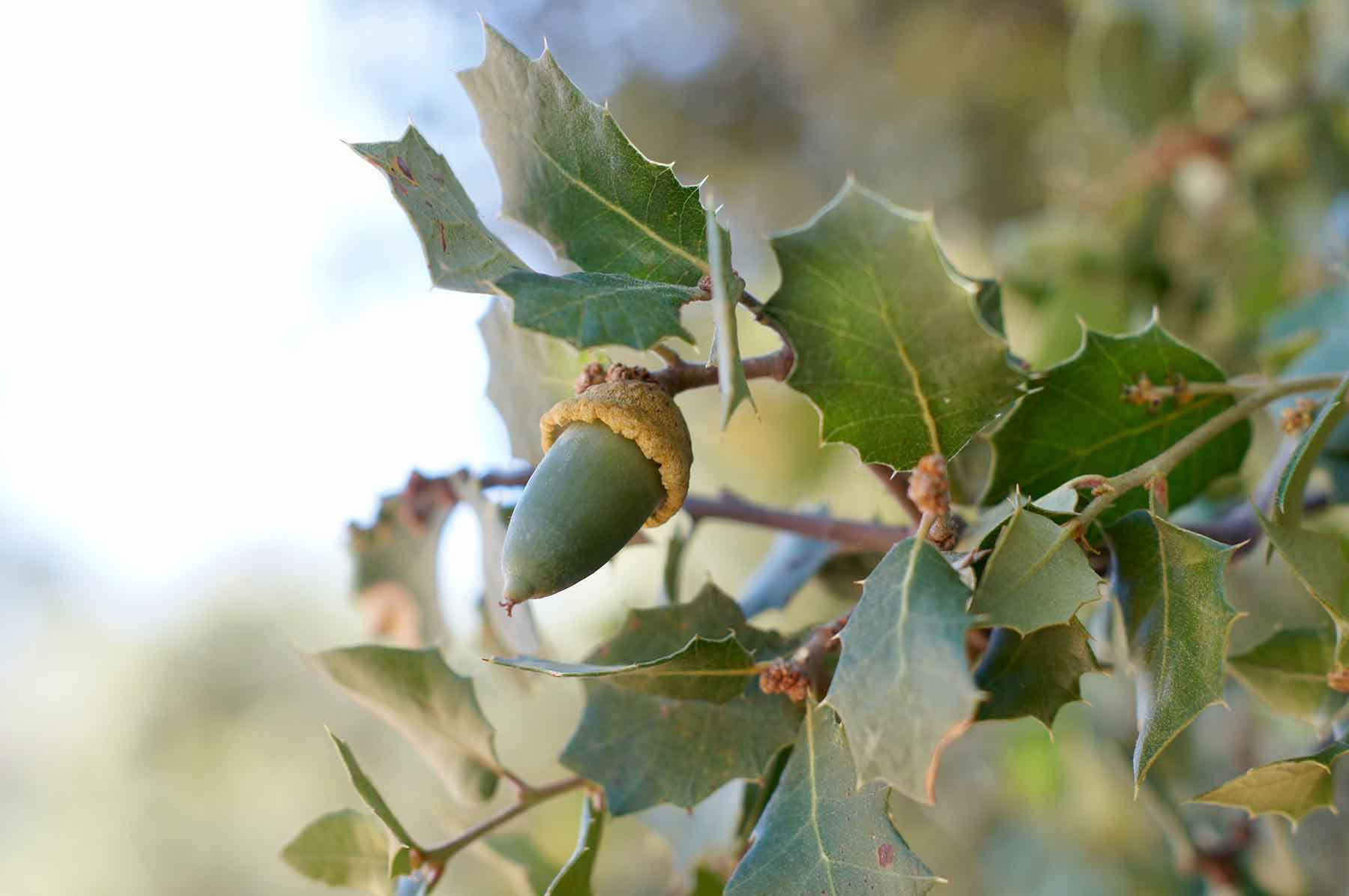
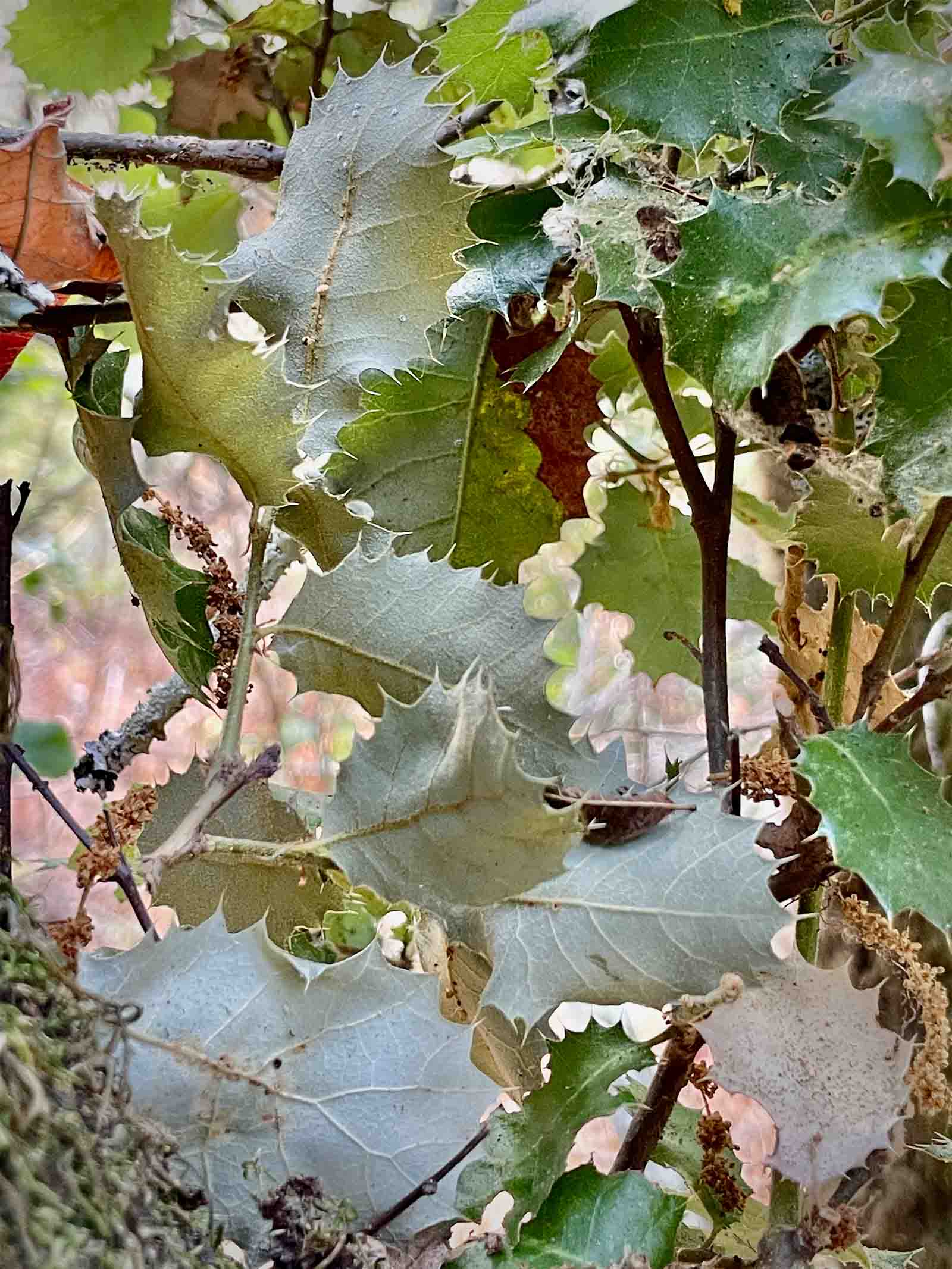
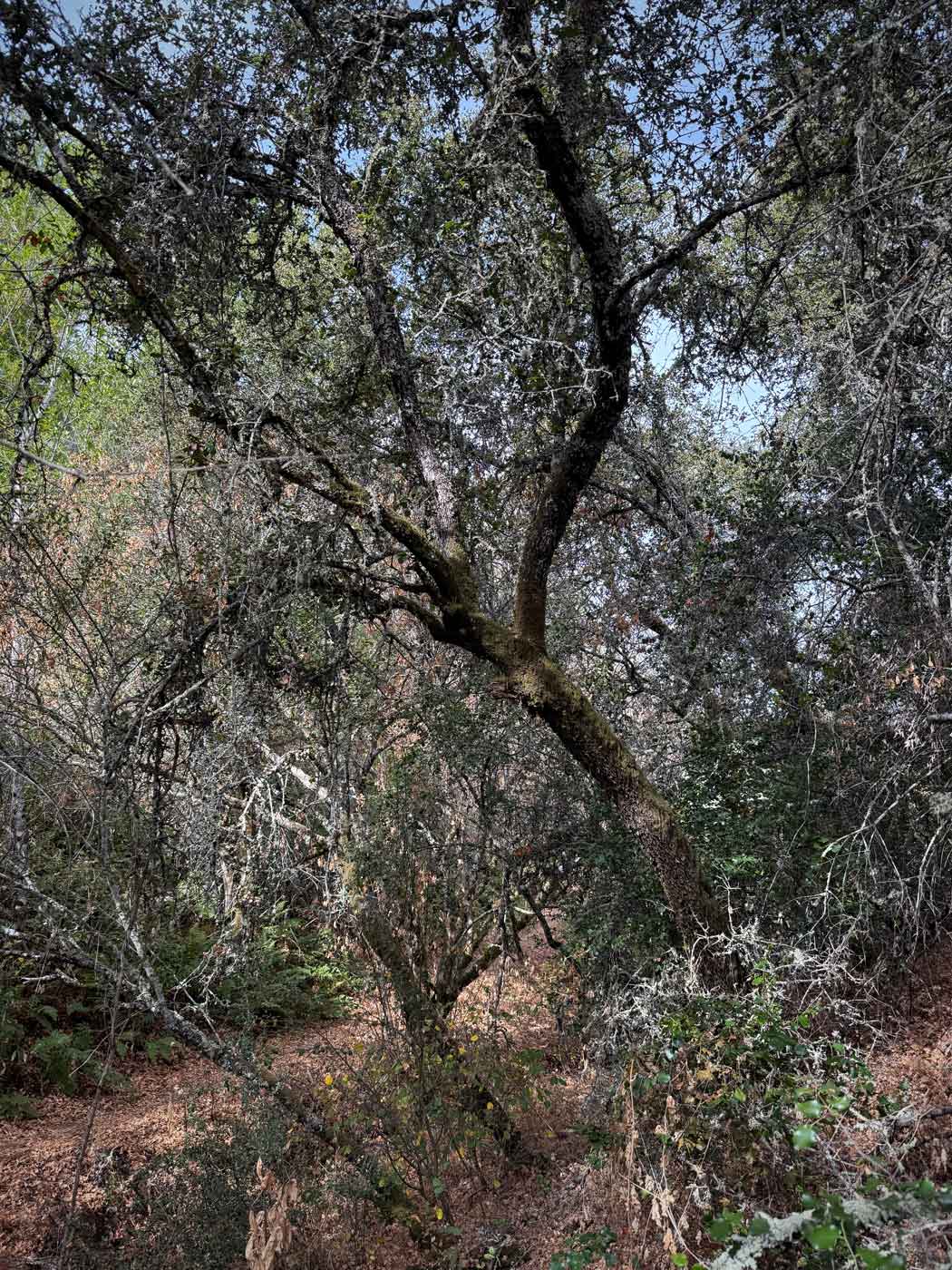
A small group of this shrubby evergreen oak, remarkably rare in the region, quietly grows southeast of Searsville Lake at Jasper Ridge, in a spot known as Buckeye Alley on Trail 9, close to its southern end. It is guarded by the flaming swords of poison oak and chamise that rise in dense mounds, choking the pathways leading to it.
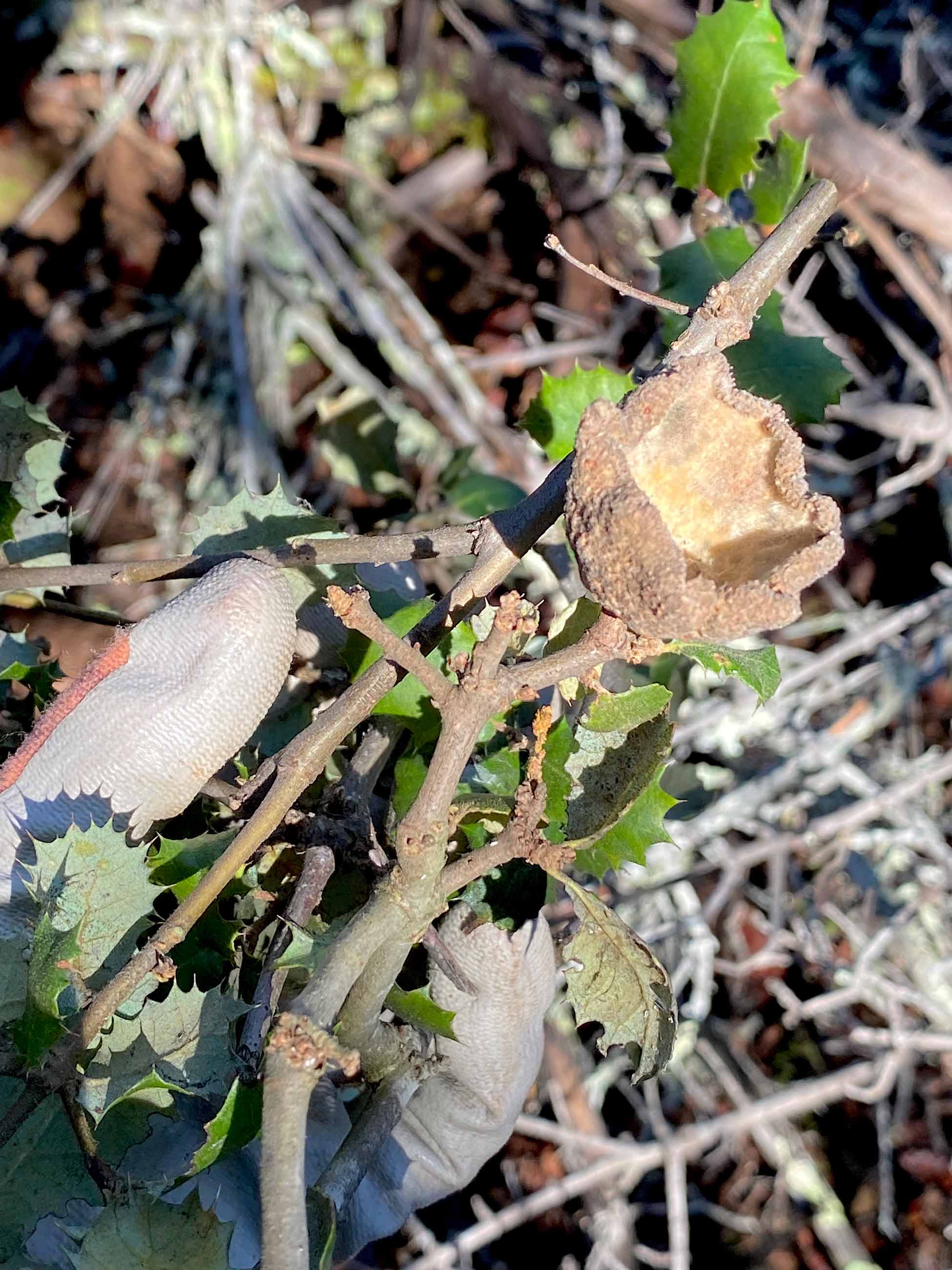
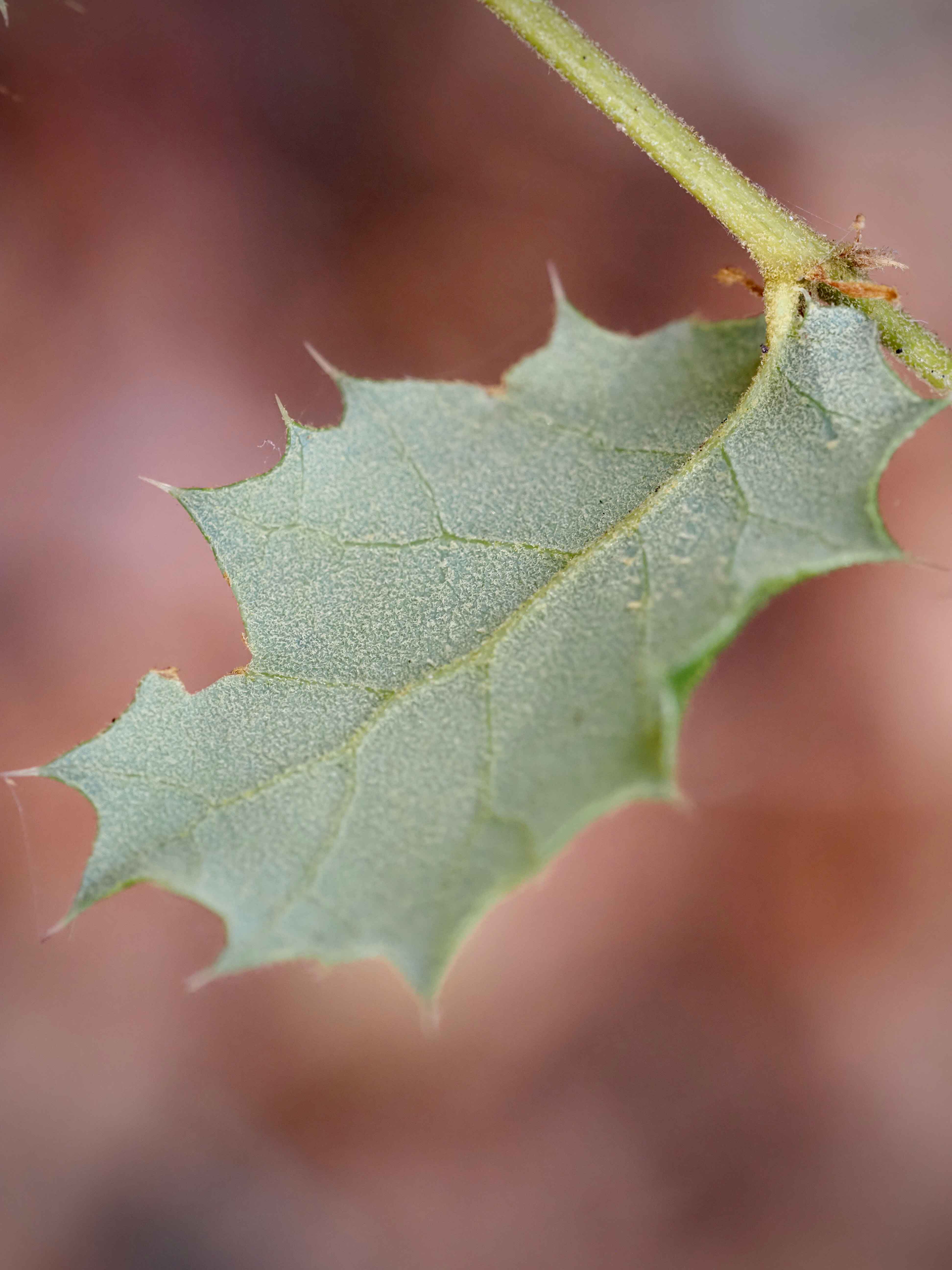
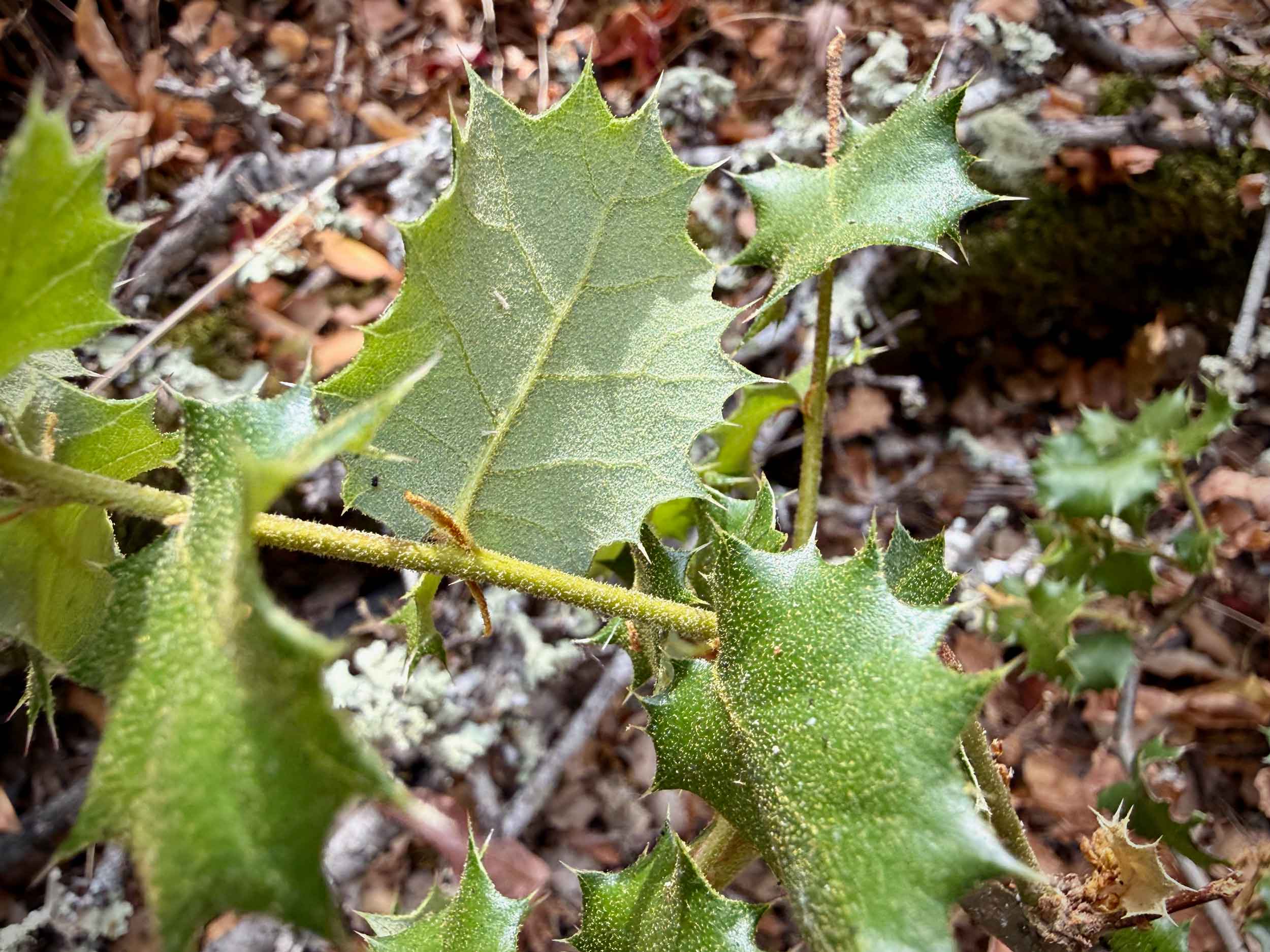
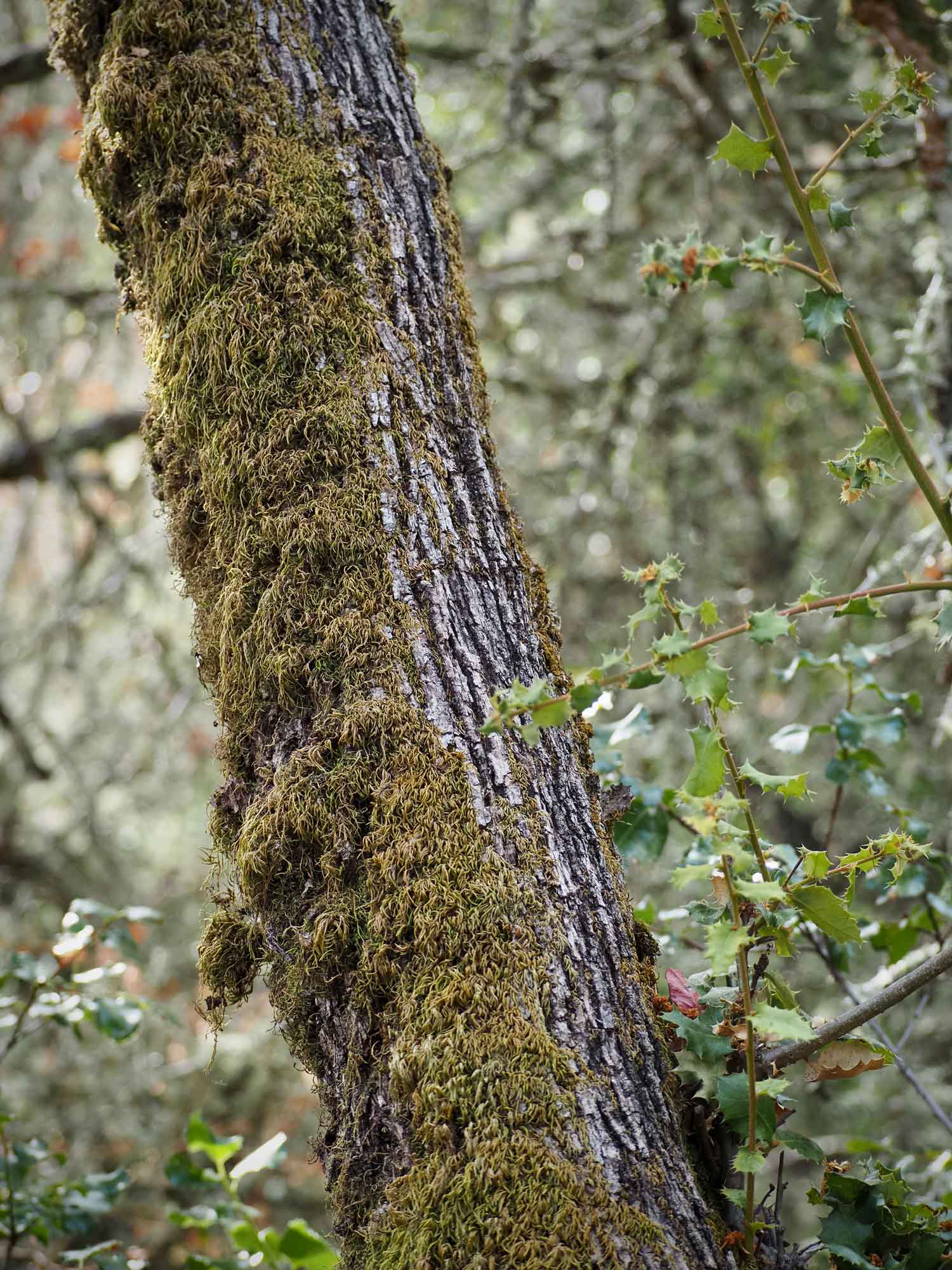
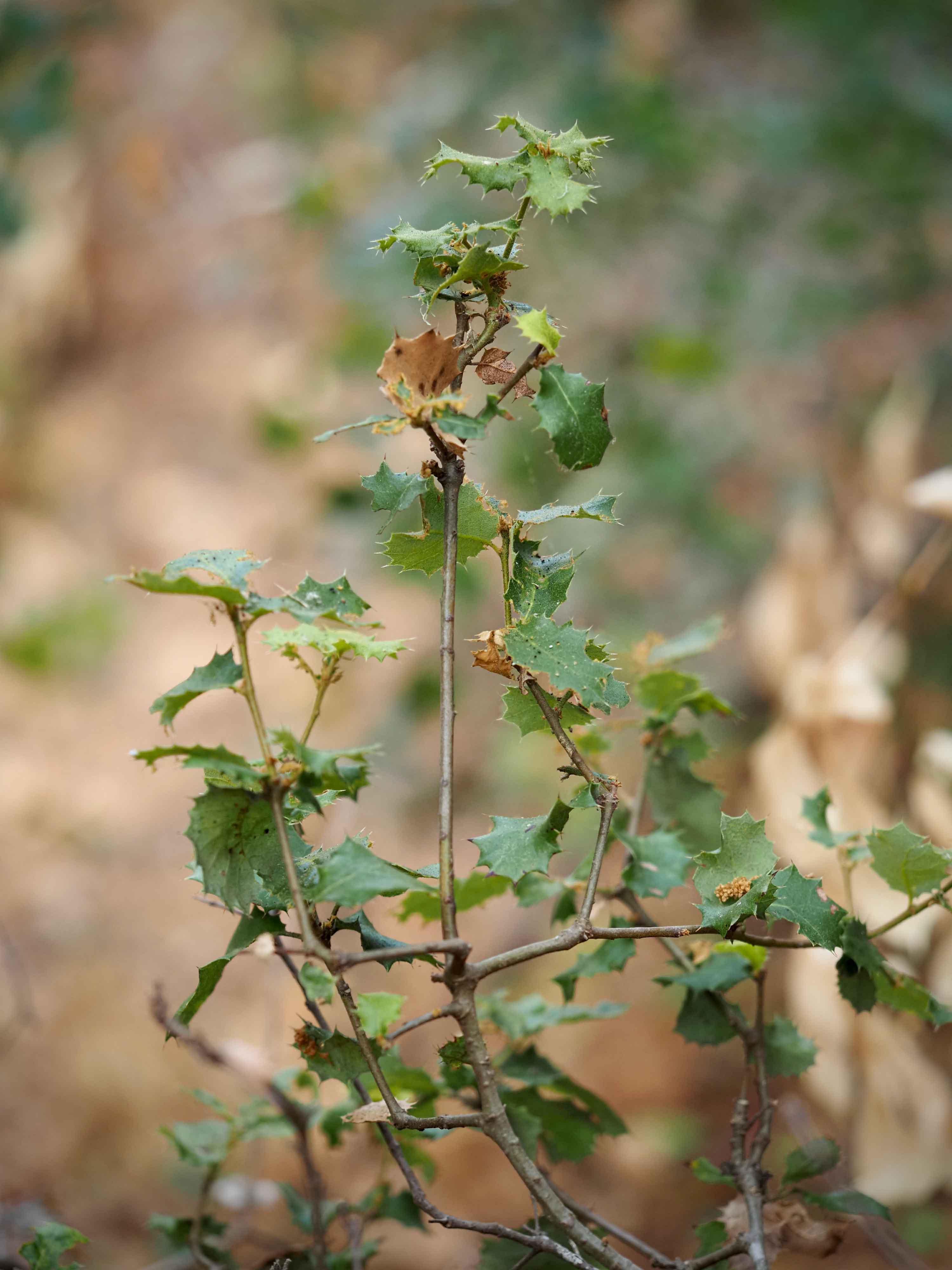
Palmer oak is closely allied to Q. chrysolepis — indeed, it was first described as a subspecies of it in 1877, before being recognized as a species in its own right two years later. Nearly a century later, the Jasper Ridge group was identified as Q. chrysolepis in 1973, perhaps unsurprisingly for a species so rarely encountered in northern California. Closer examination around 2022 supported its reidentification as Q. palmeri, distinguished by its fewer secondary leaf veins (10–14, compared to 24 or more in canyon live oak) and by its rigid, rather than flexible, small twigs. The twigs branch off at wider angles too, many approaching 90 degrees.
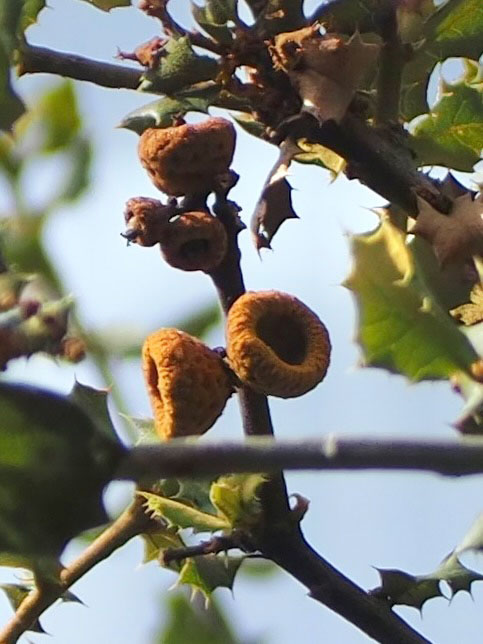
The leaf margins are viciously spined, while the pale undersides are lightly dusted with golden hairs. The rims of the golden acorn cups are flared and wavy, as often seen in the species. No fertile acorns have yet been noted on our trees; the nuts seem to abort before reaching maturity.
Our roughly 10 trees may form a clonal group. Ranging from 6 to about 25 feet tall, several exceed the maximum height given for the species in standard floras (about 10 or 20 feet, depending on the flora). Their position along a gully with seasonal water may help explain their apparently extraordinary height.
The nearest reported Palmer oaks are in the Sunol Wilderness Regional Preserve in the East Bay. Far to the south, in the Jurupa Mountains, a clonal colony of the species – estimated to be at least 13,000 years old – drew national attention in 2024, when debate centered on how close a mixed-use development might be allowed; the approved buffer was ultimately set at 550 feet.
Illustrations: Jasper Ridge photos (as Q. chrysolepis, but now considered Q. palmeri).
Gallery
- Main References for New Tree Entries.
- Jasper Ridge Biological Preserve. 2026. Vascular Plant List, Oakmead Herbarium.
- Keuter, Al. 2022. Letter from U.C.S.C. Herbarium’s Vascular Plants Curator, Sep 23. “Determination of JROH Catalog # 002467, collected by H. Dengler 1973‐04‐23, as Quercus palmeri, previously identified as Q. chrysolepis.” Linked to from Jasper Ridge Biological Preserve, 2025.
- Manos, Paul S. n.d. “Quercus palmeri.” Flora of North America. Accessed August 20, 2026.
- Osaka, Shannon. 2024. “California City Approves Industrial Park next to One of Earth’s Oldest Trees.” Washington Post, September 6.
- Rosatti, Thomas J., and John M. Tucker. 2014. “Quercus palmeri.” In Jepson eFlora, rev. 2, edited by Jepson Flora Project. Accessed August 20, 2026.
- Yong, Ed. 2009. “The 13,000 Year Old Tree That Survives by Cloning Itself.” National Geographic, Dec 26.
About this Entry: Authored Oct 2023 by Sairus Patel. Last updated Aug 2026 (SP).

