

Quercus kelloggii
 California black oak
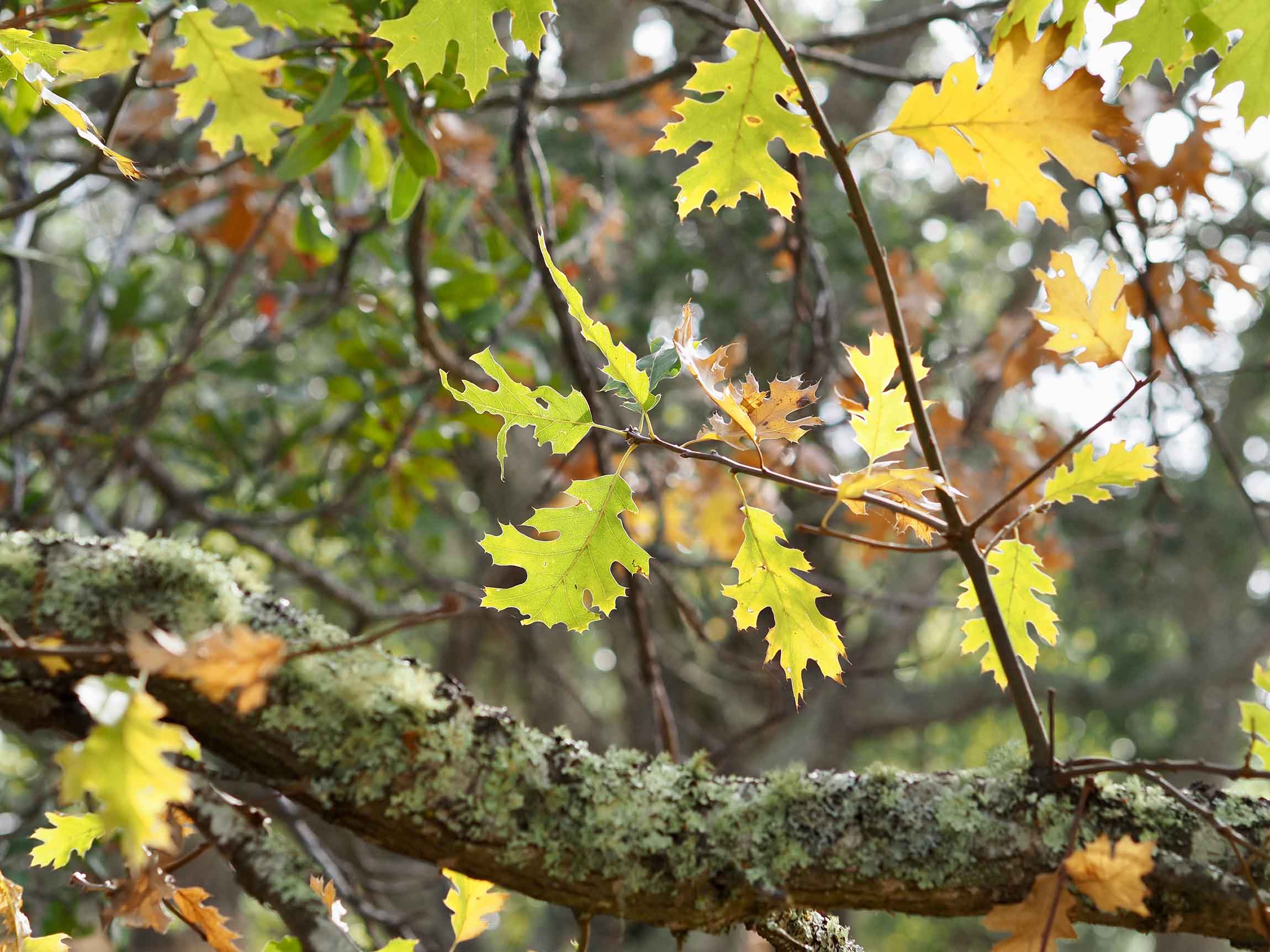
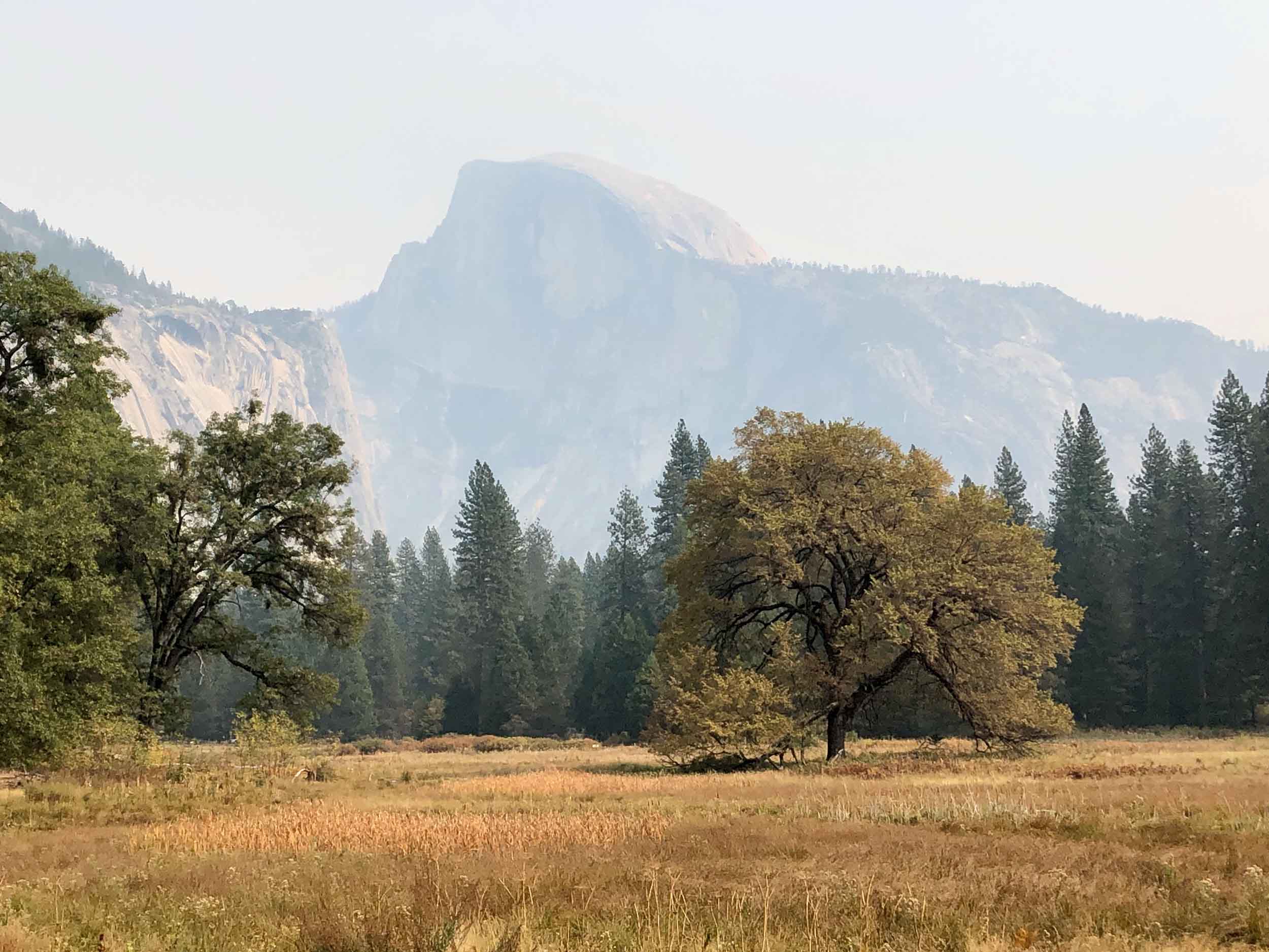
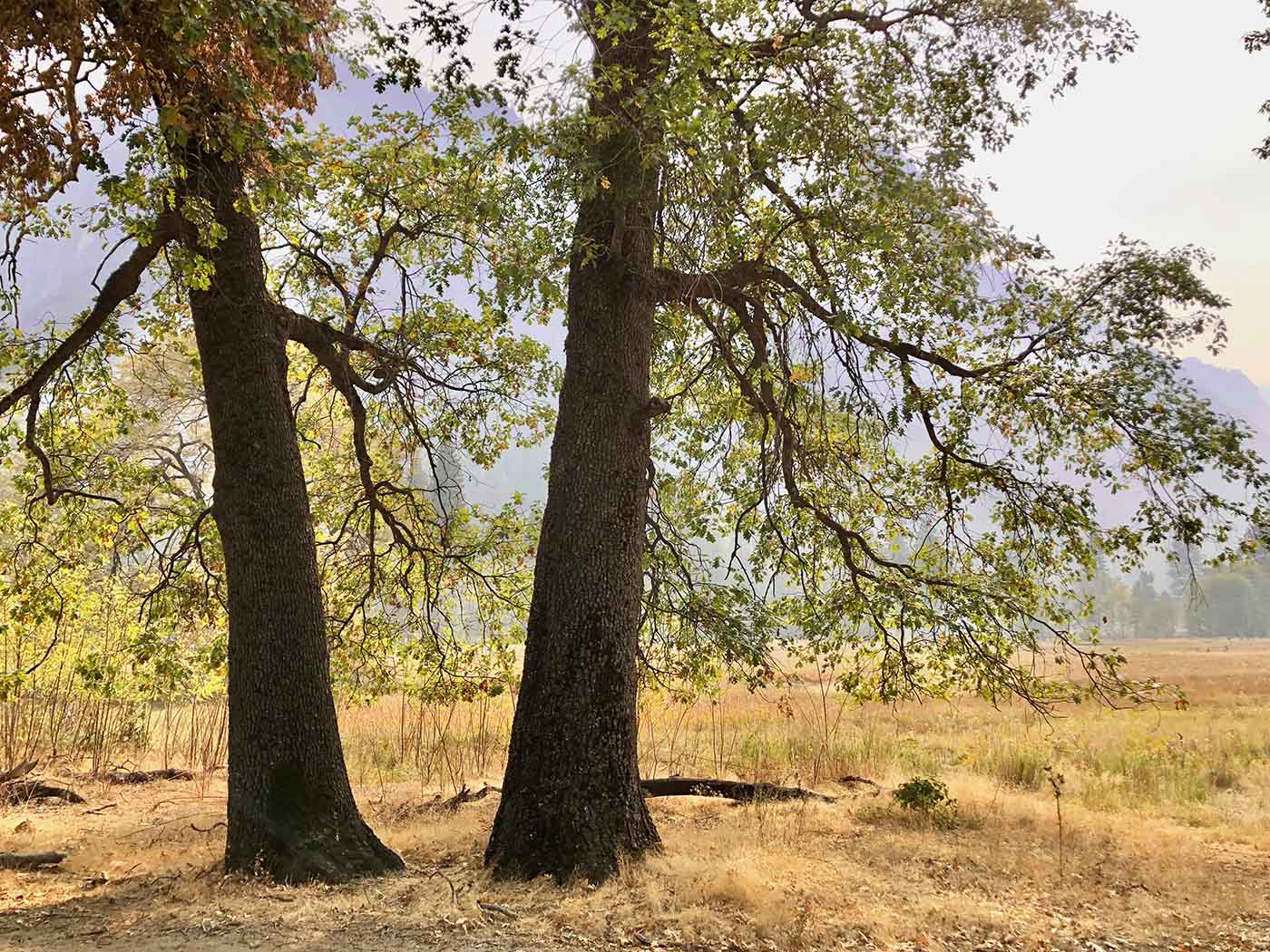
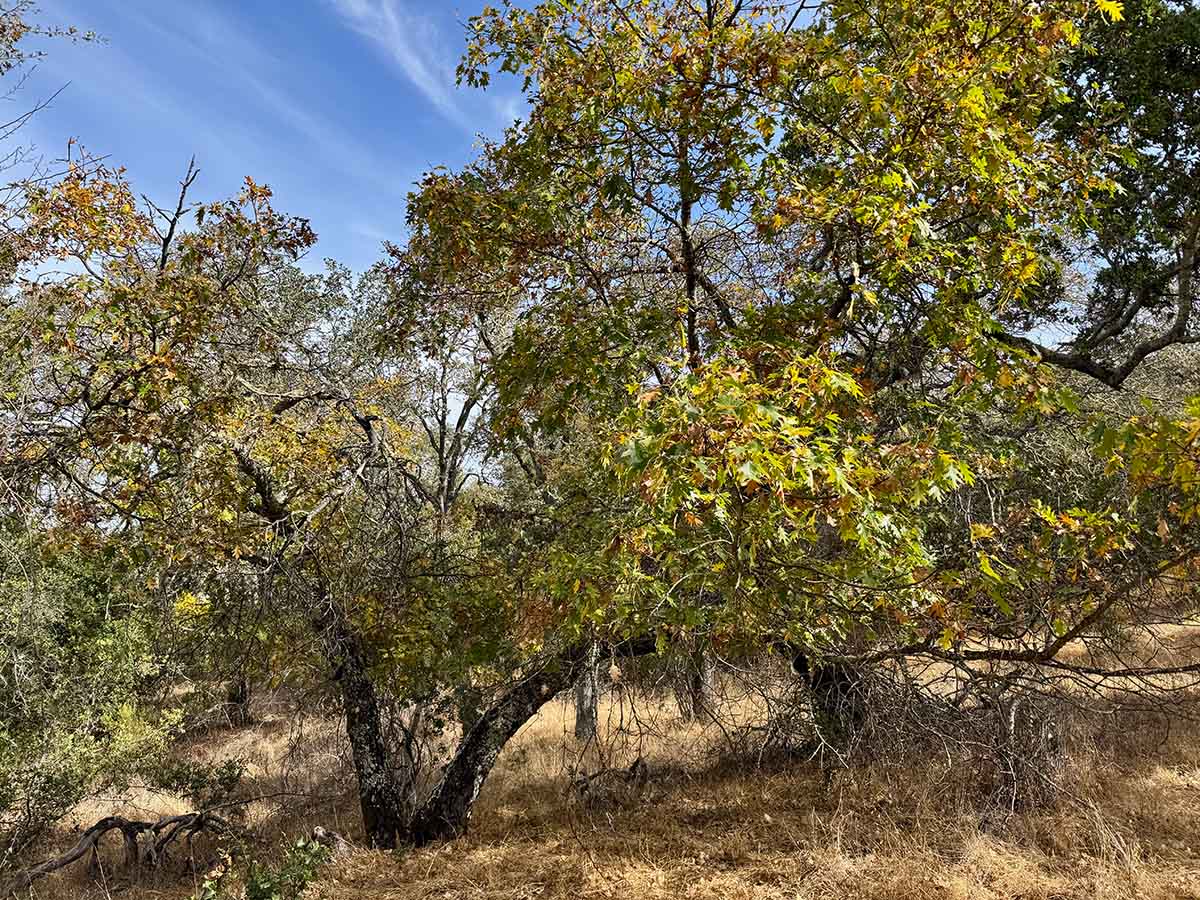
The rough, “notoriously black” bark, the “blackest of all the Black Oaks” – in the words of physician-botanist Albert Kellogg (1813–1887) – gives this most beautiful of higher-elevation deciduous oaks its common name. Yet “gold oak” might have been better, for in autumn its brilliant deep yellow, orange, and russet mantle California’s mountains, rivaled only by the quaking aspens. It is commonly encountered in Yosemite, though the iconic isolated tree on the Valley floor so often photographed with Half Dome rising behind it, usually mistaken for the nearby black oaks, is in fact the last survivor of an avenue of American elms planted in the mid-1800s; it also colors somewhat earlier than the oaks. Black oak occurs locally in the Santa Cruz Mountains, mostly on their eastern slopes. At Jasper Ridge, saplings of black oak are scarce, as with blue oak; older specimens persist in the woodlands just north of the field station, extending west along the hillocks there to Sand Hill Road. Scattered individuals can also be found south of San Francisquito Creek.
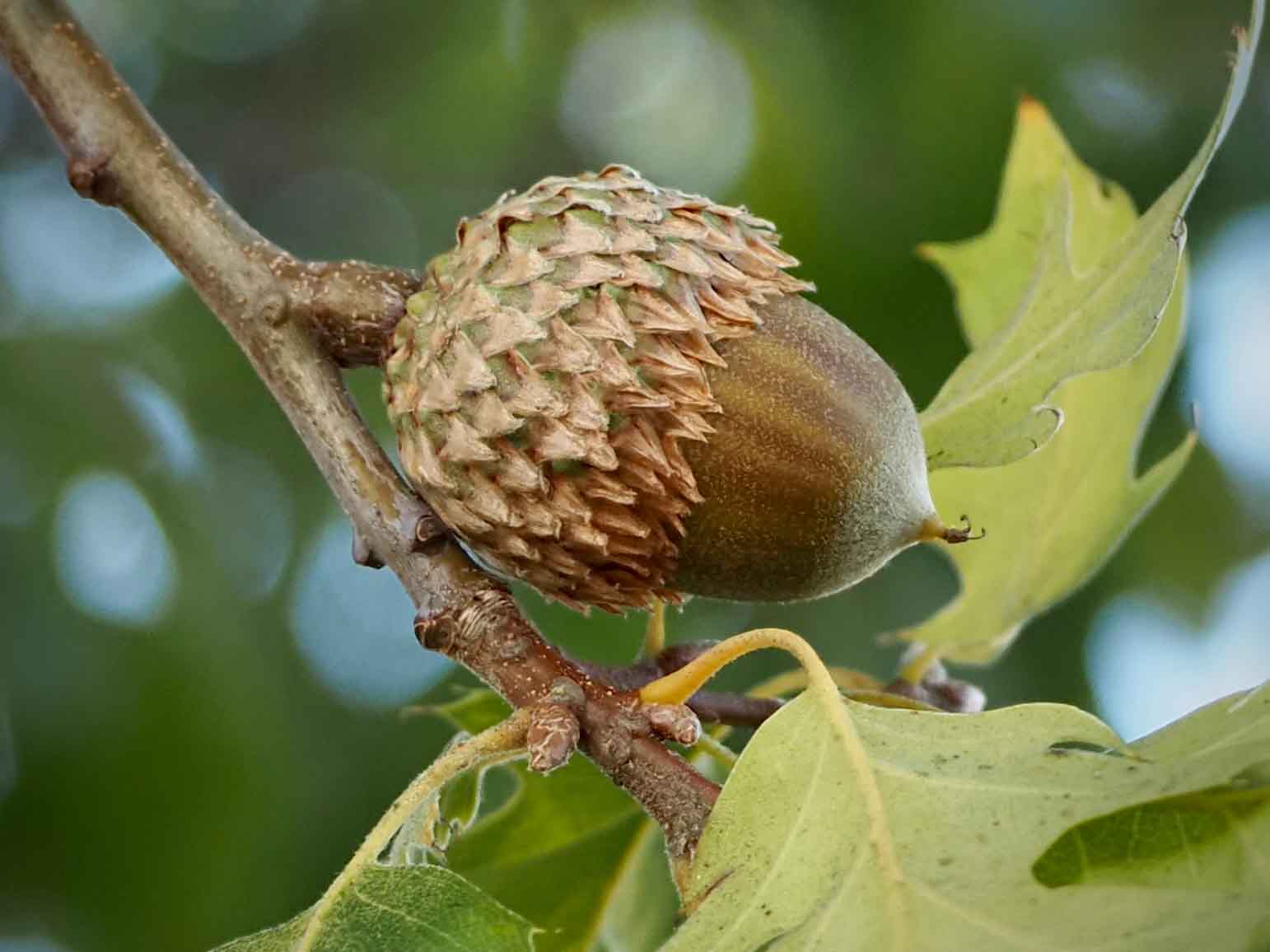
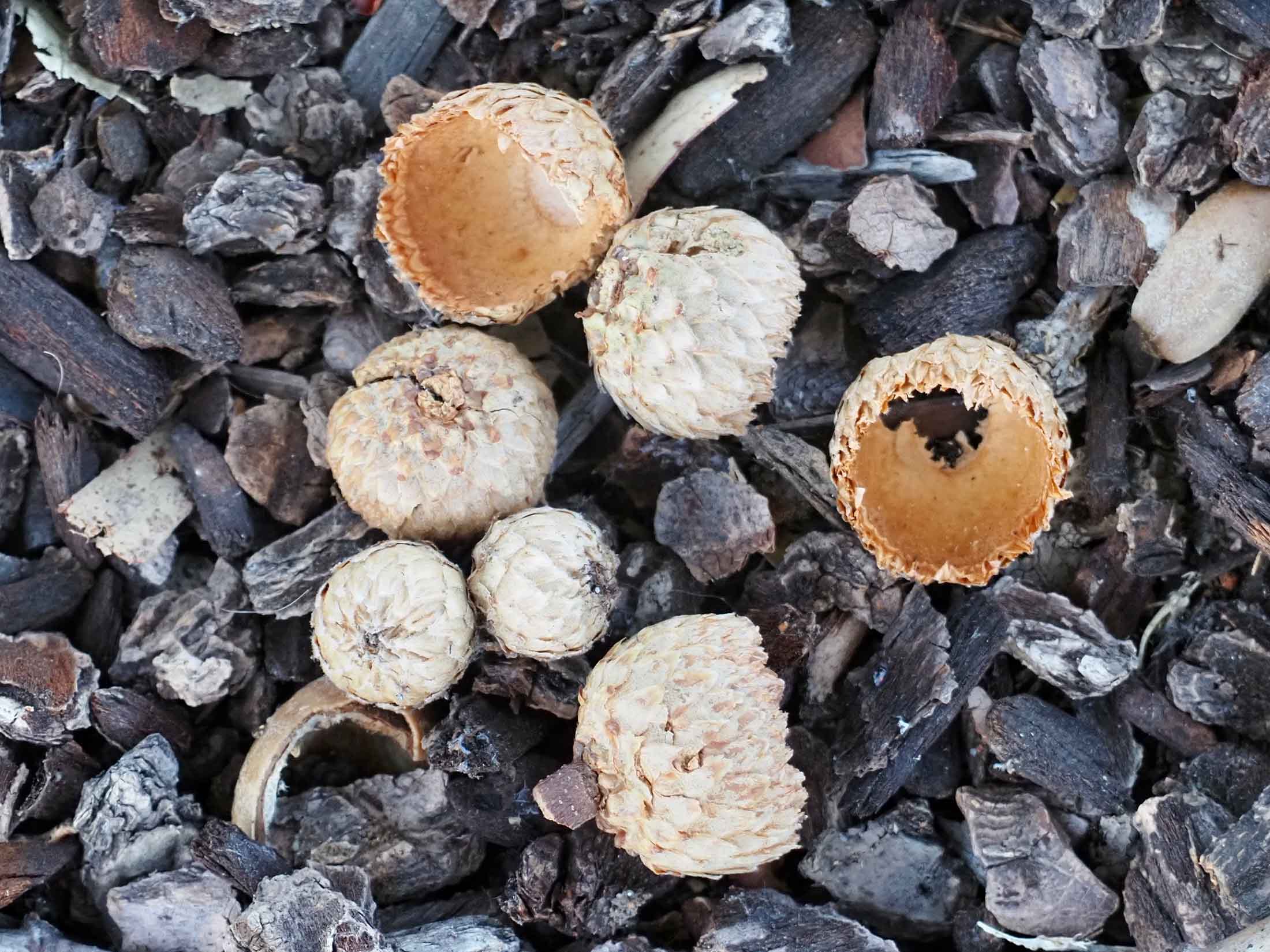
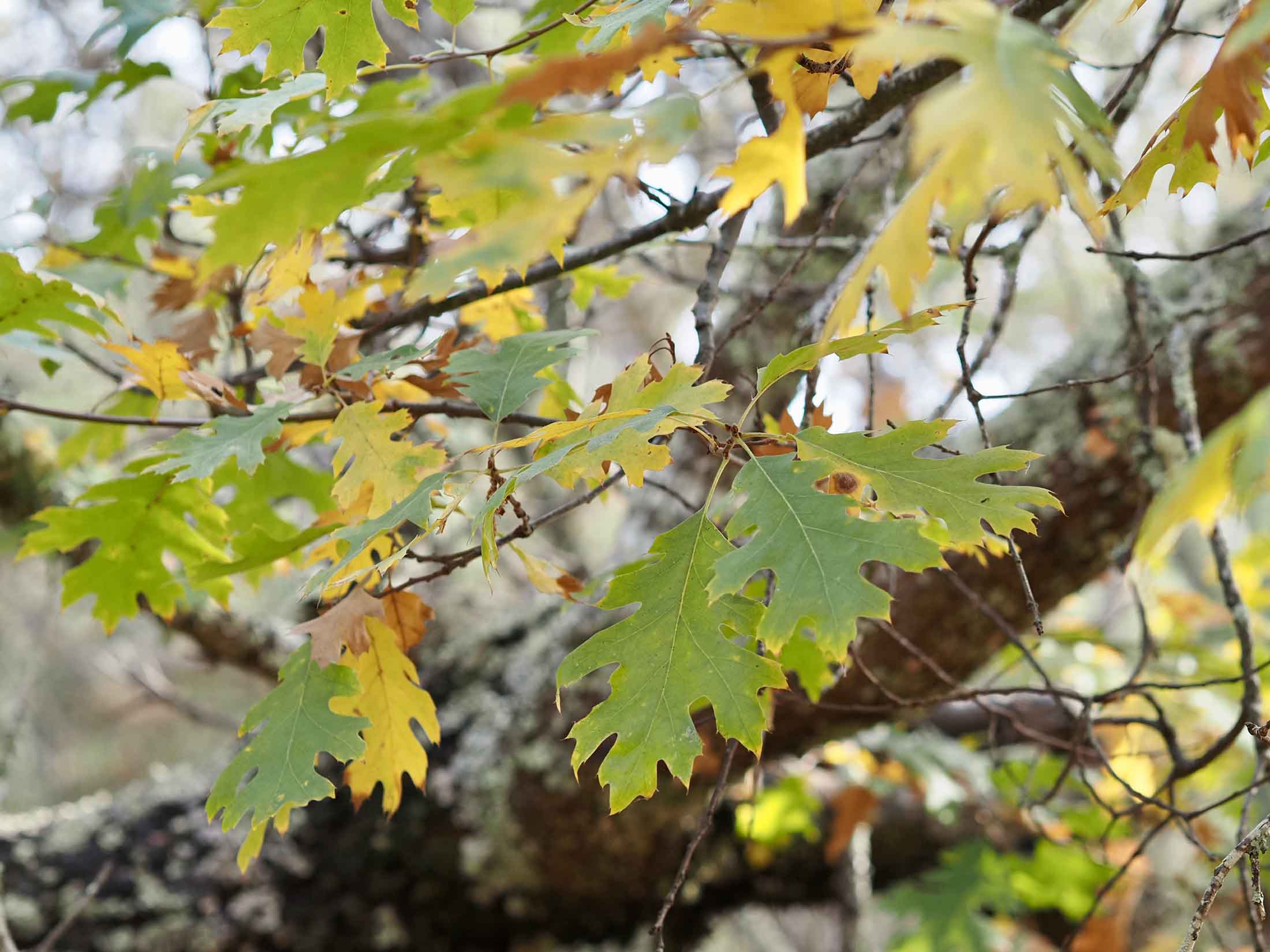
California’s red oaks (Quercus section Lobatae) are evergreen and unlobed, save for Q. kelloggii, whose lustrous leaves resemble those of the prototypical red oak, Q. rubra, but are more deeply cut, more than halfway to the midrib, the lobes tipped with slender bristles that extend the terminating veins. Its stout acorn, about 1½ inches long, sits snugly about halfway into its cup, whose thin, overlapping scales cling to the nut at the cup’s edge as though reluctant to release it.
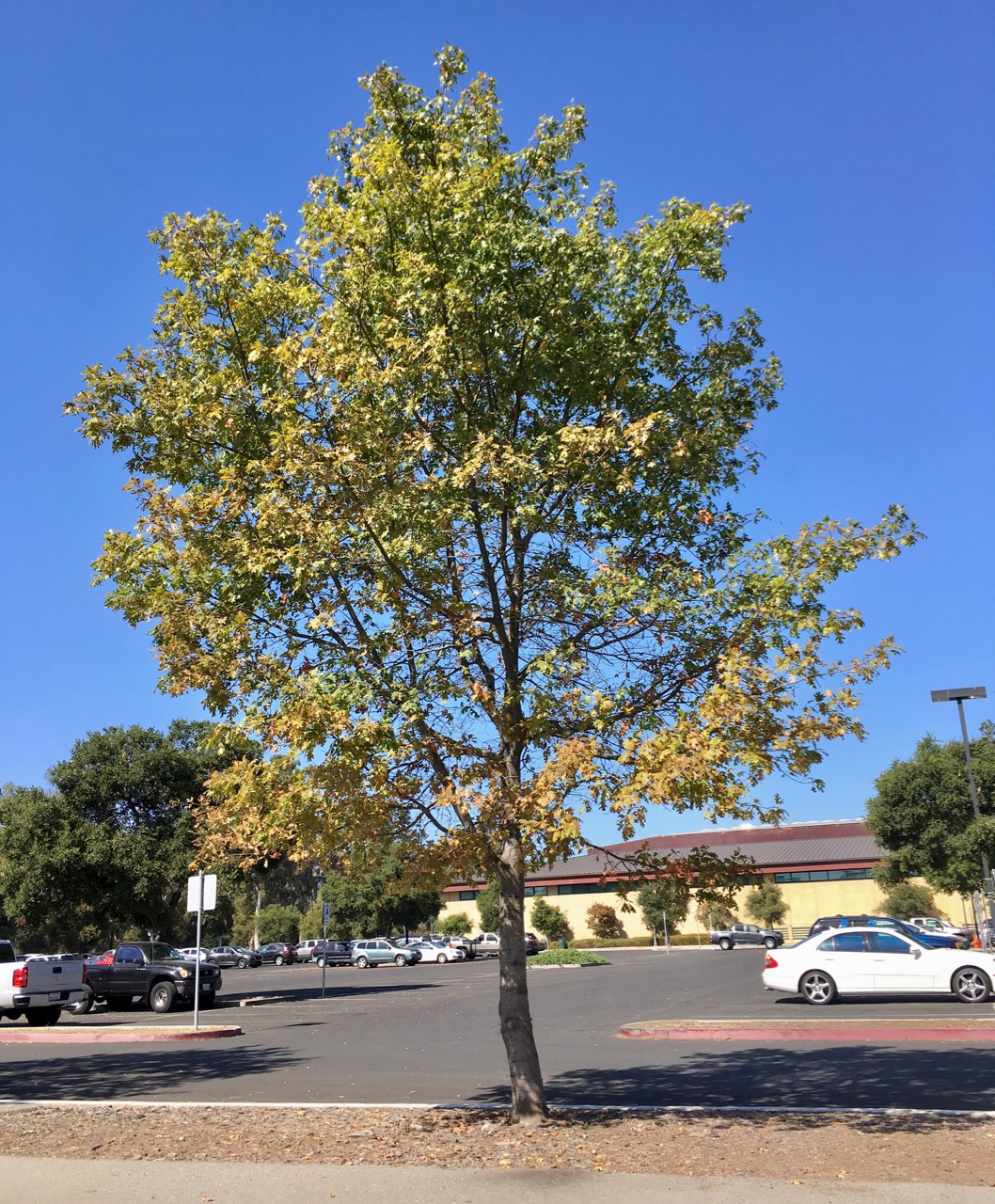
On campus the black oaks have not attained anything approaching majestic stature. A row endures on Bonair Siding at the edge of the Maples Pavilion parking lot. A few are scattered outside the northwest and southeast corners of Knight Management Center and around the pathway south of Center for Academic Medicine; they also serve as the street tree from 700–750 Welch Road. Good-sized specimens stand along Stock Farm Road, between Sand Hill and Oak Road, with more nearby. The most noteworthy grove is in the park opposite 820 Lathrop Drive, likely dating to the park’s initial 1962 planting.
Gallery
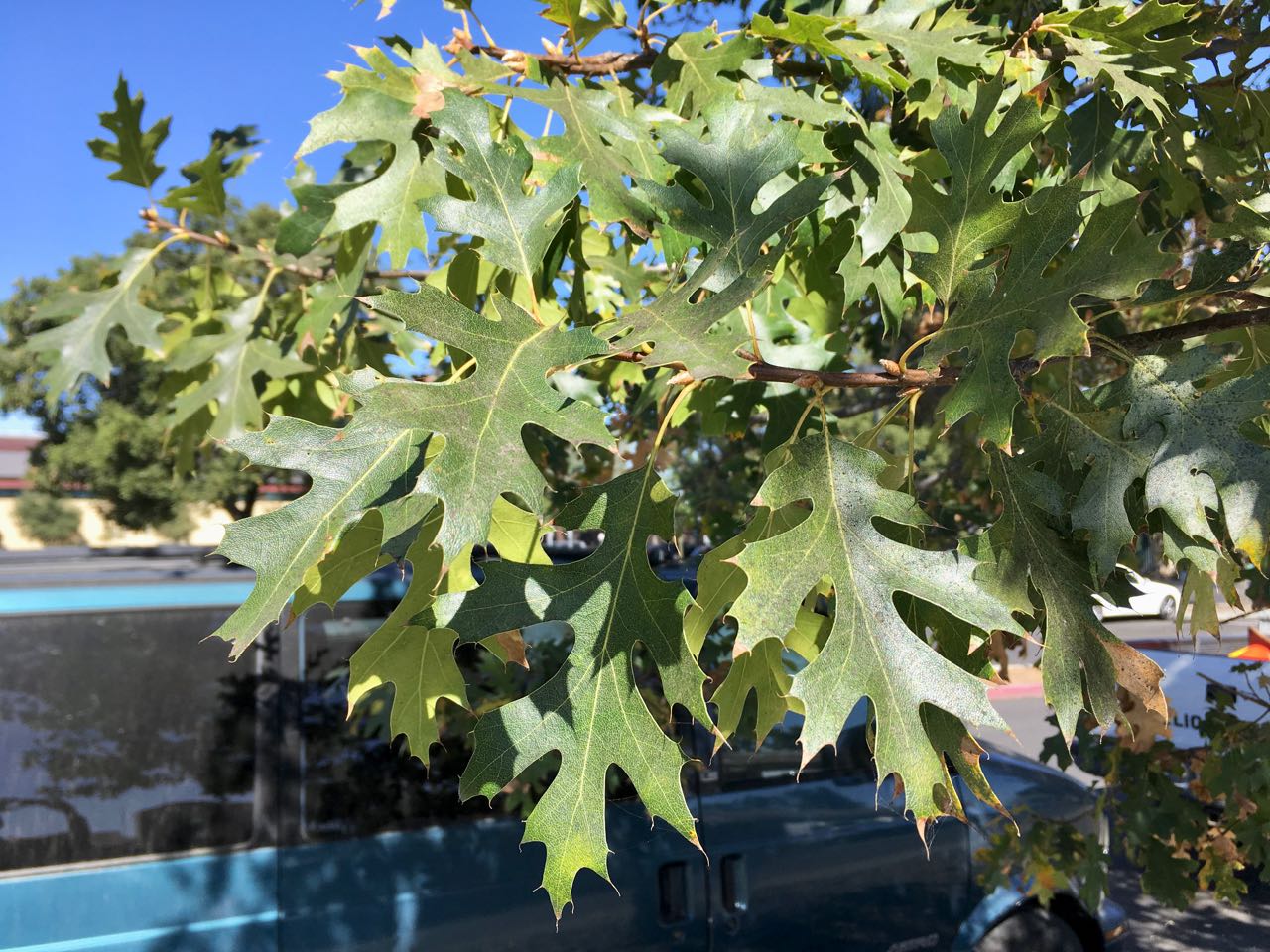
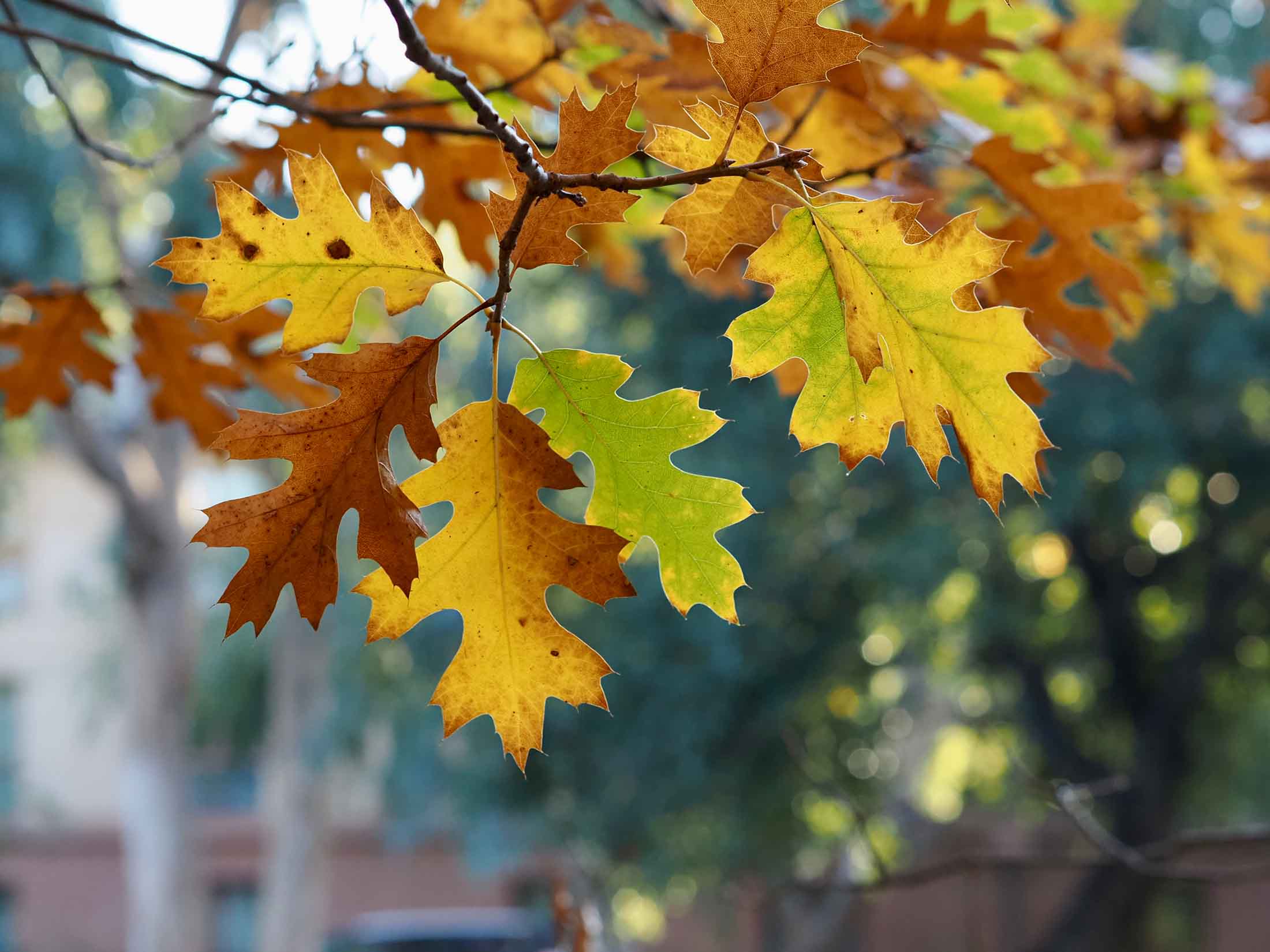
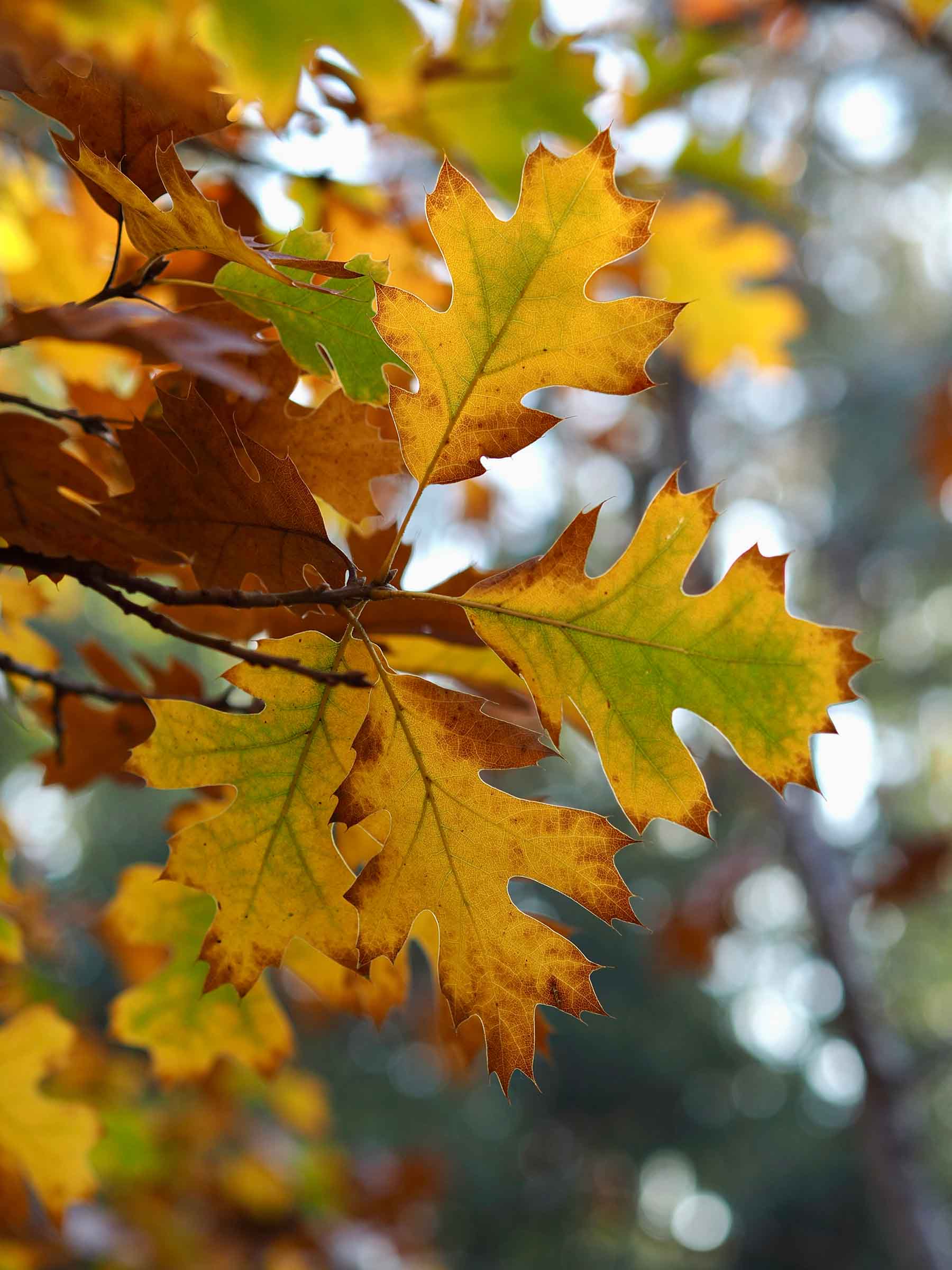
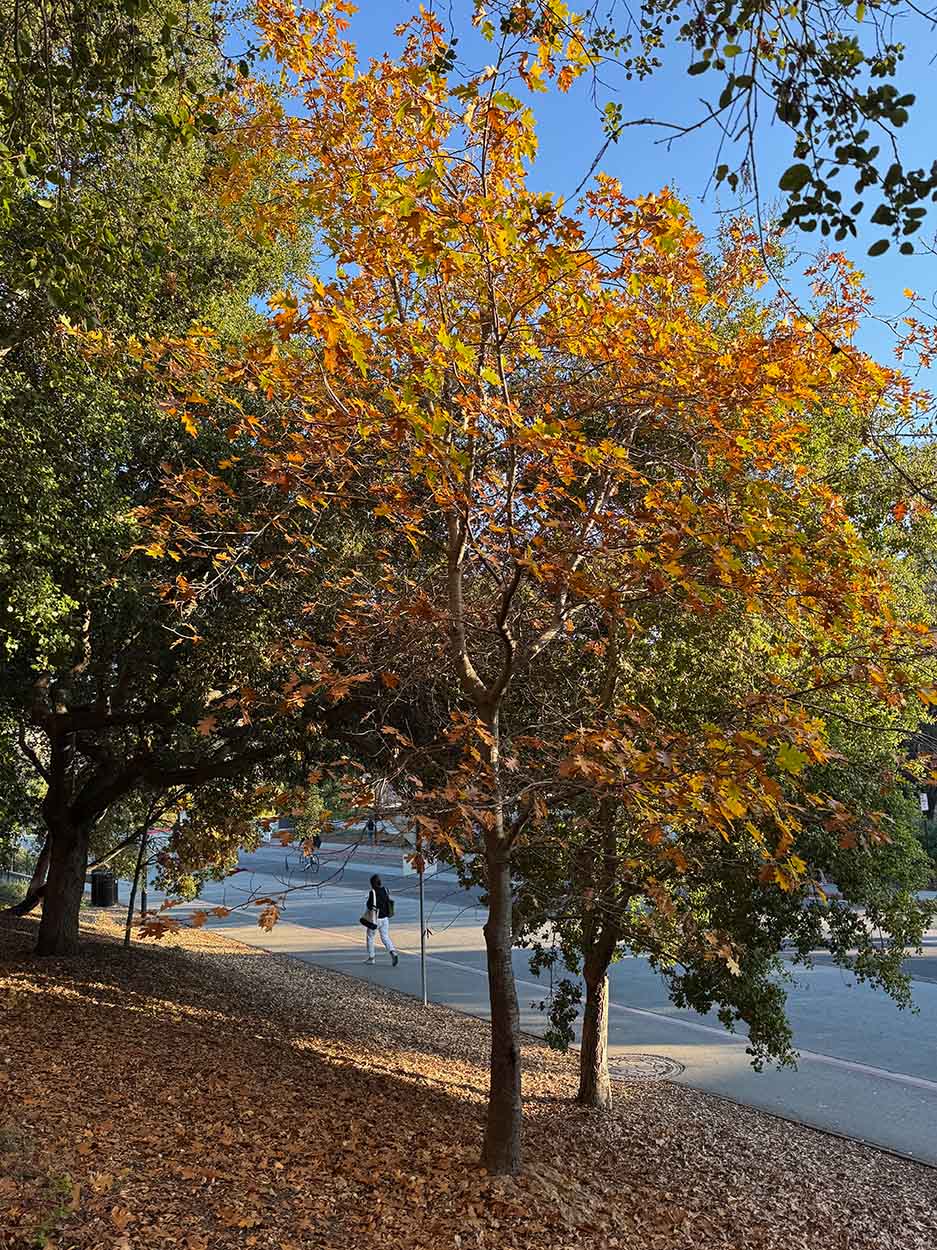
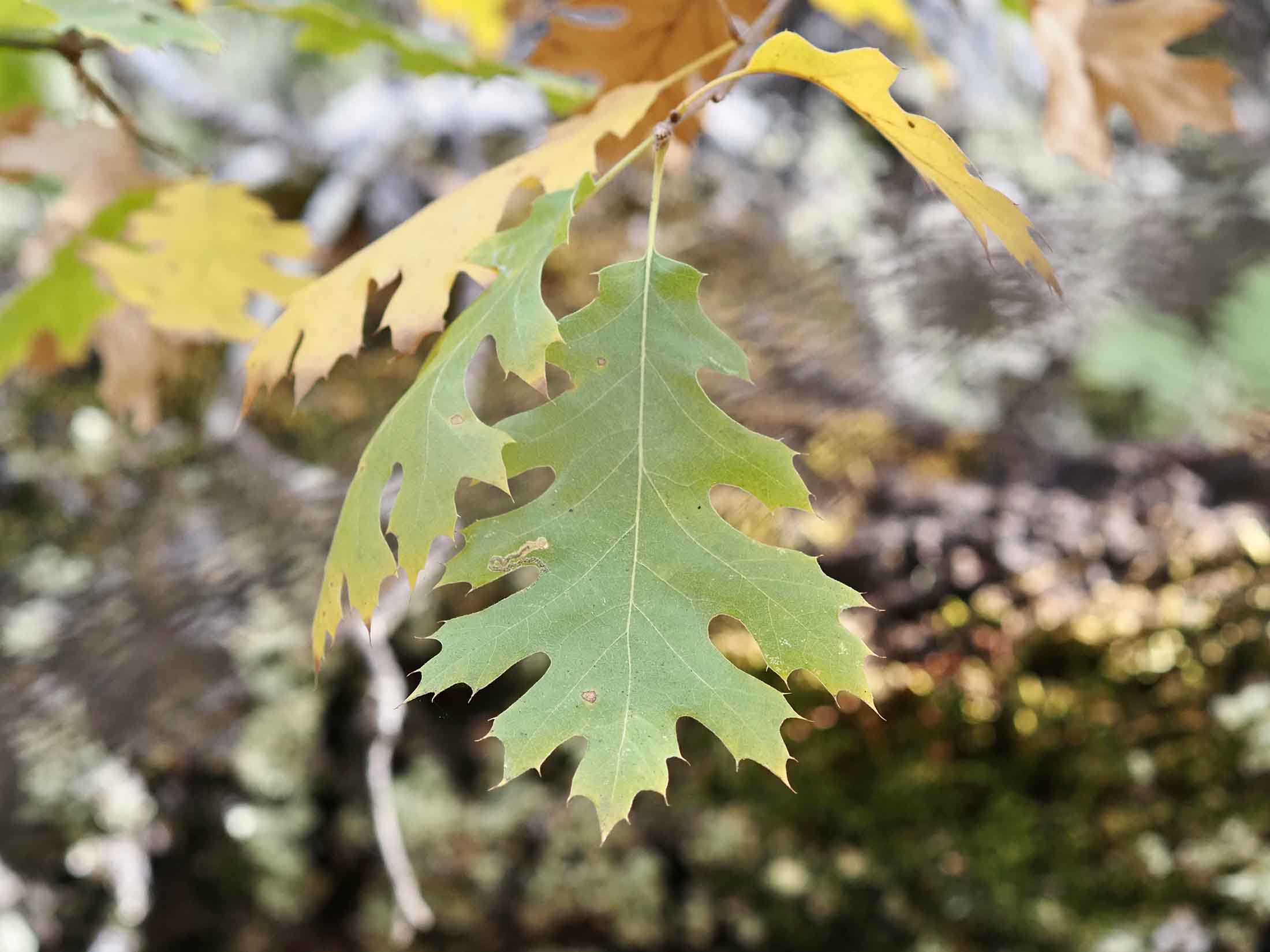
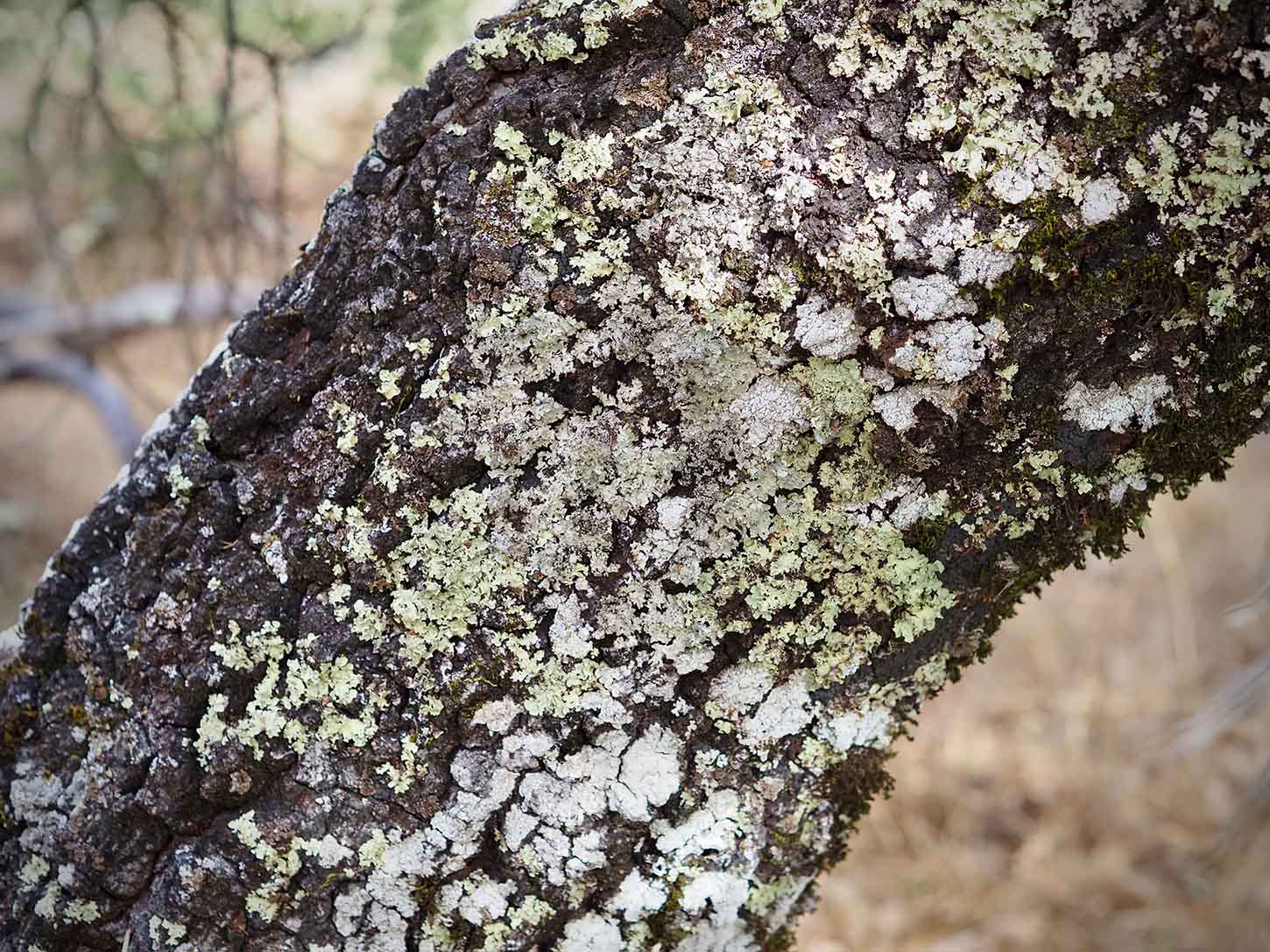
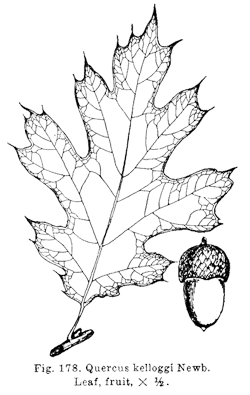
Illustrations: Jasper Ridge plant photo archive.
- Main References for New Tree Entries.
- Brockman, C. Frank. 1947. Broadleaved Trees of Yosemite National Park. Yosemite Nature Notes 26 (1) (January).
- Kellogg, Albert. 1882. Forest Trees of California. Sacramento: J. D. Young.
- Scott, Geraldine Knight. 1962. “Planting Plan: Hilltop Park.” Stanford Maps & Records Archives. (Re. grove in Lathrop Park; 11–19 Q. kelloggii specified in map for the spot opposite 820 Lathrop Drive.)
About this Entry: Authored Aug 2025 by Sairus Patel. Updated Feb 2026 (SP).

