

Populus nigra ‘Italica’
 Lombardy poplar
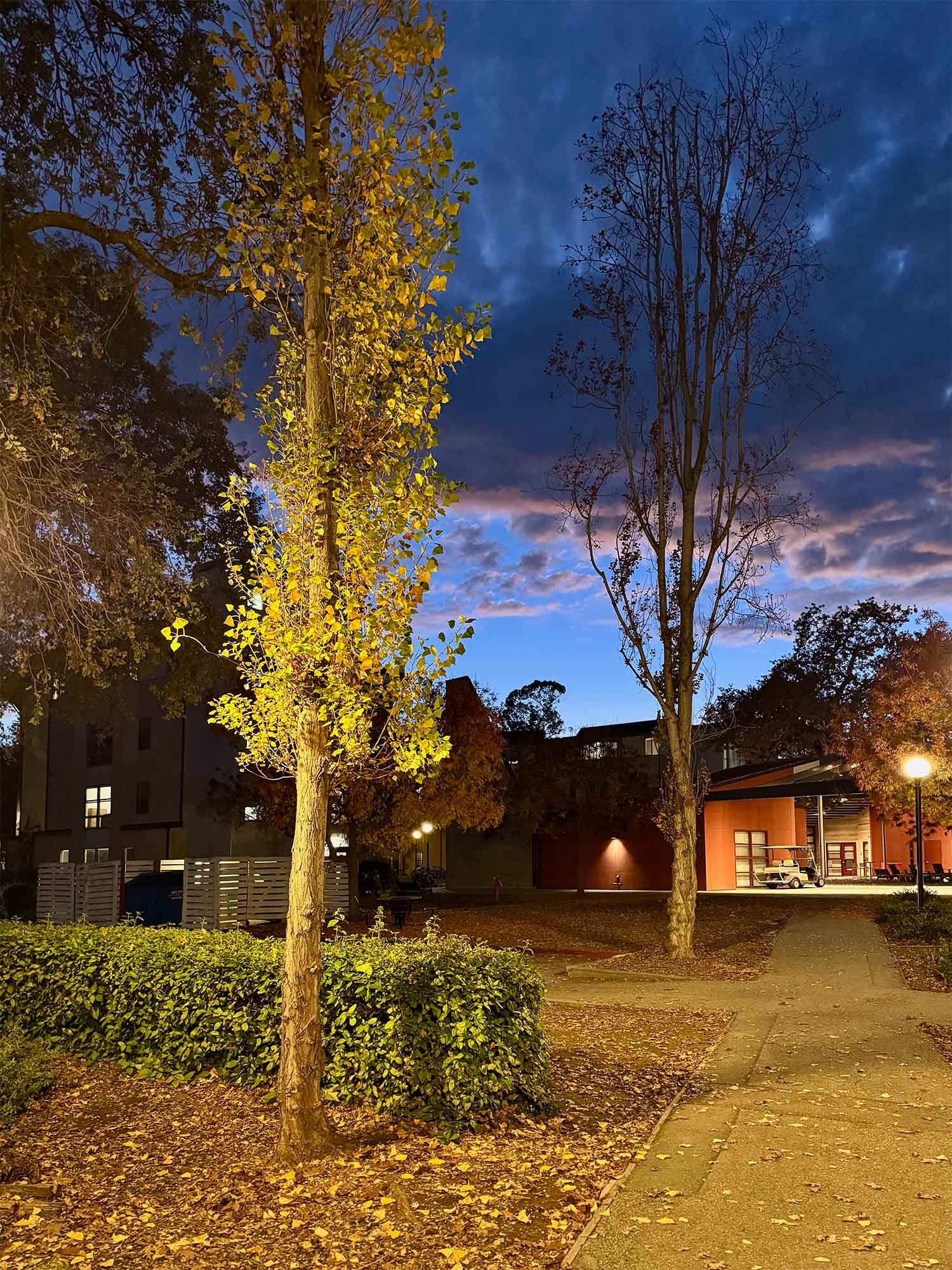
The quintessential narrowly columnar tree of landscapes of yesteryear, Lombardy poplar sends its branches almost straight upward, forming a distinctive silhouette when bare. Its broad, kite-shaped leaves with finely serrated margins are much like those of our native cottonwood, P. fremontii. Fall color, a rich yellow, arrives late. Mature trees develop fluted trunks and gray-black bark, hence the species name nigra. ‘Italica’ is a male clone, thought to trace back to a single mutant tree discovered in Lombardy around the late 17th century, whence it was introduced to other parts of Europe in the early 18th century and reached Philadelphia by 1784.
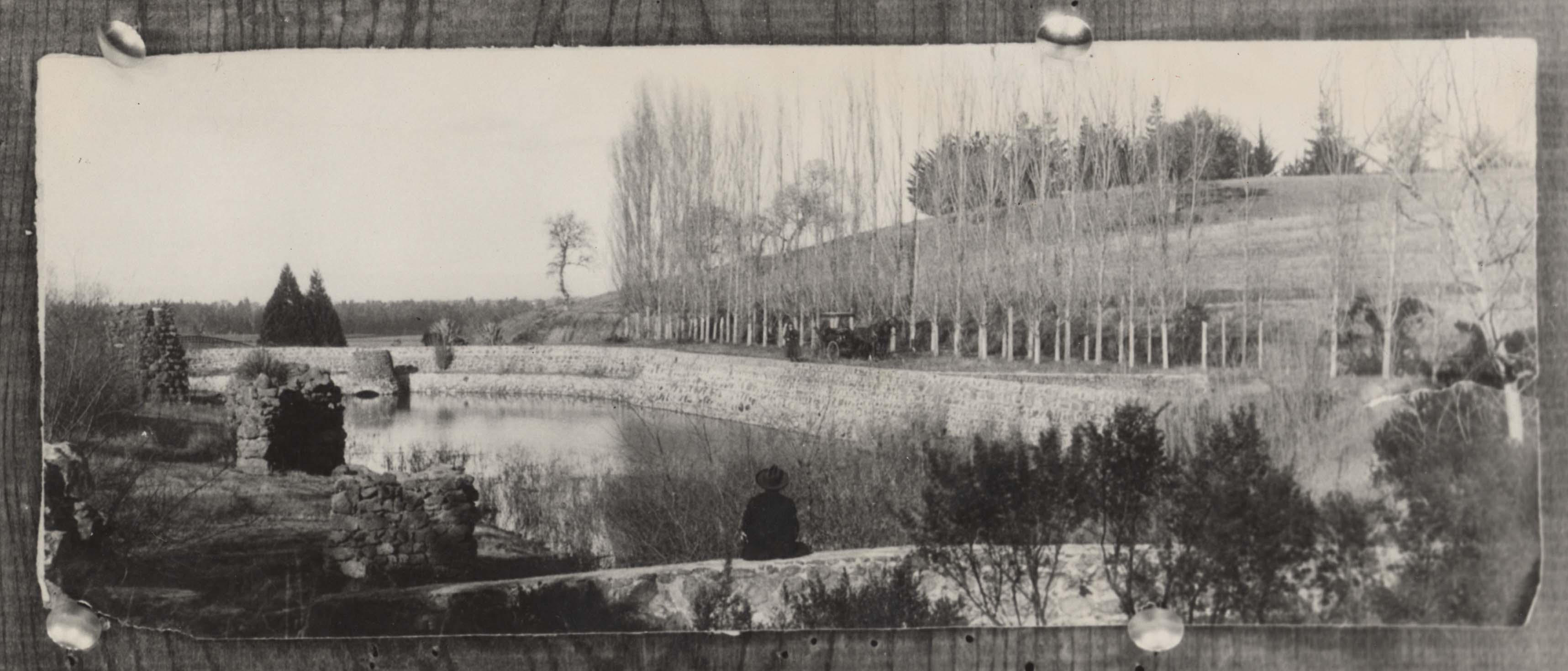
In the late 1870s, French political expatriate Peter Coutts planted rows of Lombardy poplars around the stone-lined lake he constructed in what is now known as Frenchman’s Park on campus. Those poplars, long gone, were commemorated by a row of columnar English oaks during a 2006 renovation of the park. Lombardy poplars also once lined the path from Lyman Commons to the periphery of Governor’s Corner (2011 street view); two remain. A later row, planted in 2009, stands along Deer Creek Road at Page Mill.
Once widely planted, Lombardy poplar is now seldom used, owing to its susceptibility to disease, short lifespan, and aggressively invasive roots.
About this Entry: Authored Dec 2025 by Sairus Patel.

