

Magnolia campbellii
 Campbell’s magnolia
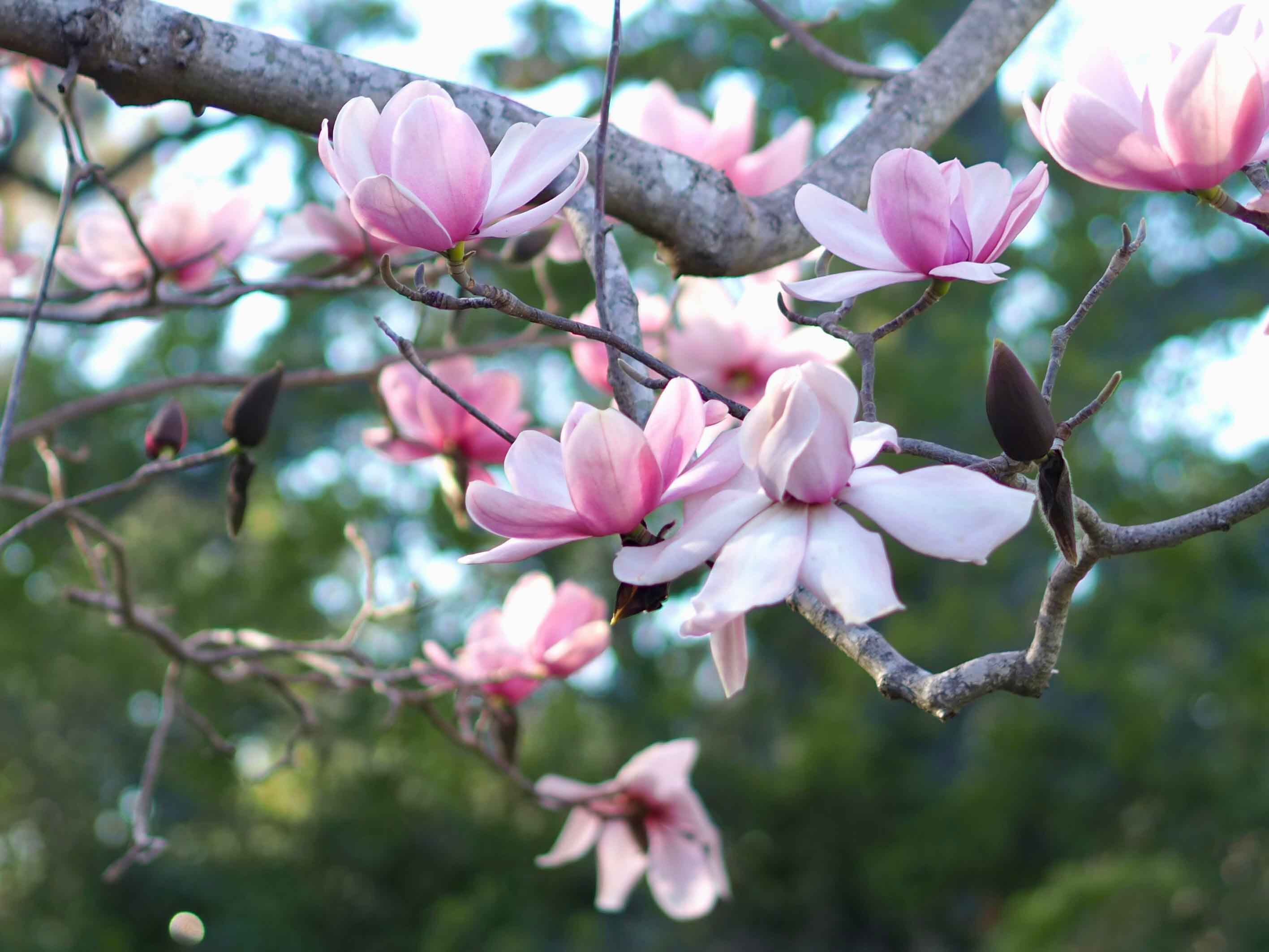
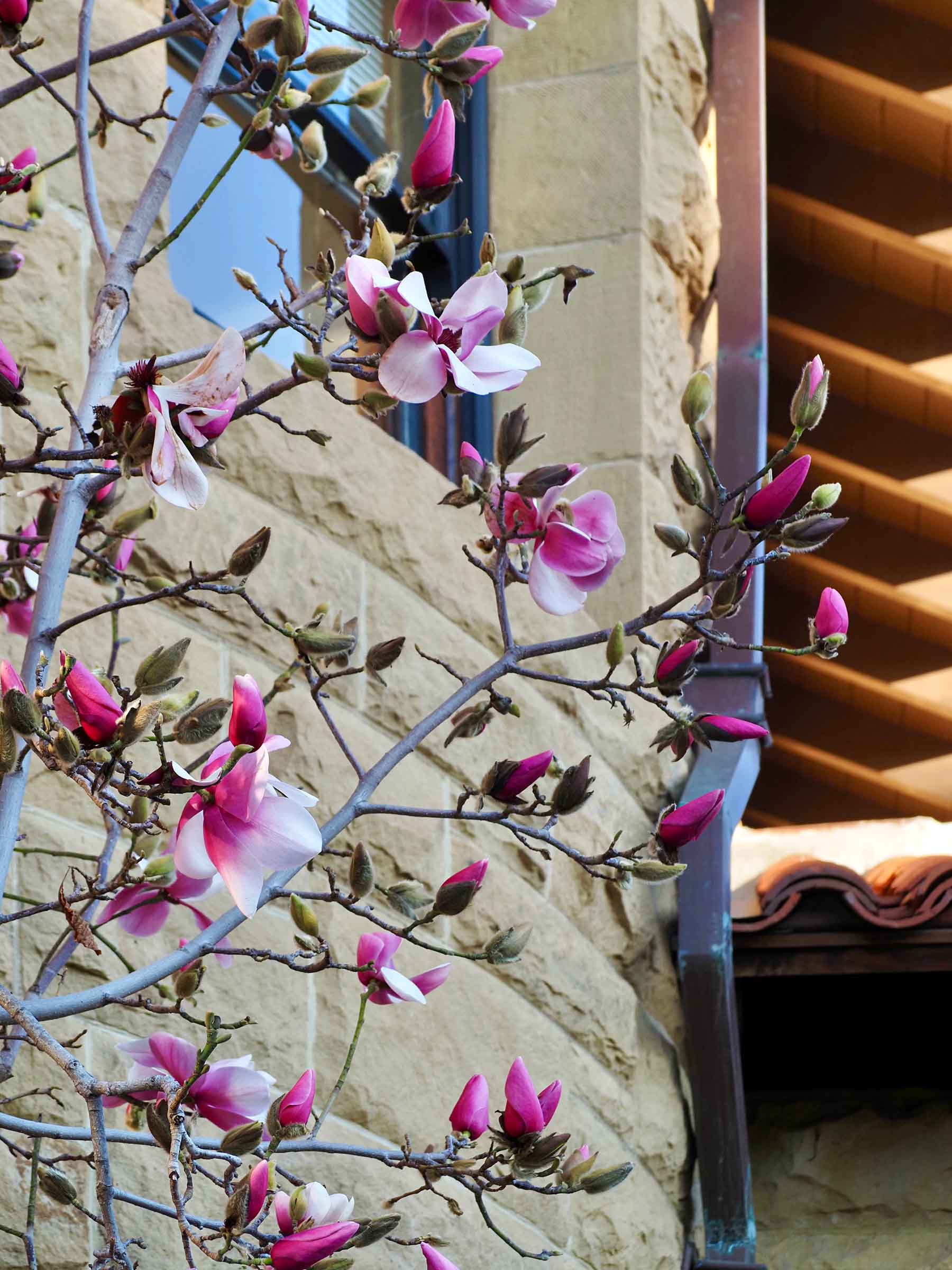
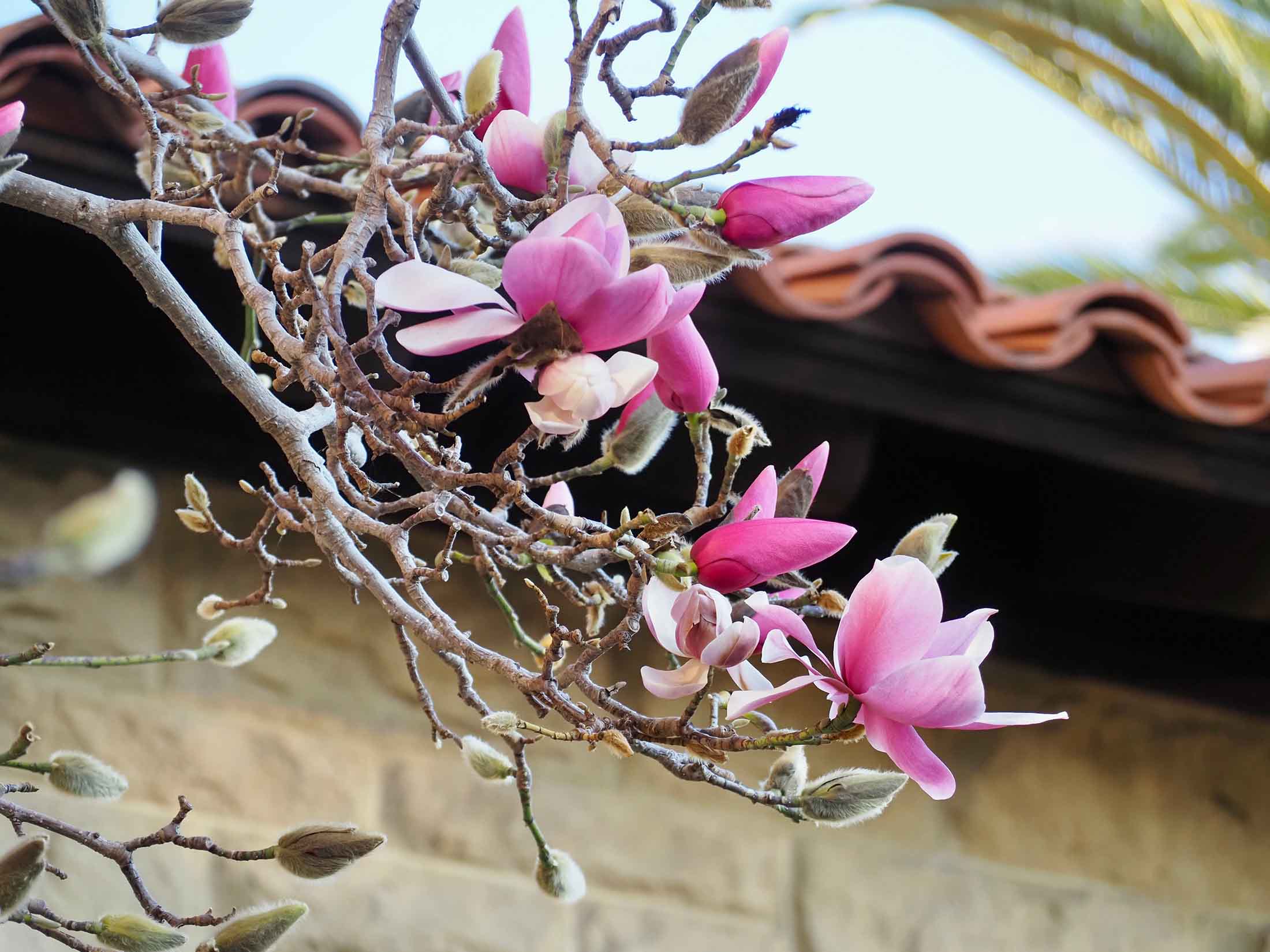
The distinctive “cup-and-saucer” flower marks this uncommon deciduous magnolia: the outermost tepals extend almost horizontally, while the inner ones remain more or less erect, modestly concealing the reproductive parts from view. In the United States, the first of this species to flower was a specimen in the San Francisco Botanical Garden in 1940.
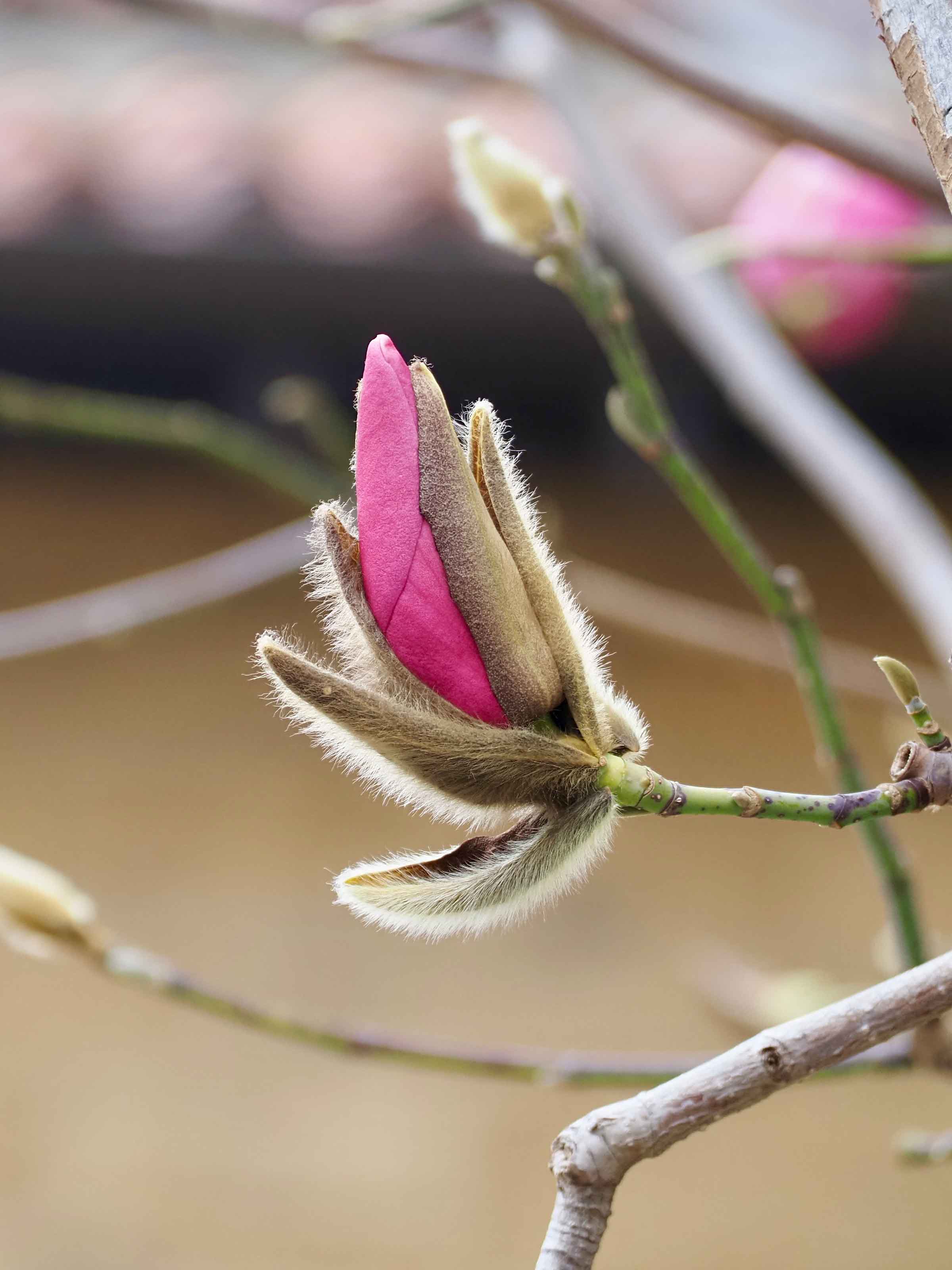
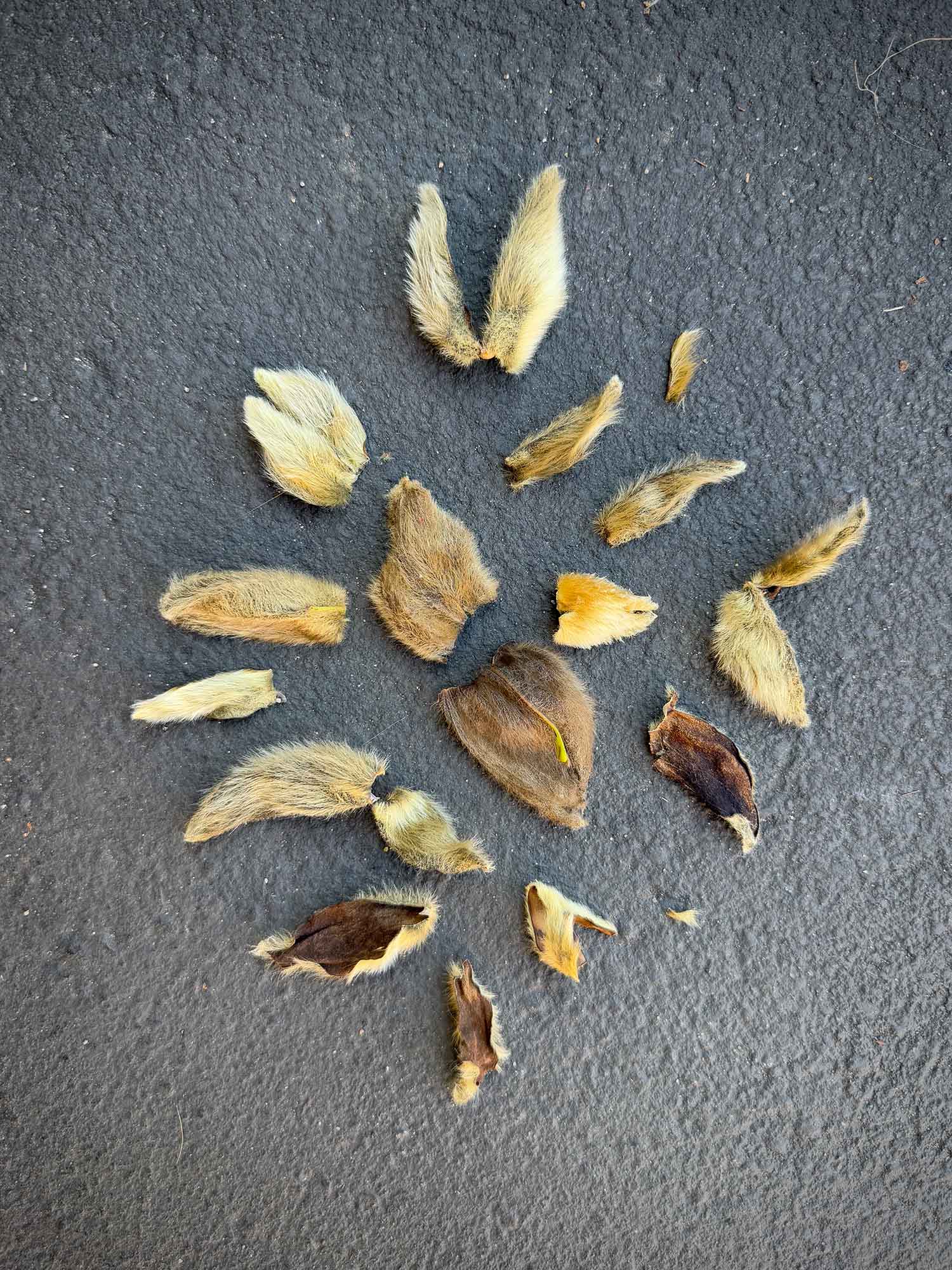
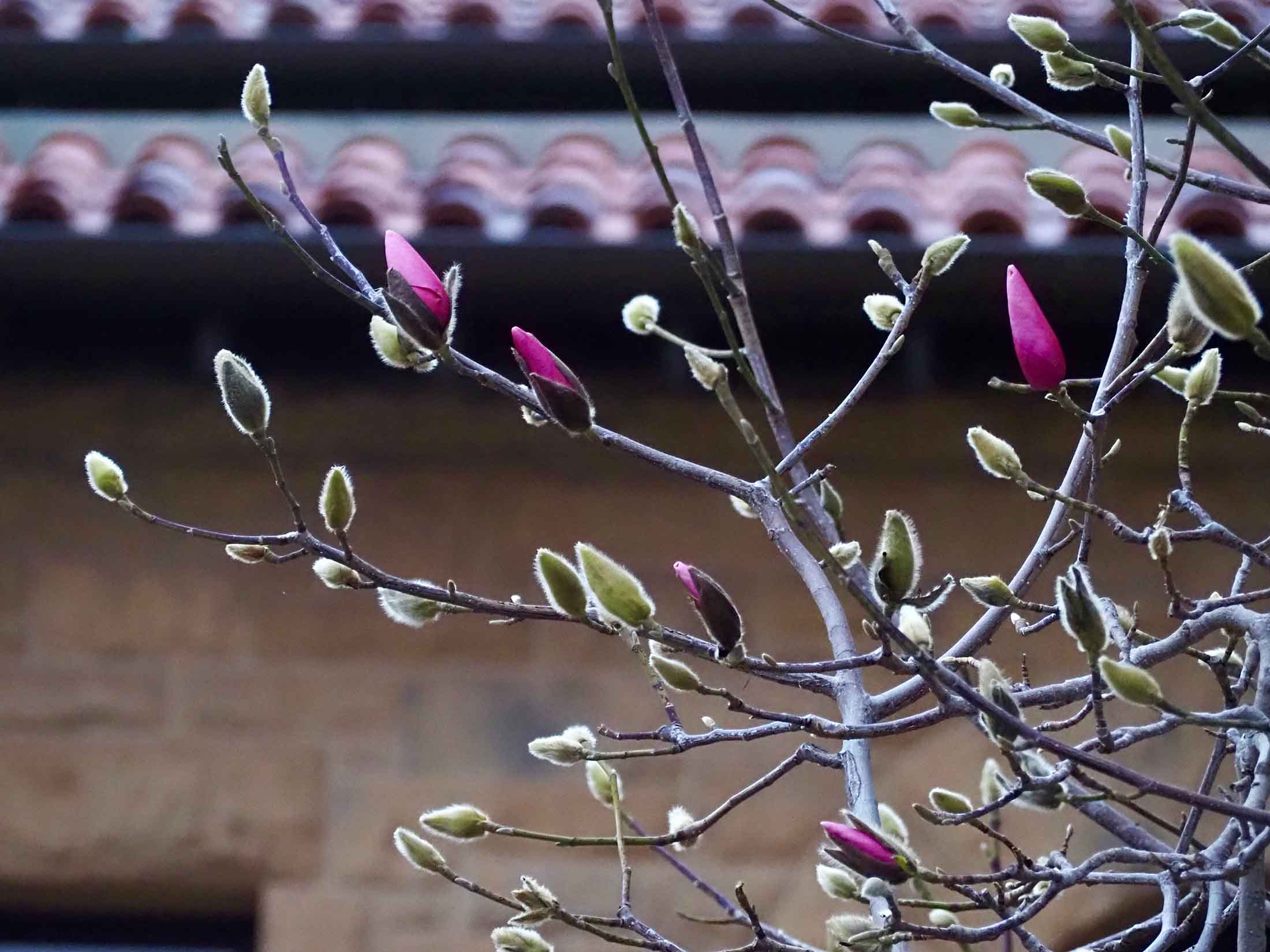
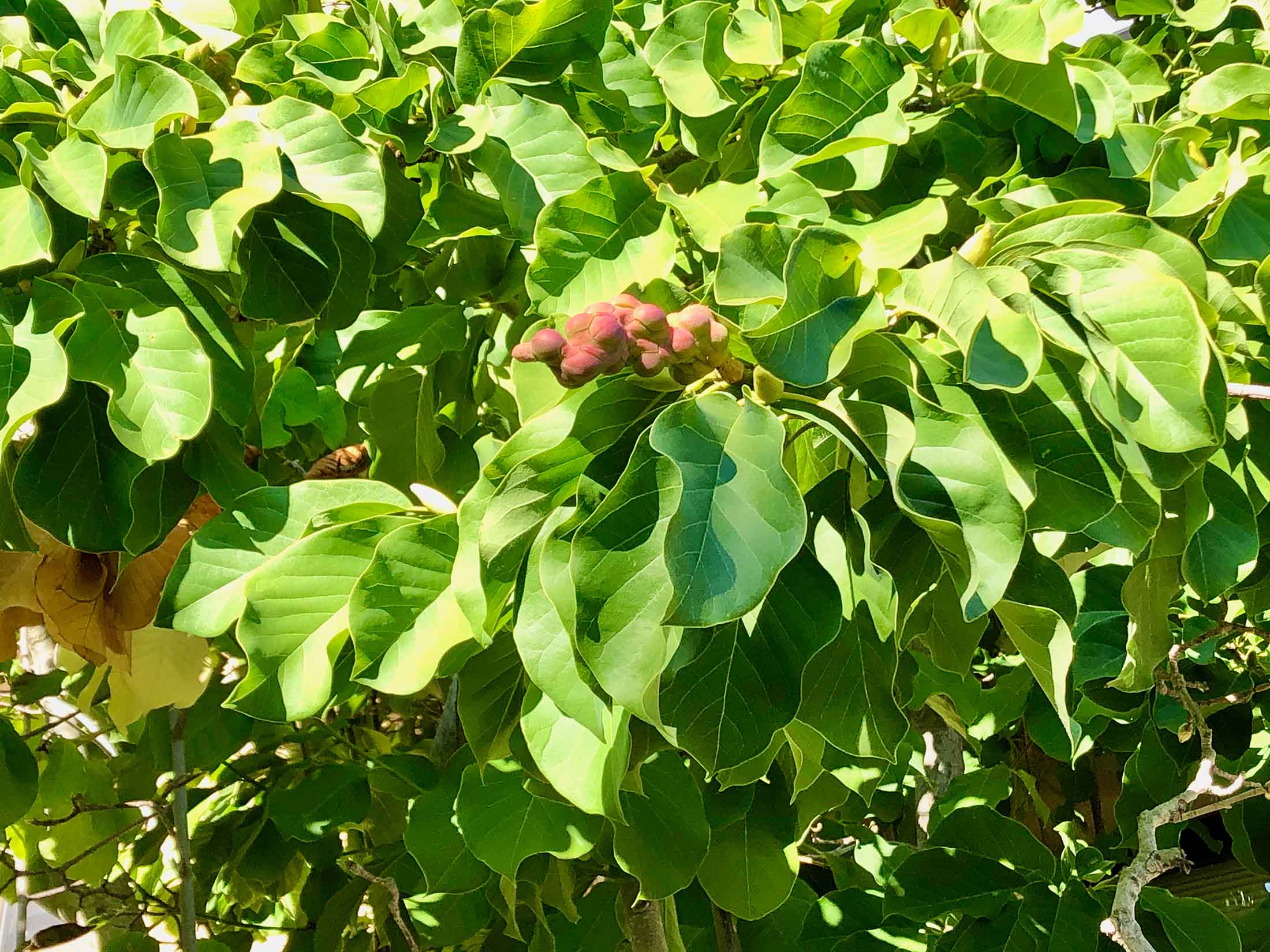
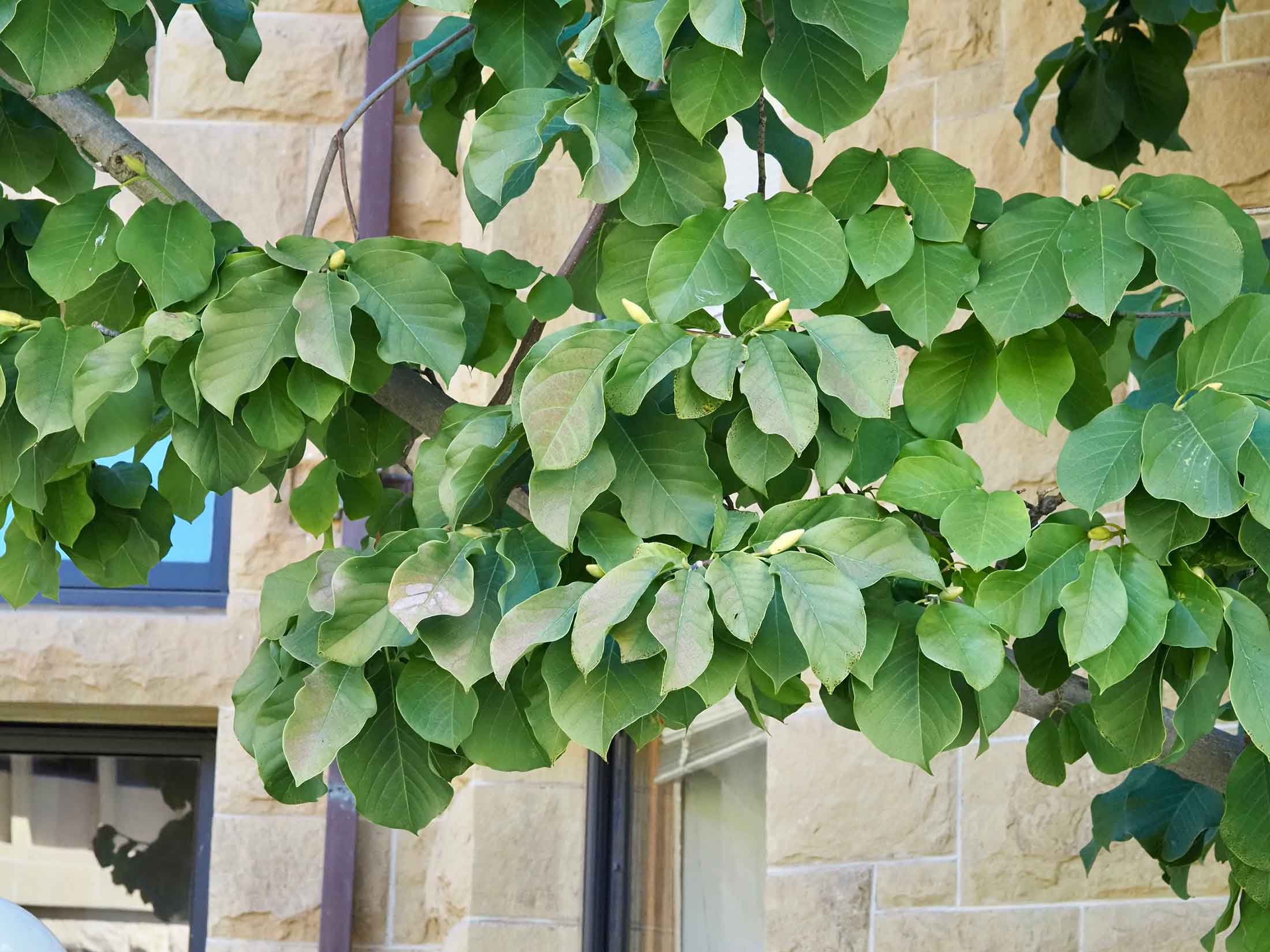
If you wander into the History Corner courtyard during winter break, you may witness the earliest of campus’s magnolia blossoms, on the sole M. campbellii on central campus. Cupped flowers, pink on the outside and white within, emerge from the upright, silvery-trunked specimen against Building 200, contrasting handsomely with the buff sandstone, sometimes as early as Christmas Day. As they develop, the outer tepals spread apart. The silky bud scales that protect the flower buds fall away intact, making irresistible collectibles – soft, downy, and uncannily reminiscent of rabbit ears. A saucer magnolia nearby buds heavily.
Two further trees, a paler pink, stand near the north corner of Lou Henry Hoover House, breaking into bloom just after mid-January; here the “saucer” tepals droop more emphatically. In Palo Alto, a giant on the lawn northeast of Rinconada Library shows the same melting saucer form, its ivory flowers opening at the very start of the year.
Gallery
About this Entry: Authored Jan 2026 by Sairus Patel. Updated Feb 2026 (SP).

