

Juglans hindsii × J. regia
 Paradox walnut


A hybrid of our native Northern California walnut (J. hindsii) and the common walnut of western Asia (J. regia), Paradox was developed by master horticulturist Luther Burbank in the late 1800s. It arises naturally as well, where pollen from orchard-grown J. regia drifts into nearby stands of our native walnut; such spontaneous hybrids have been spotted along the Sacramento River.
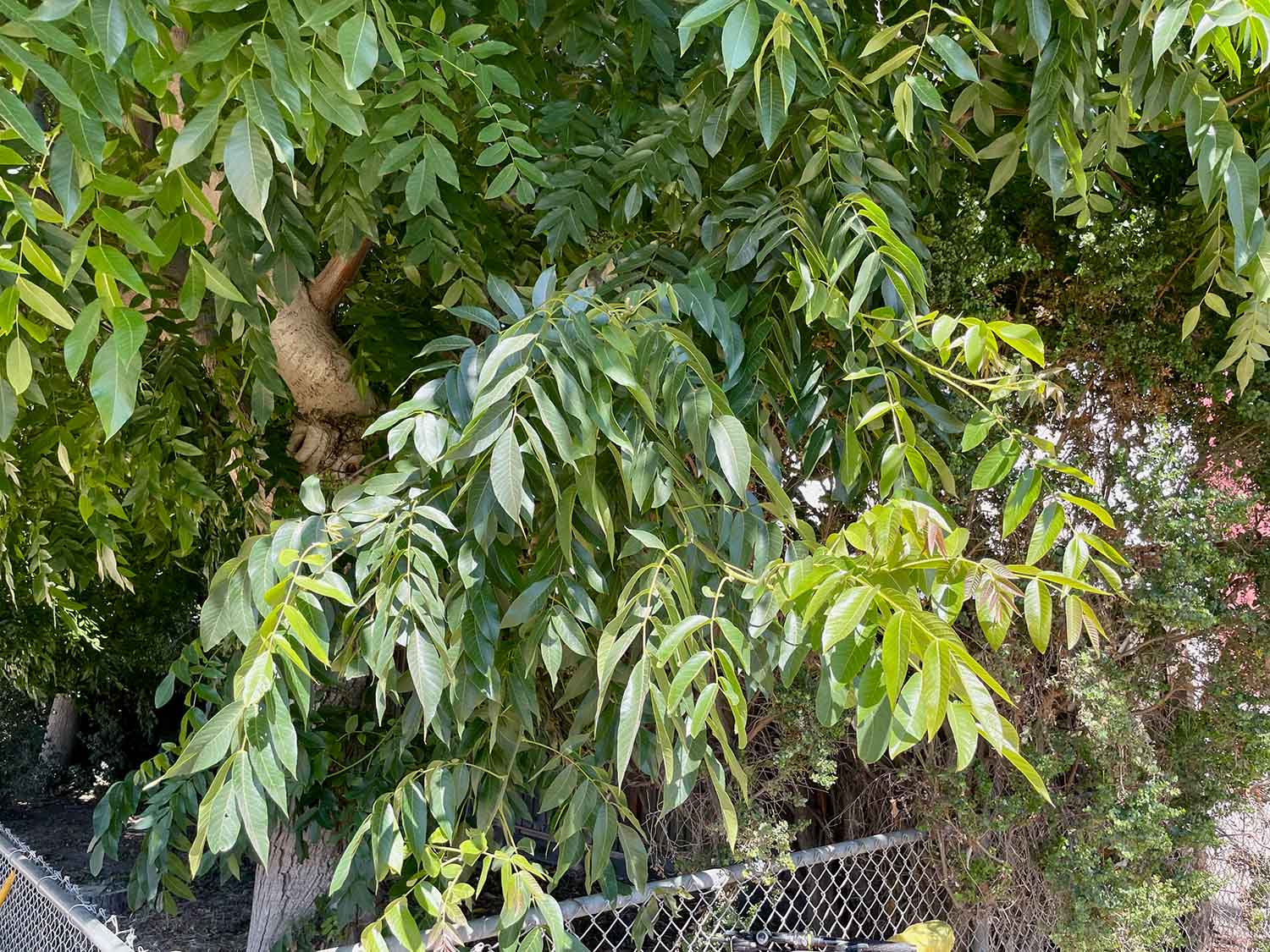
Primarily employed as a vigorous rootstock for J. regia, Paradox displays foliage of an intermediate cast – typically with more leaflets than J. regia, yet narrower, and edged with minute teeth. (J. regia has smooth leaf margins, though young leaves may show faint serration.)
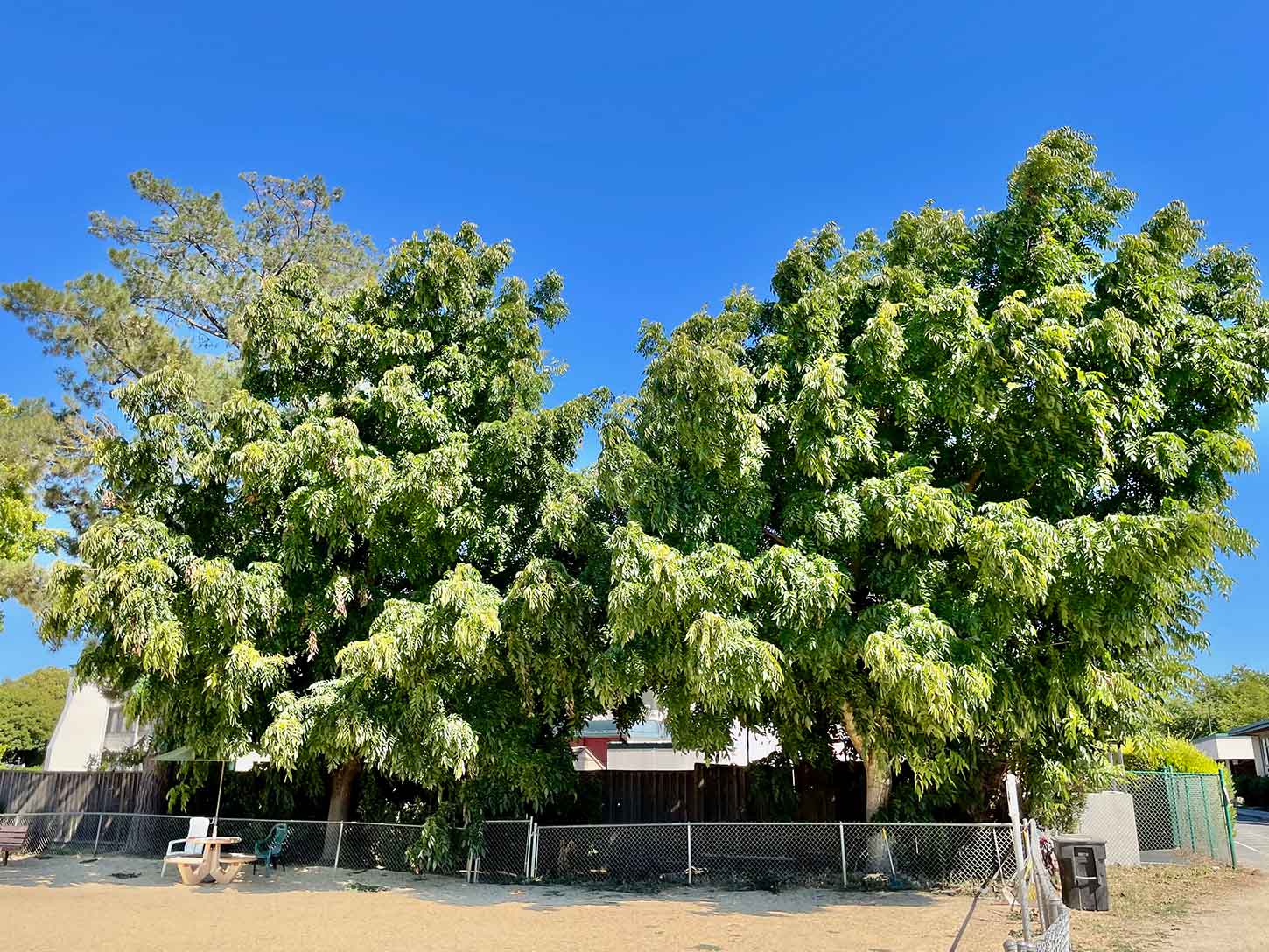
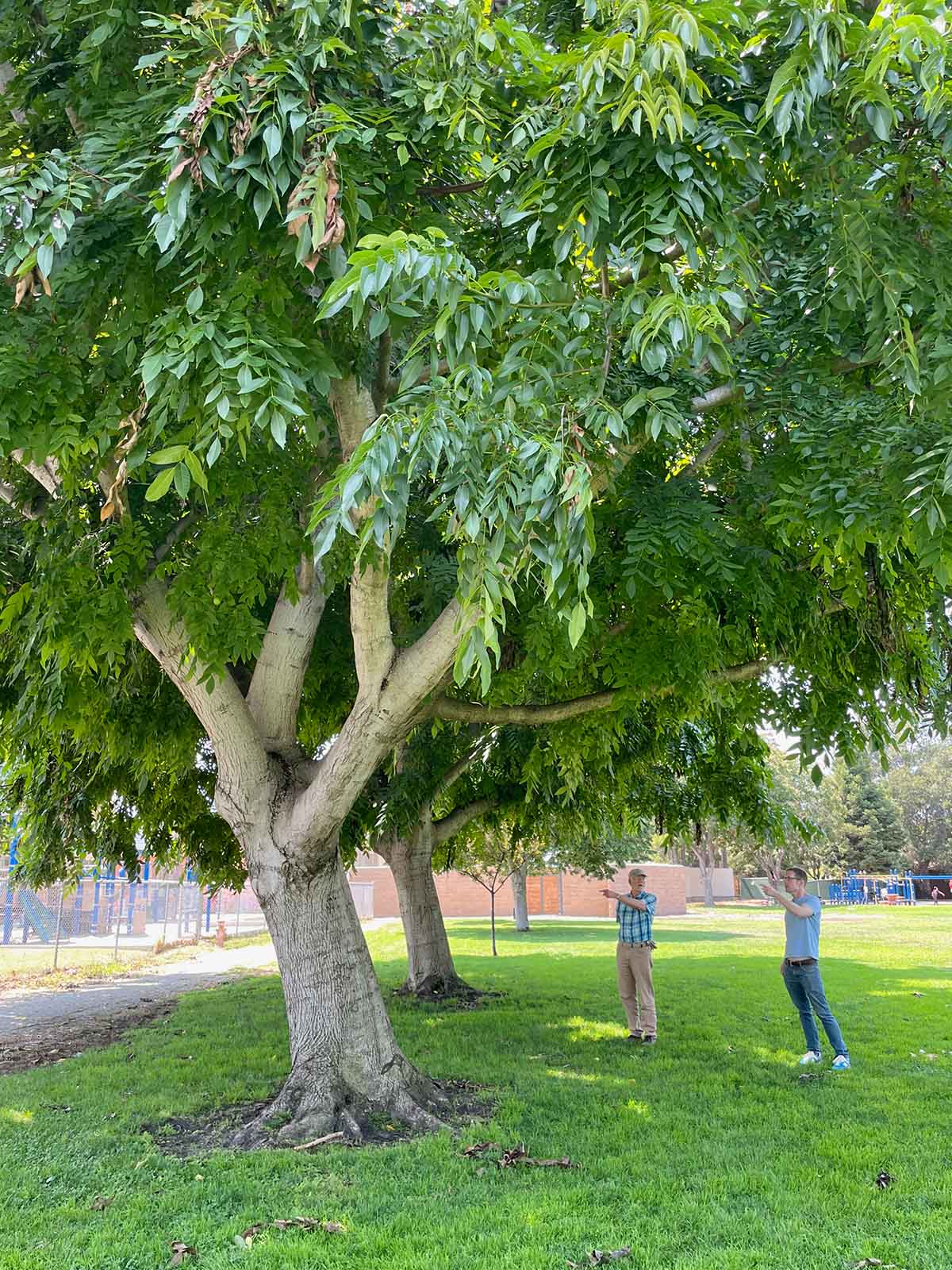
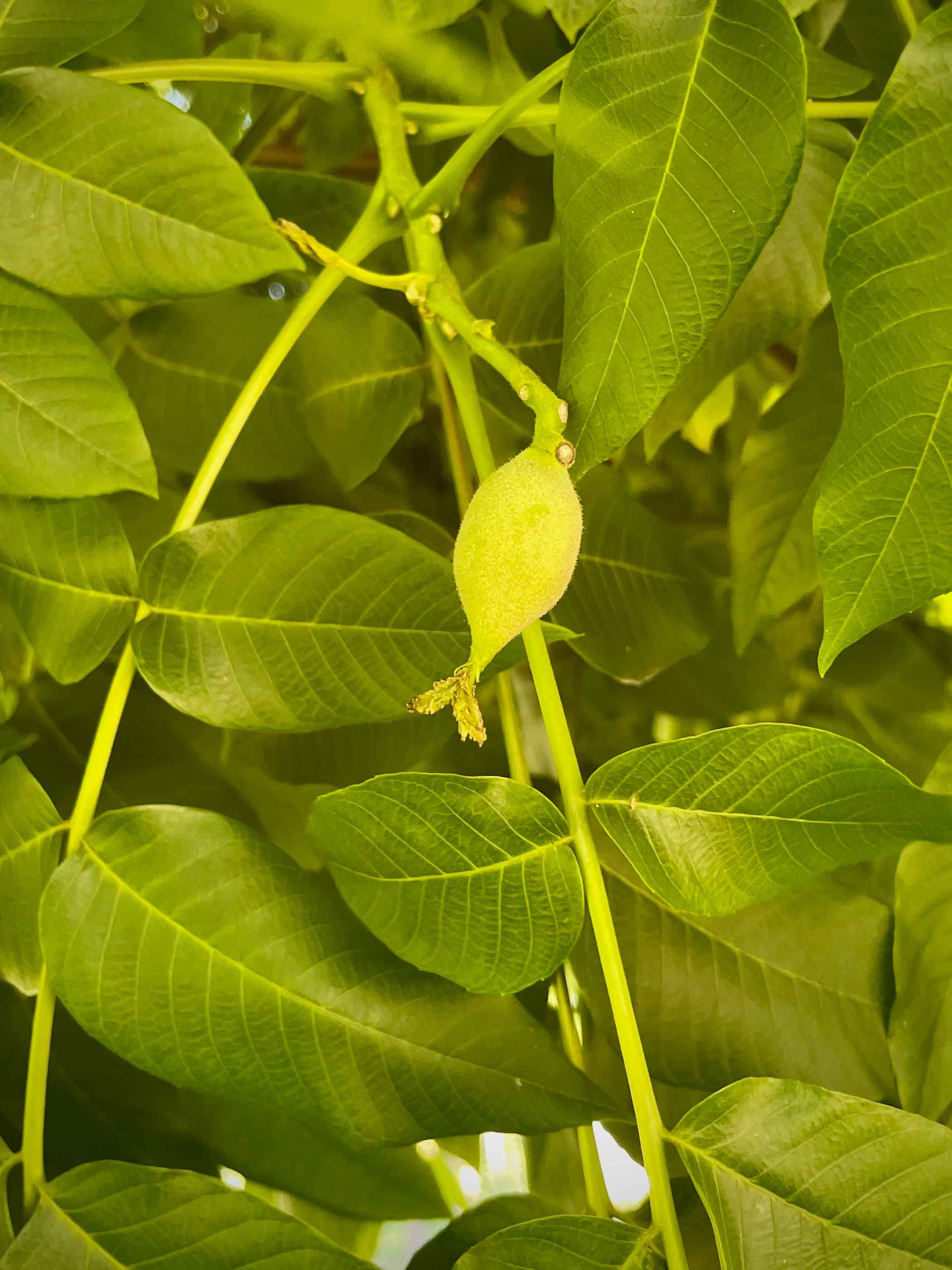
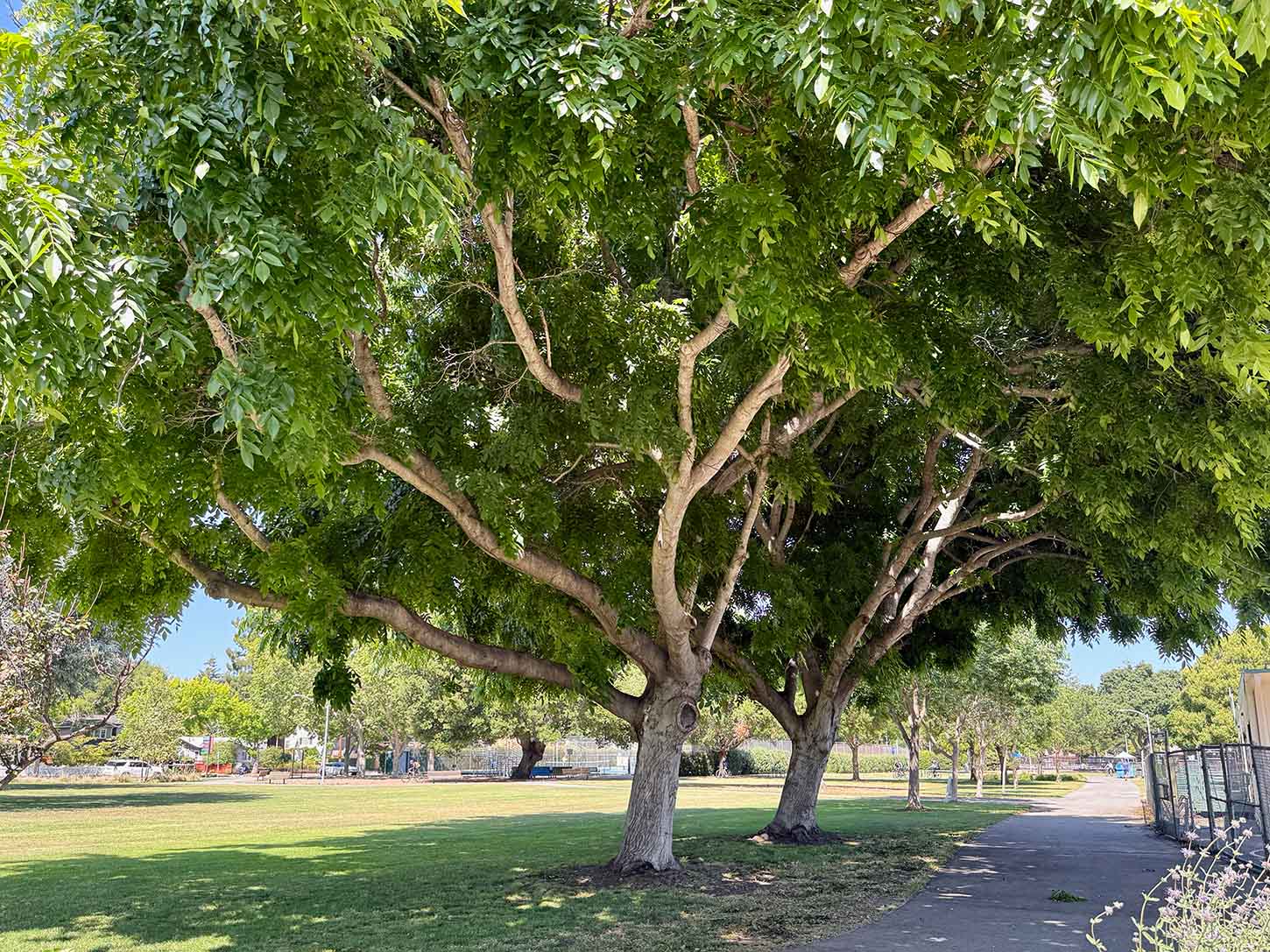
Paradox walnut clones of the cultivar ‘Vlach’ were used in a 2003 artistic experiment in which paired trees were planted across sites in San Francisco and the greater Bay Area. More than twenty years later, several Palo Alto locations are thriving: two girthy specimens with immense crowns southeast of the Rinconada Park playground; one at the southeast corner of Briones Park; two at the unirrigated dog run in Mitchell Park, near the rear edge of 455 East Charleston Road; and two at Greer Park, midway between the basketball courts and Amarillo Avenue. A few have produced a smattering of small walnuts; Paradox is not known to be a heavy fruiter.
It has proved adaptable both in irrigated lawn and in drier settings, suggesting promise for campus plantings where a large, fruitless deciduous tree is desired. Since some proportion of “native” trees is often desired – or required – in landscaping, would two Paradoxes count as one native walnut, or two?
Gallery

- Main References for New Tree Entries.
- OneTrees: An Information Environment. The OneTrees project website, archived at the Internet Archive (Wayback Machine).
- Sardar, Zahid. 2004. “Society’s Signposts: Natalie Jeremijenko’s trees aren’t simply decorative—they can be read like a social register.” San Francisco Chronicle, October 23. Archived at the Internet Archive (Wayback Machine).
- Shea, Ellyn. June 18, 2014. OneTrees: The Forgotten Tree Art Project.
- University of California, Davis. “Walnut Rootstock & Scion Selection.” Fruit & Nut Research & Information Center.
About this Entry: Authored Jul 2023 by Sairus Patel. Rinconada locations added (May 2024, SP). Leaf notes, Vlach cultivar added (Jul 2025, SP). Updated (Apr 2026, SP).

