

Eucalyptus rudis
 flooded gum

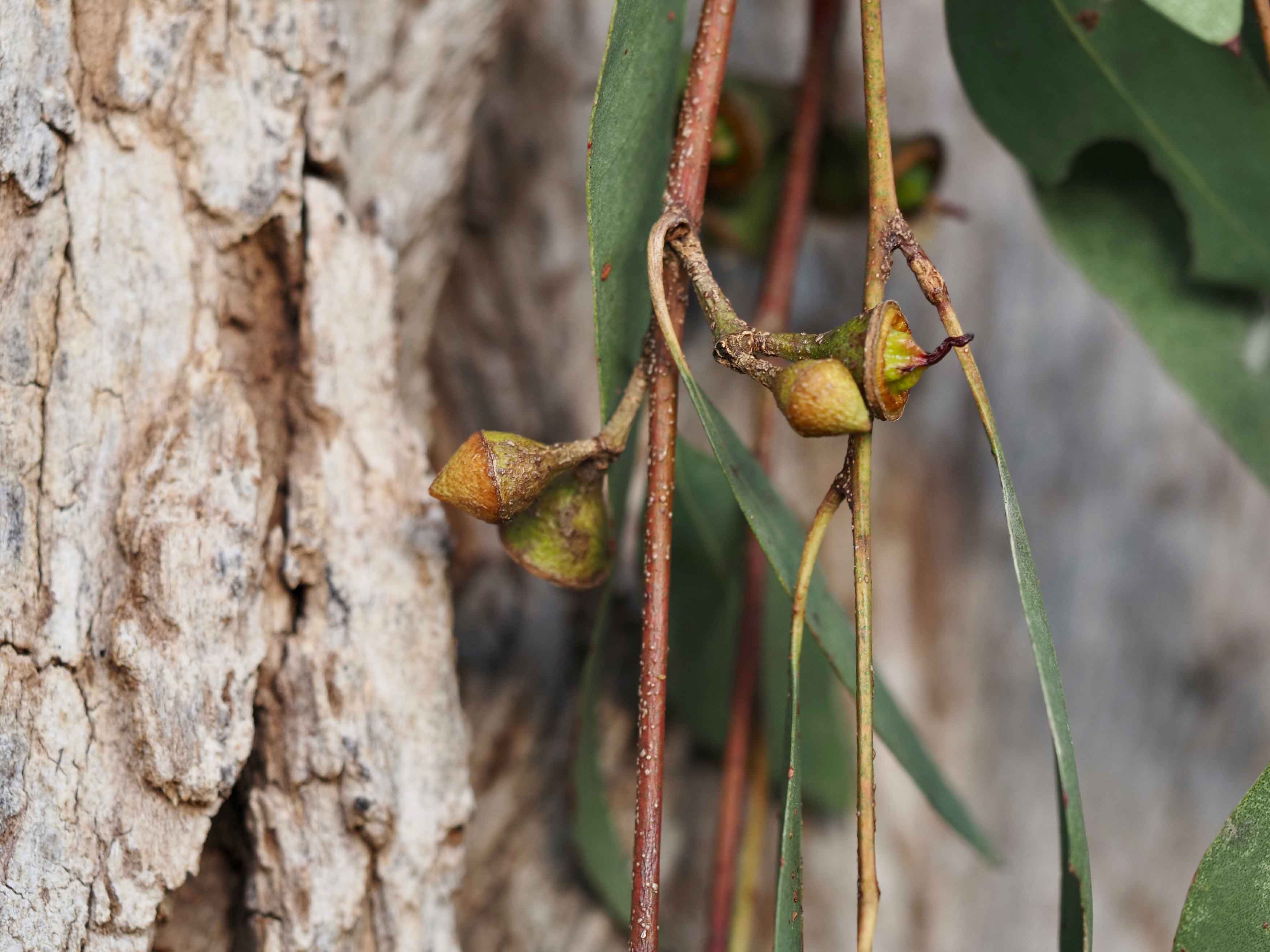
Rough bark covering much of the trunk and gray-green foliage may recall the rough-barked form of E. polyanthemos, but the capsules and buds are entirely different. The capsules resemble those of E. camaldulensis, but differ in having a mostly level disk. The buds look similar to those of E. camaldulensis subsp. arida, which also has rounded or conical opercula without a prominent beak; indeed their ranges mostly coincide – commonly in seasonally flooded sites, hence “flooded gum” – and they hybridize there. The rough bark almost always found on flooded gum, though, most easily distinguishes it from E. camaldulensis, whose bark is predominantly smooth and peeling. Still, rudis, “rough,” apparently refers to the timber.
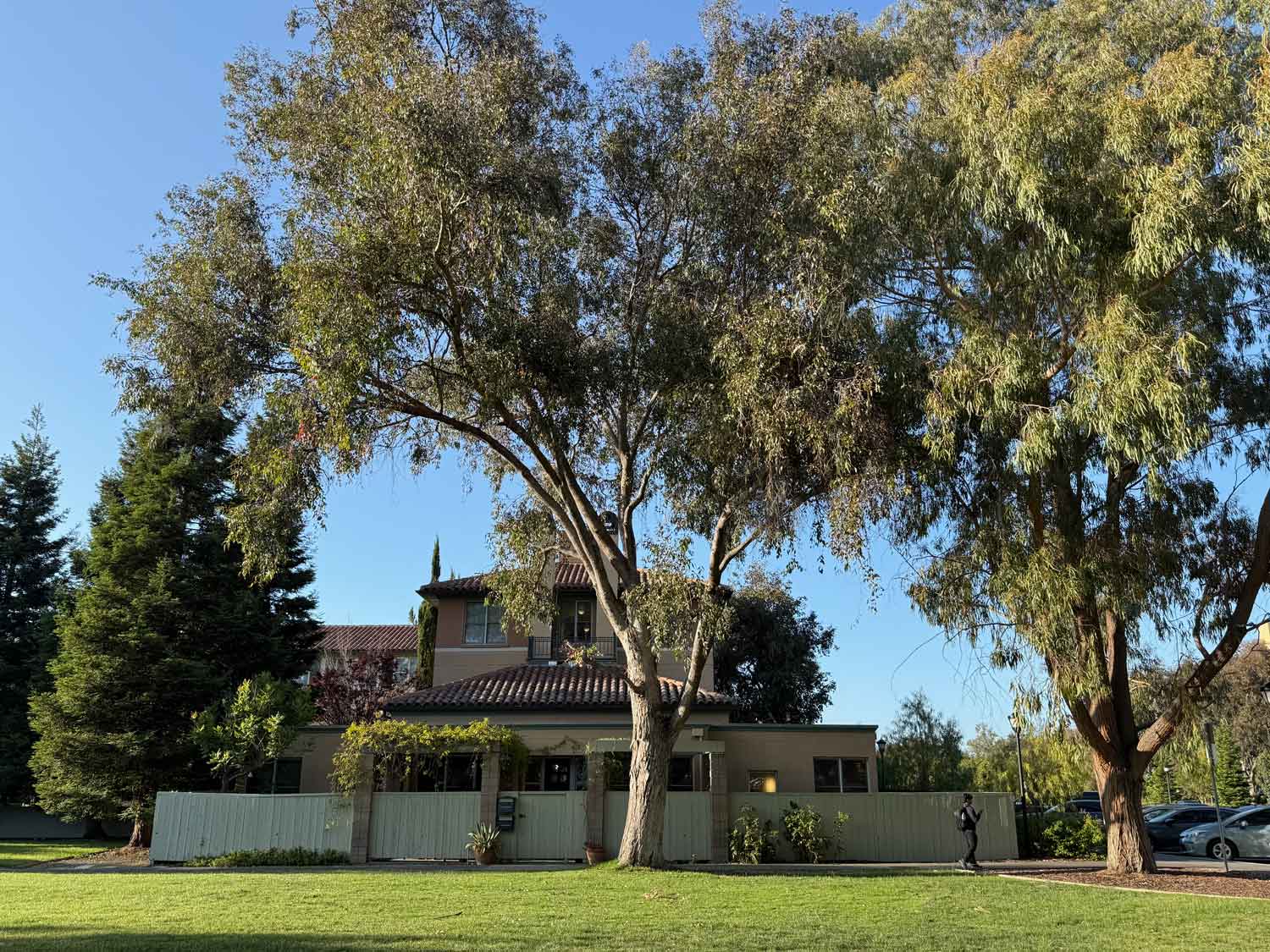
A large specimen stands at the south end of Castaño, near the lawn; others are arrayed along the east side of the building, continuing along Lantana. These dormitory plantings date from around 1992, when the buildings were constructed, and were no doubt inspired by the veritable arboretum of eucalypts established along that section of Campus Drive beginning in the 1960s, most of which is now gone. A substantial flooded gum is in the Campus Drive median opposite Maples Pavilion. Two more grow at the edge of the parking lot south of the Center for Academic Medicine. Another large specimen at the Palo Alto Baylands stands on Embarcadero Road just east of the Duck Pond. Those I’ve seen in California seem to bear a large proportion of juvenile and intermediate leaves.
Gallery


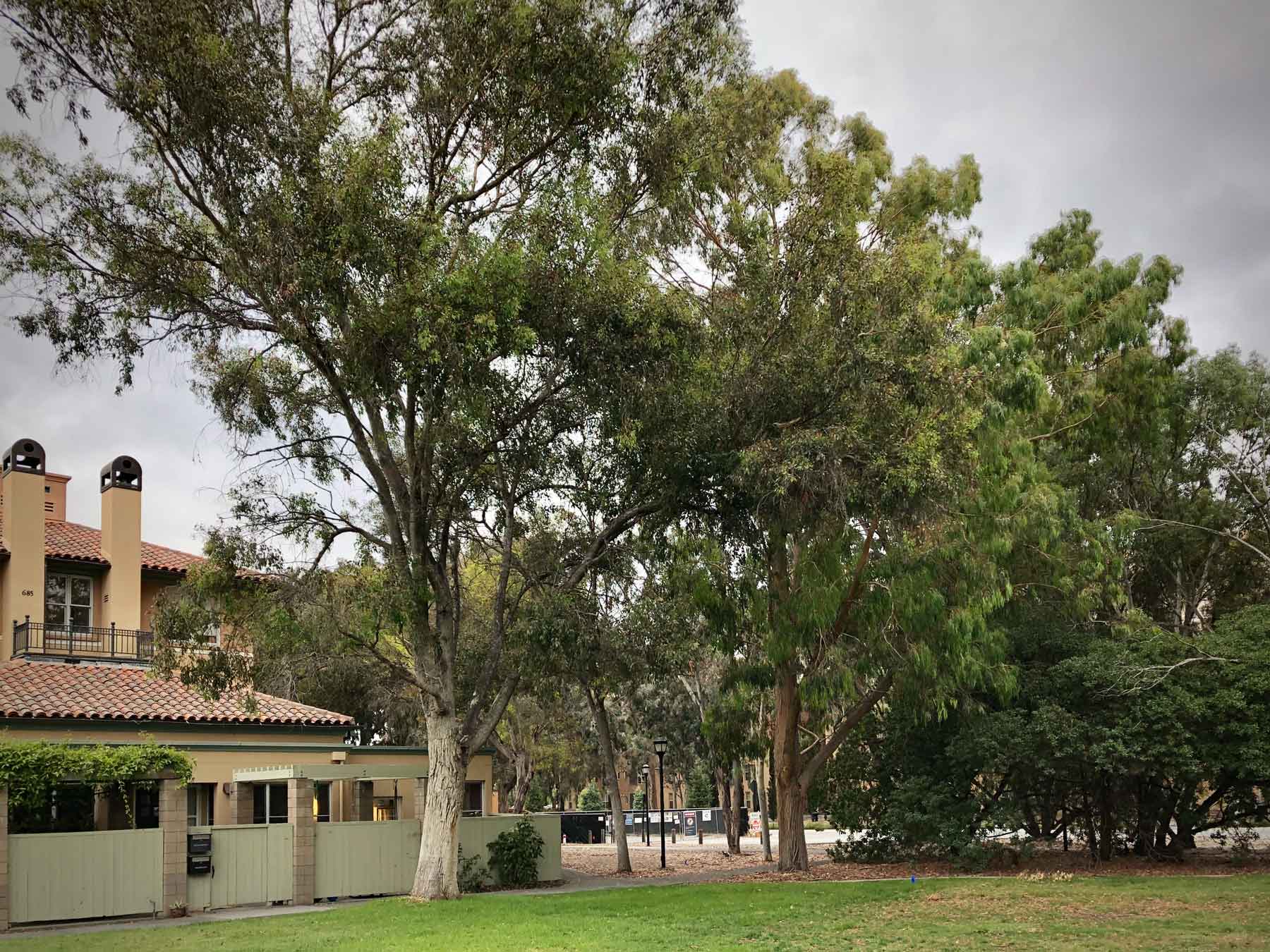
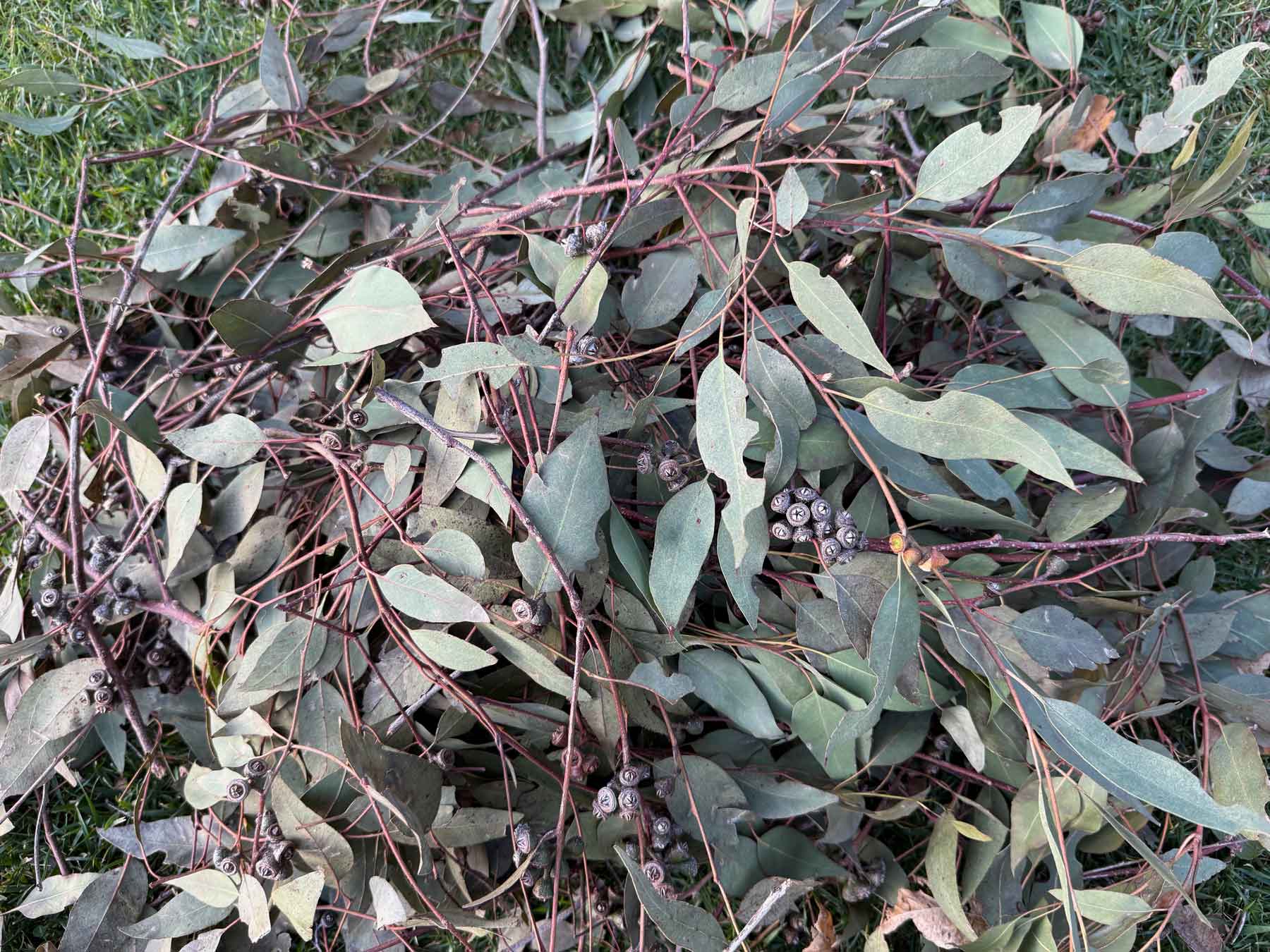
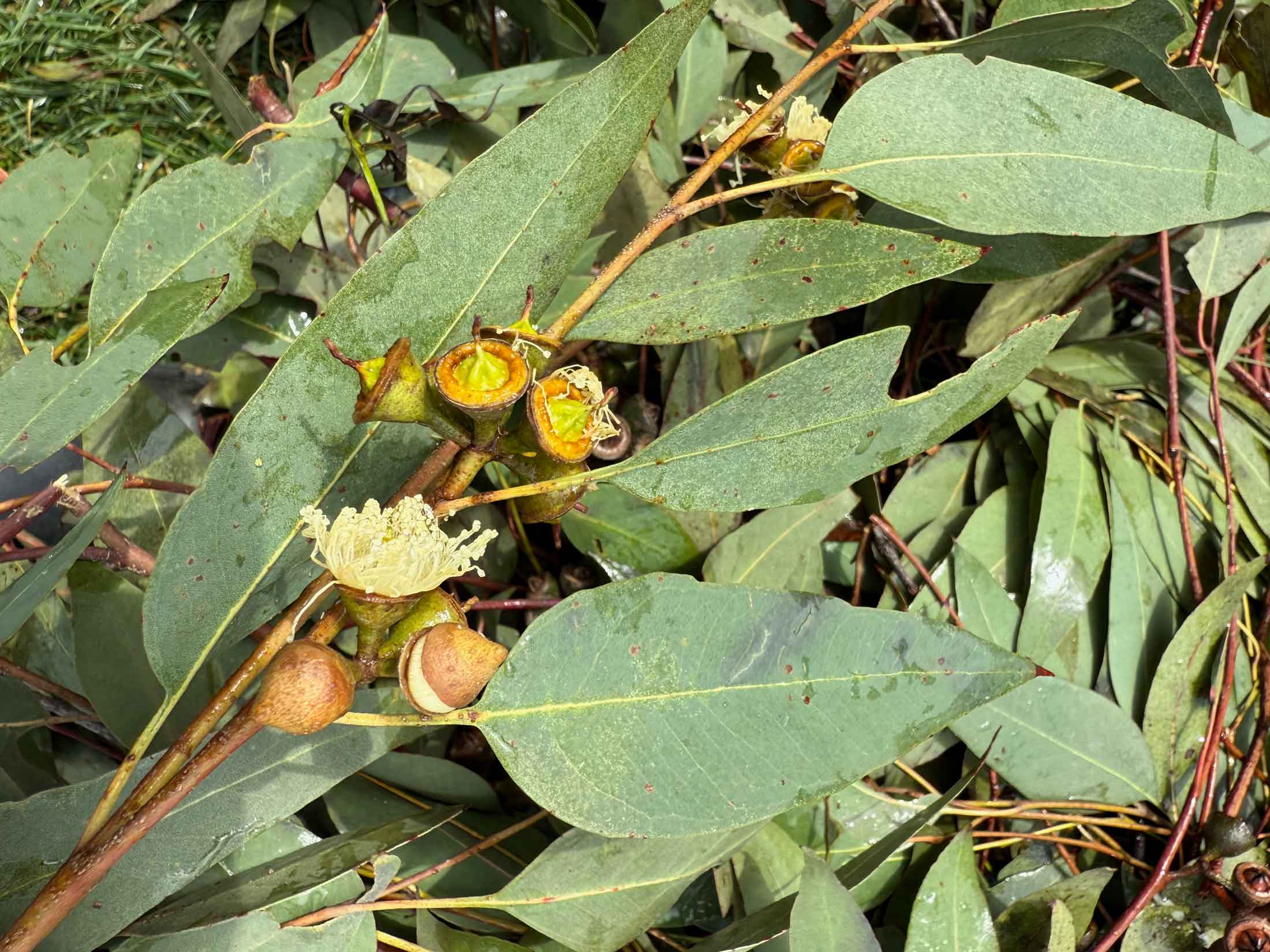
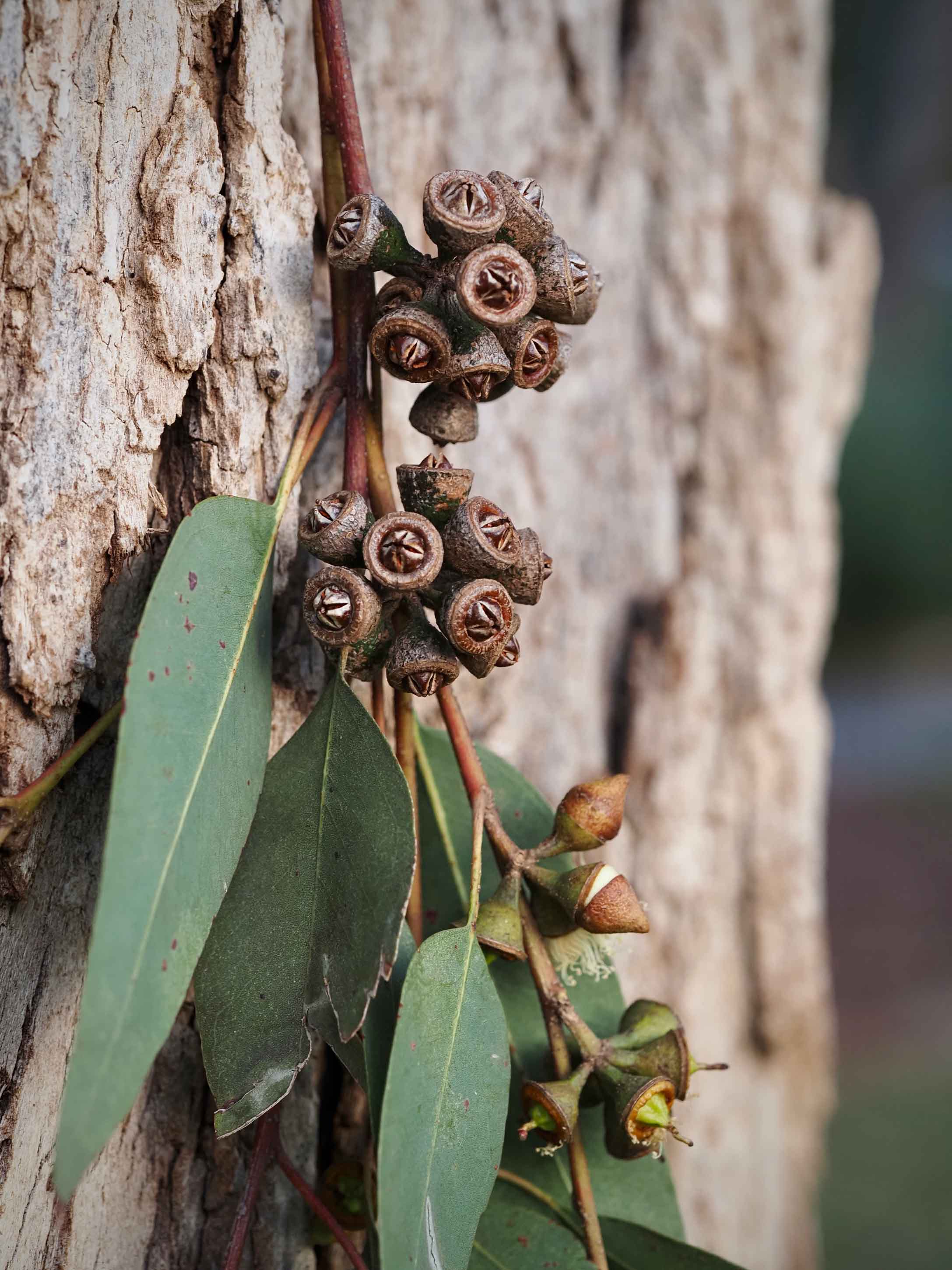
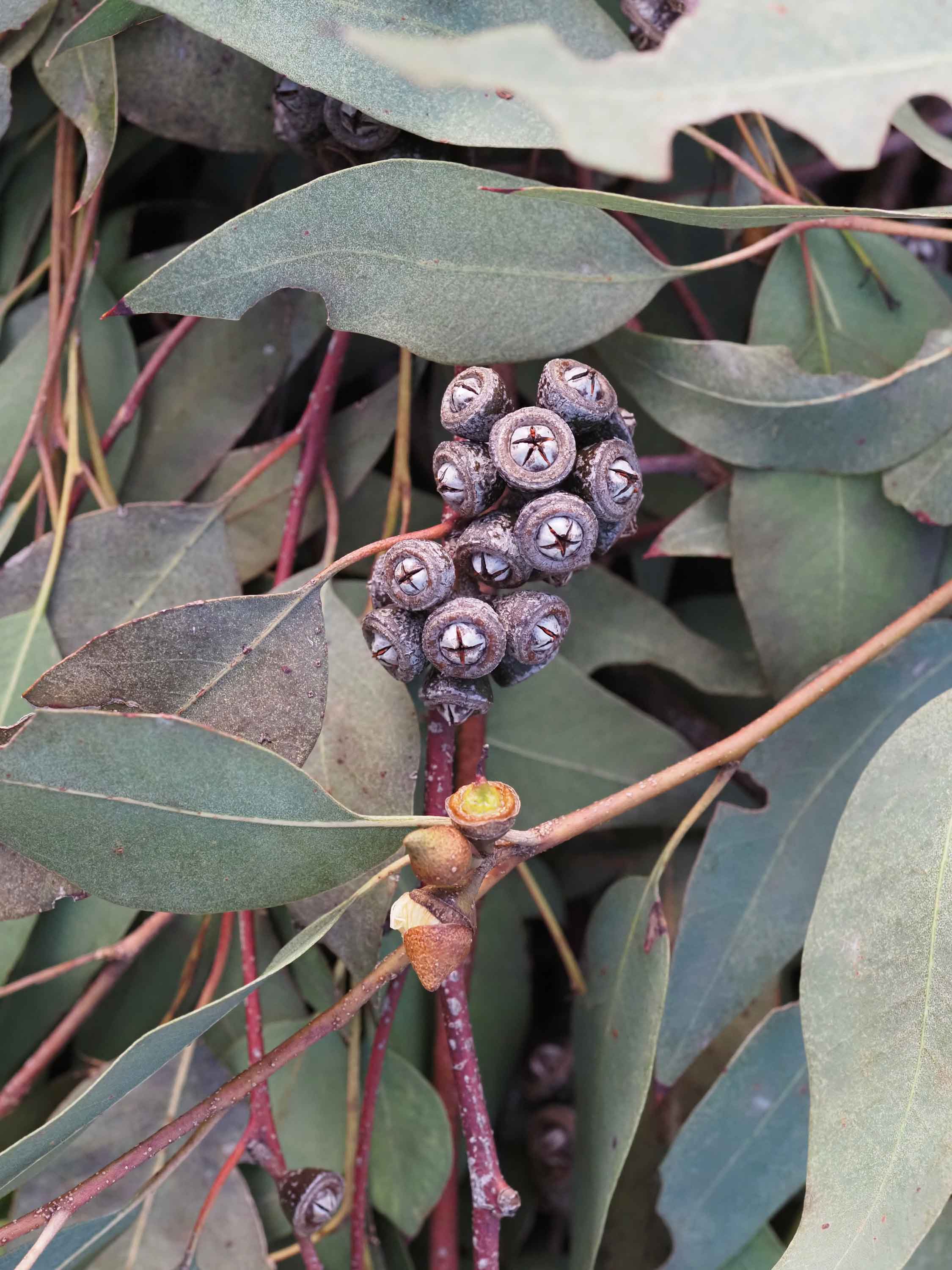
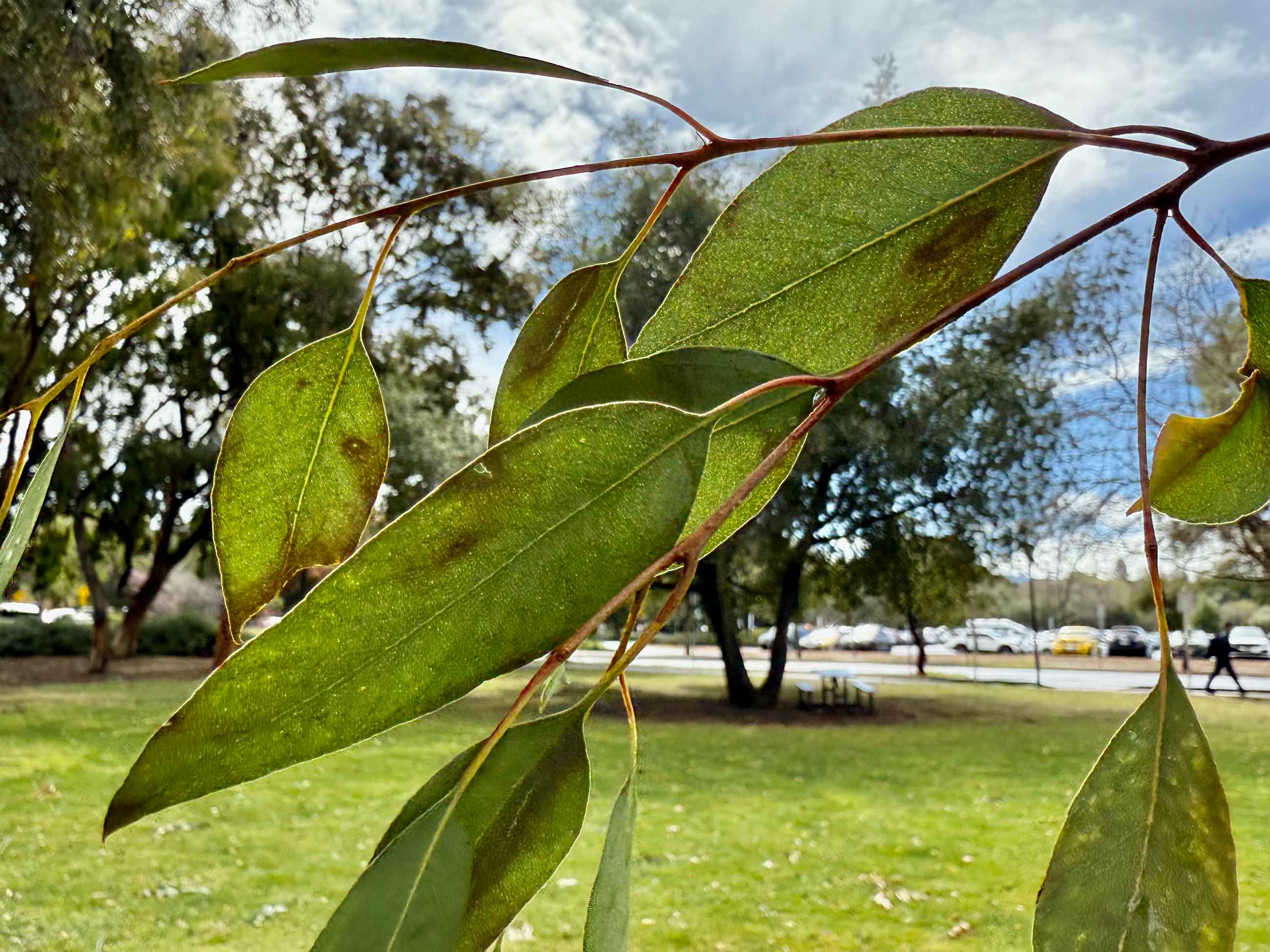
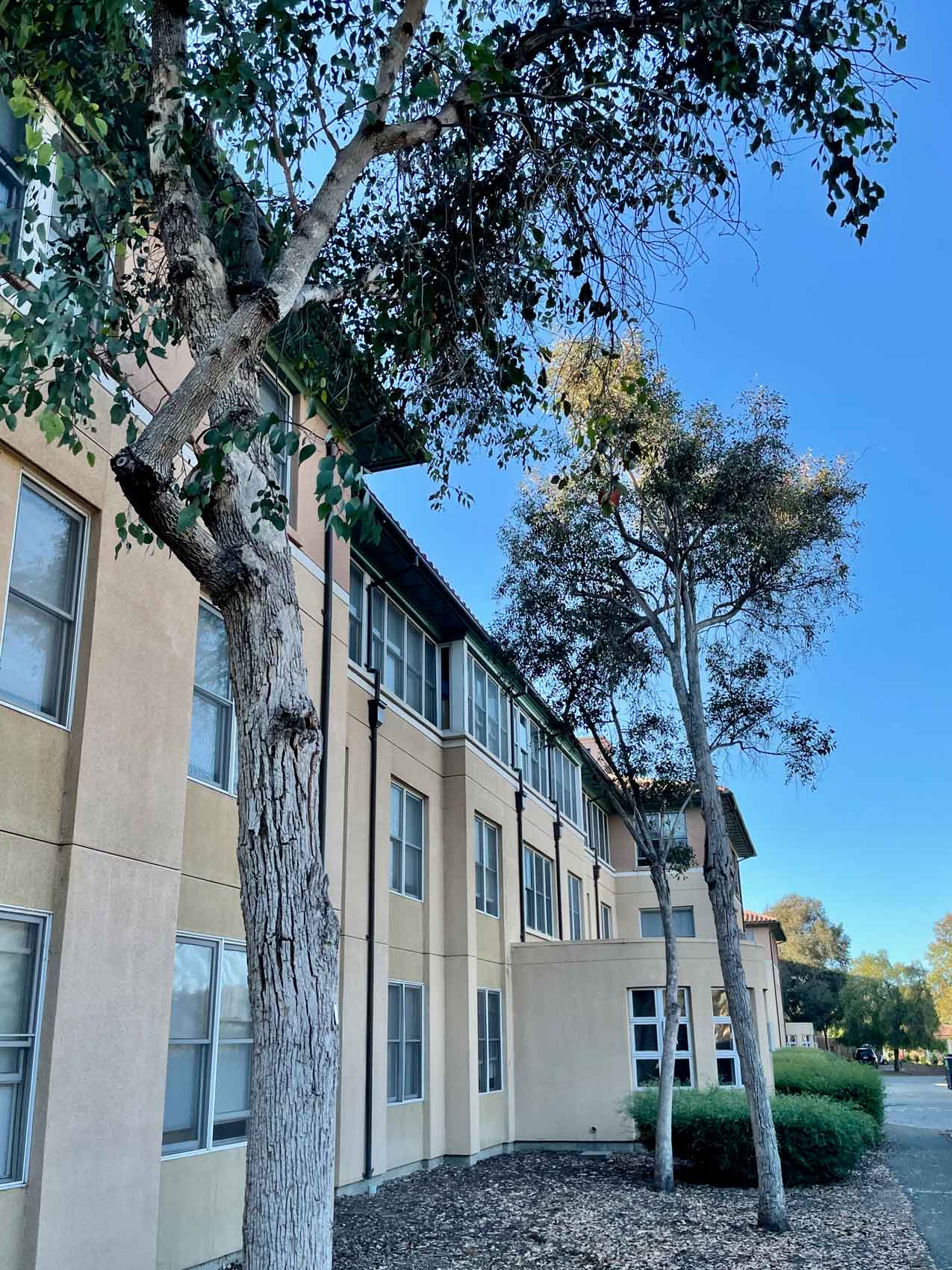
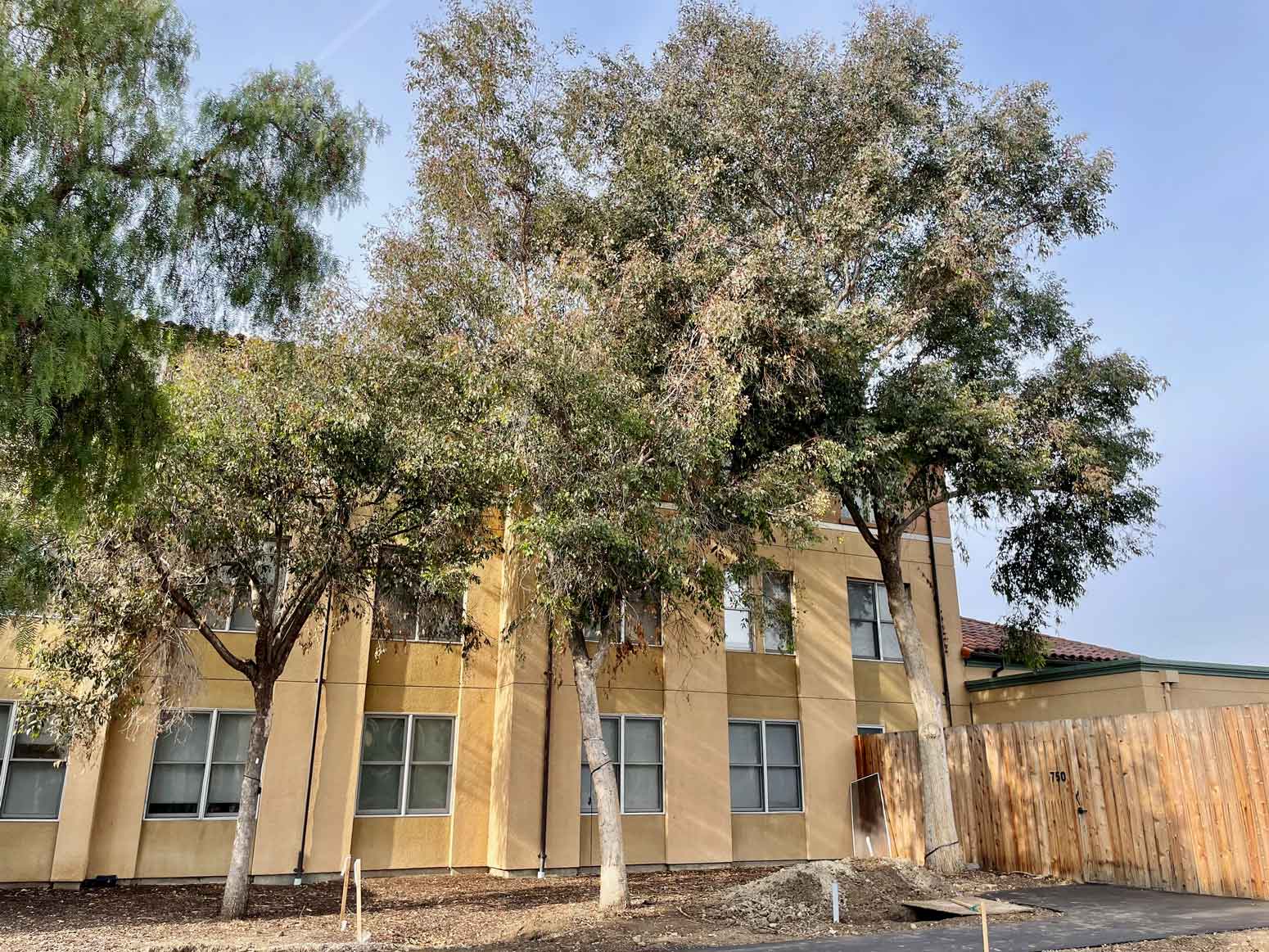
- The Castaño and Lantana E. rudis were identified as E. polyanthemos on the Eucalyptus Walk map of Oct 2000.
About this Entry: Authored Aug 2026 by Sairus Patel.

