

Chionanthus virginicus
 fringe tree
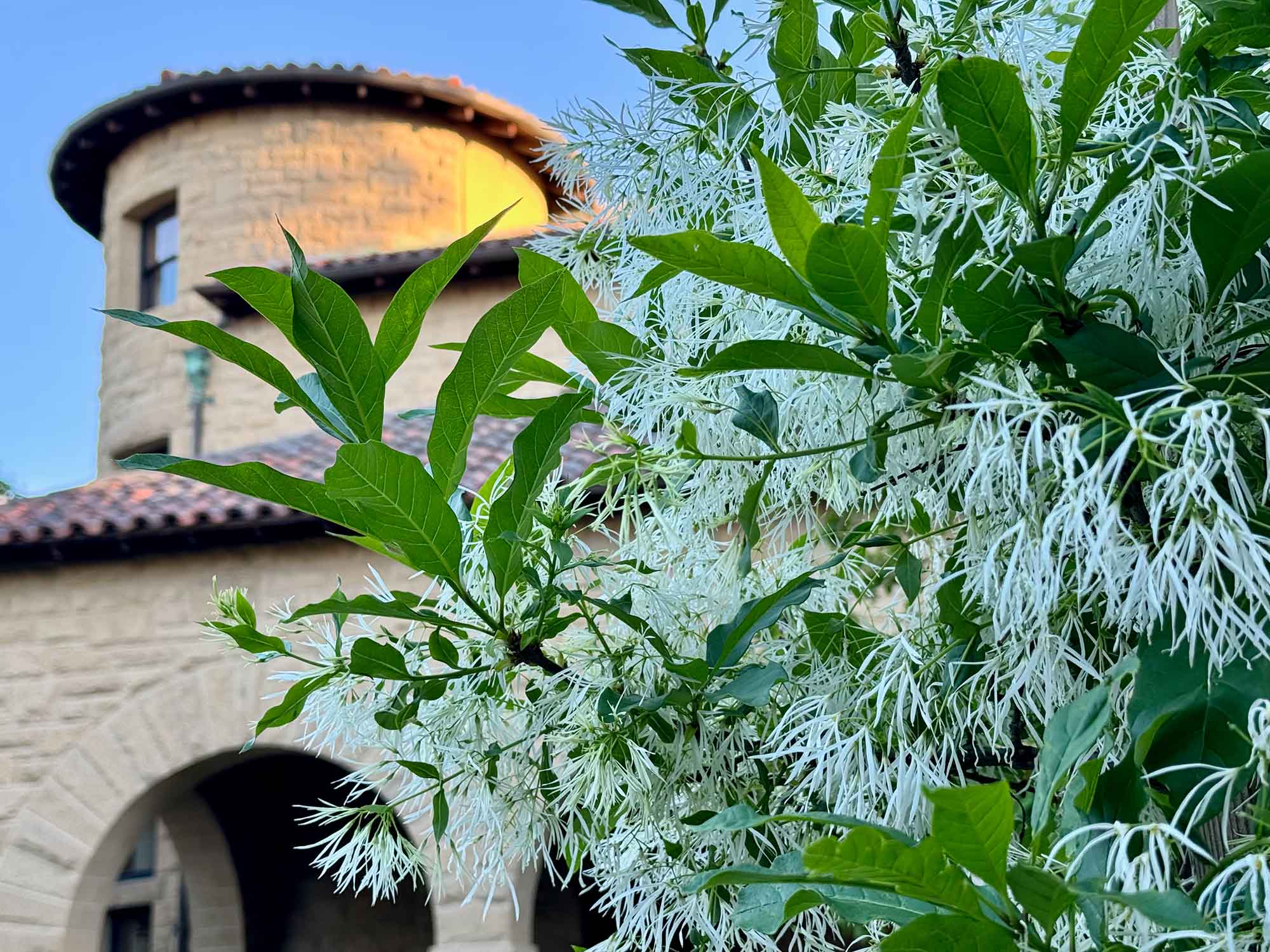
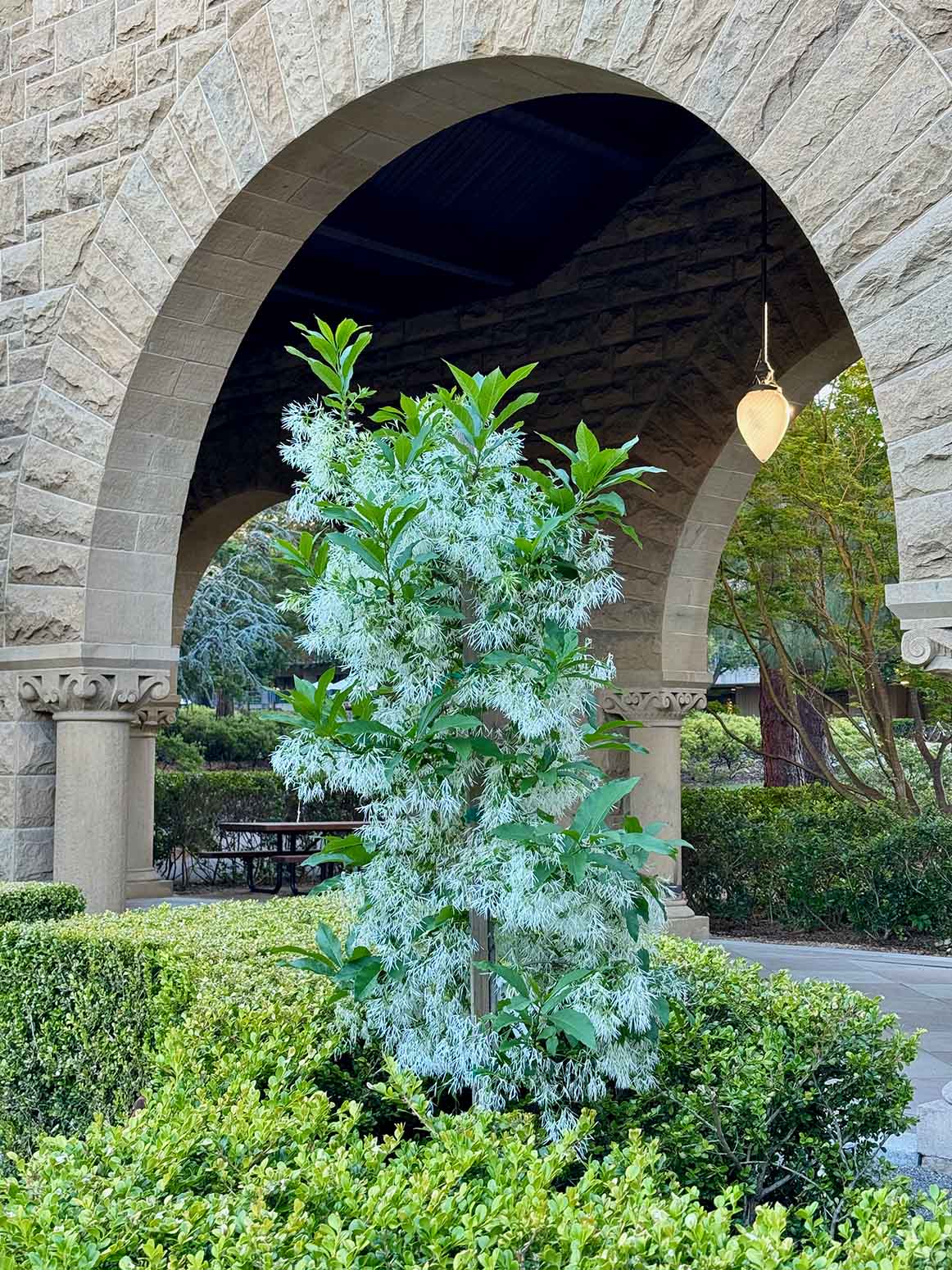
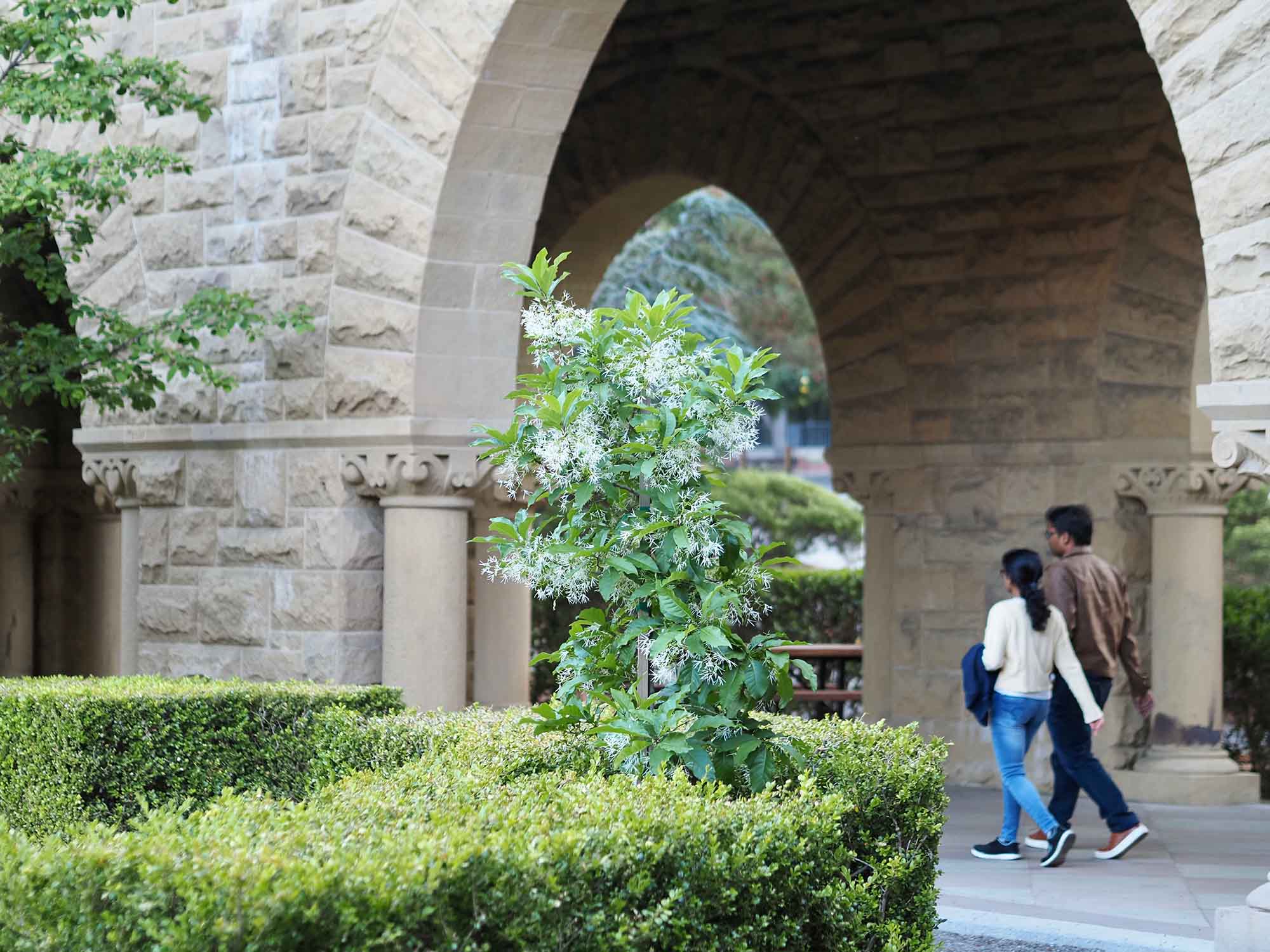
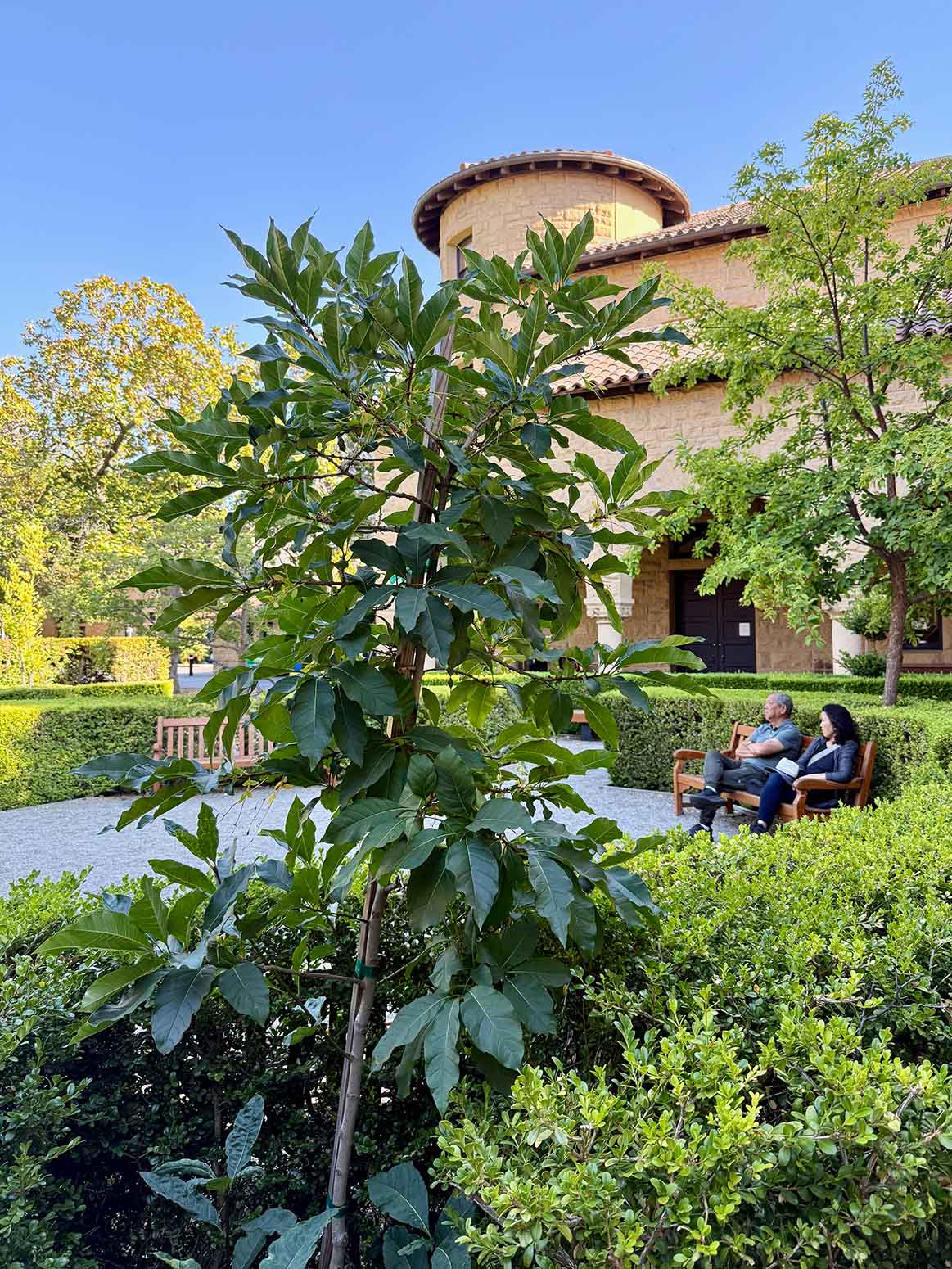
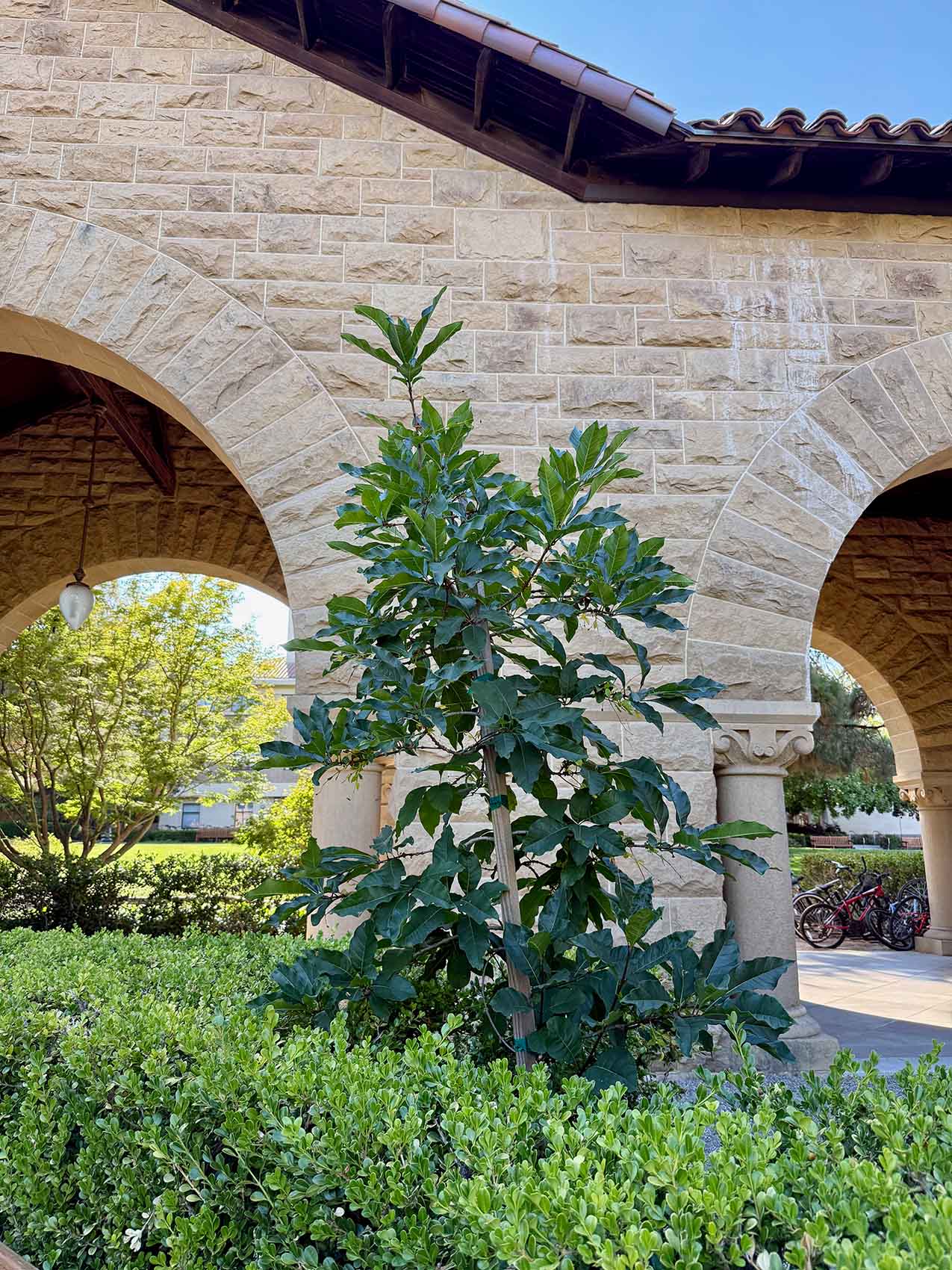
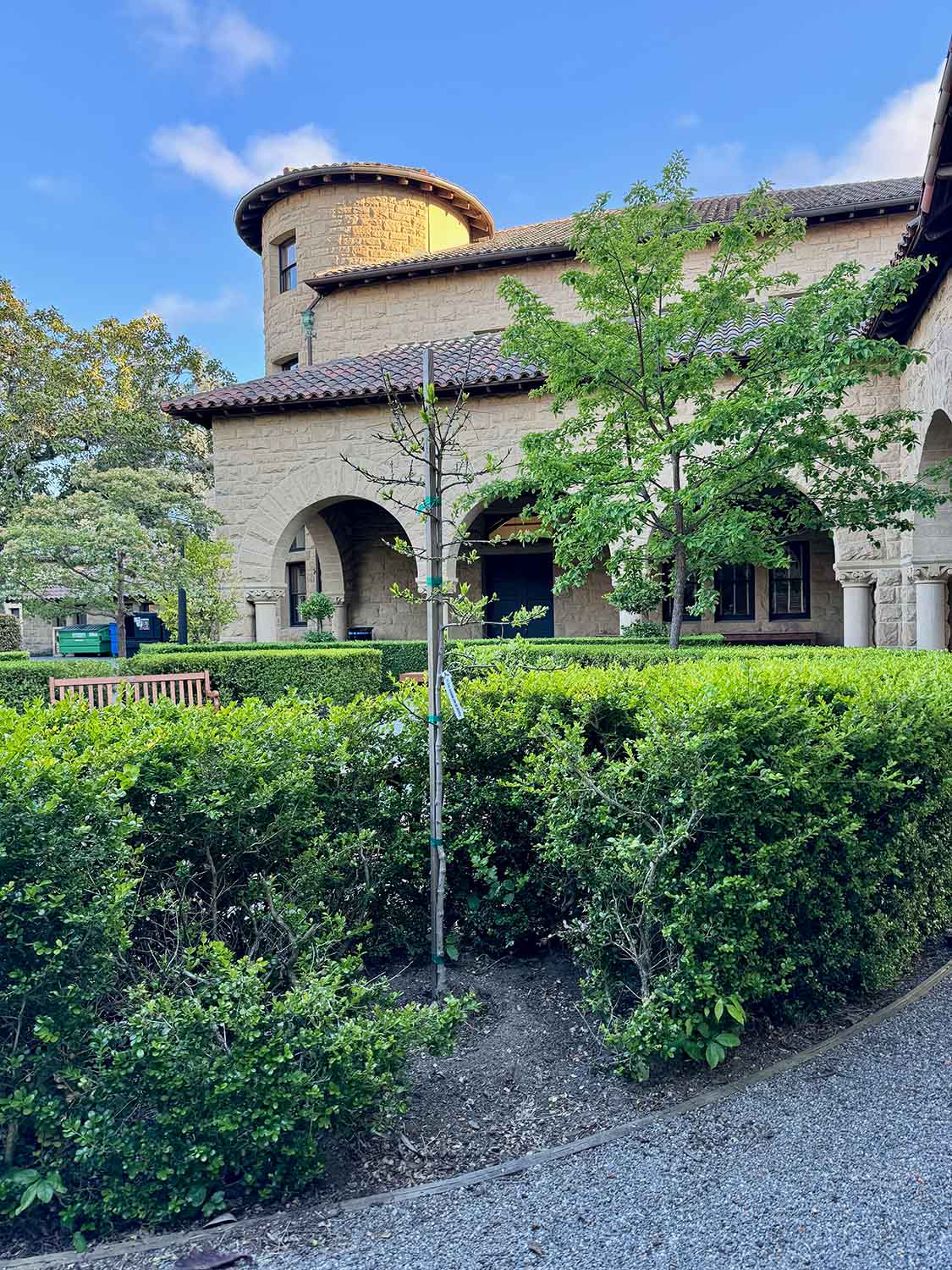
Campus’s sole specimen is a sapling planted in 2024 in the Thomas Church Garden, the courtyard just north of Geology Corner. This is the species called for in landscape architect Church’s original 1967 plan, though its more popular Asian ally C. retusus has been used in its place for the past few decades, three of which remain there and serve as a convenient comparison. In 2011, a historical restoration of the courtyard involved replacing other plant material, furnishings, and pavement details to match those originally specified by Church – including the three-tiered “poodle” style topiaries of Texas privet.
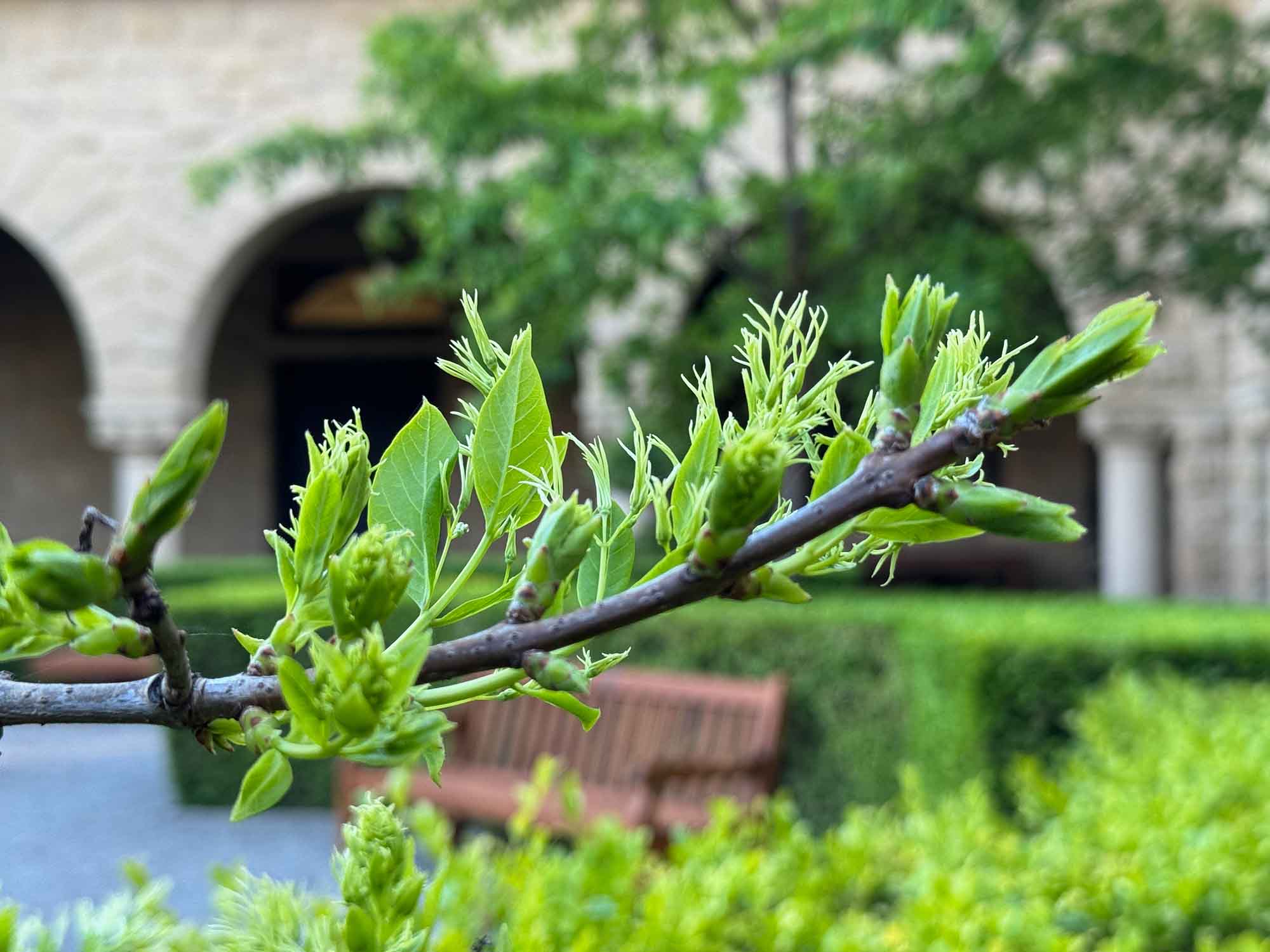
Leaves of both species of fringe tree are quite variable, but in general those of our American native are pointed at the tip and about twice the size Chinese fringe tree’s, whose foliage is more rounded. In spring, panicles of flowers emerge from the leaf nodes of the previous year’s growth and tend to droop; fresh new leaves stick up like leafy crowns above them, at branch tips, a characteristic sight. In contrast, the flowers of the Chinese, in smaller panicles, bloom on the tips of new spring growth.
Gallery


Also see
- 28 Feb 2000. Cardinal Chronicle: Thomas Church. Stanford Report. “In late spring, Chinese fringe trees blossom into a spectacular show of white flowers in Geology Courtyard behind Building 320.”
- Jan/Feb 2003. He Changed the Landscape. Raymond Hardie, Stanford Magazine. “The campus was overrun with automobiles and ‘backyard junk.’ Then Thomas Church came along and dreamed up a peripatetic’s paradise.”
- Main References for New Tree Entries.
- Thomas D. Church, Incorporated. 1967. “Planting Plan Area 2, Lomita Mall” (Aug 3). Stanford Maps & Records Archives.
About this Entry: Authored Jul 2025 by Sairus Patel.

