

Cedrus atlantica
 Atlas cedar
Cedrus – The Cedars
A multiplicity of trees bear the name “cedar,” usually resinous, fragrant-wooded conifers, such as California’s incense cedar – leading tree people to sniff that only genus Cedrus comprises the “true” cedars. Yet the Latin word and its Greek precursor kedros were in classical use for trees with resinous wood – juniper chief among them – well before the name was fixed to the present genus.
All four species are native to the Old World. On campus we have the Atlas, deodar, and Lebanon cedars, present since the University first opened its doors. All three can be seen in close proximity in front of the Mausoleum and at Kingscote Gardens.
The fourth species, Cyprus cedar (C. brevifolia, often treated as a subspecies of cedar of Lebanon), can be seen alongside its congeners in the southeastern reaches of the great lawn at San Francisco Botanical Garden. There, the standalone specimens recall the long tradition of English parklands, where majestic cedars studded the broad lawns before country houses – and the occasional abbey turned estate – heightening the sense of approach, with perhaps a distant train whistle announcing the day’s first arrival.
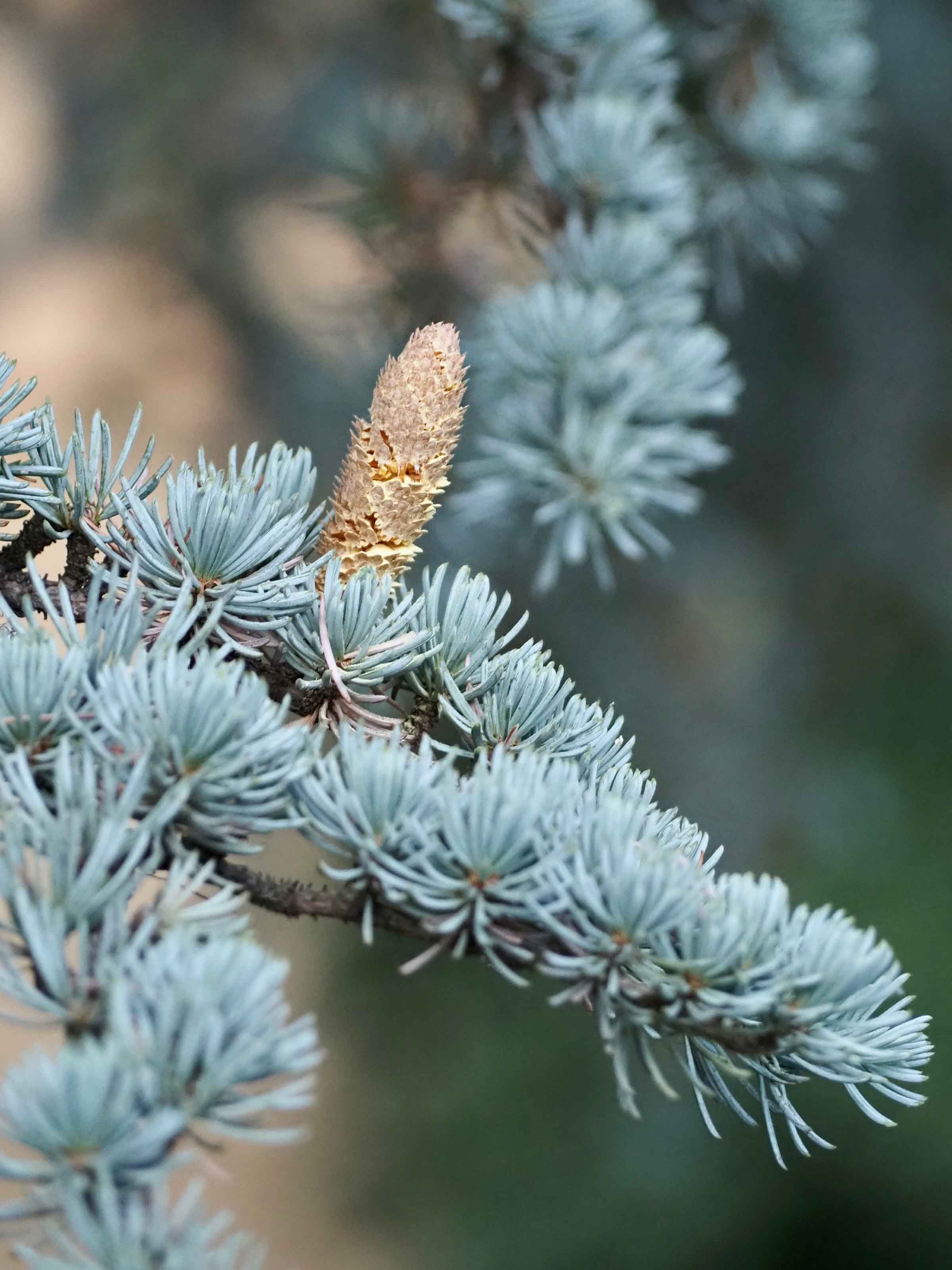
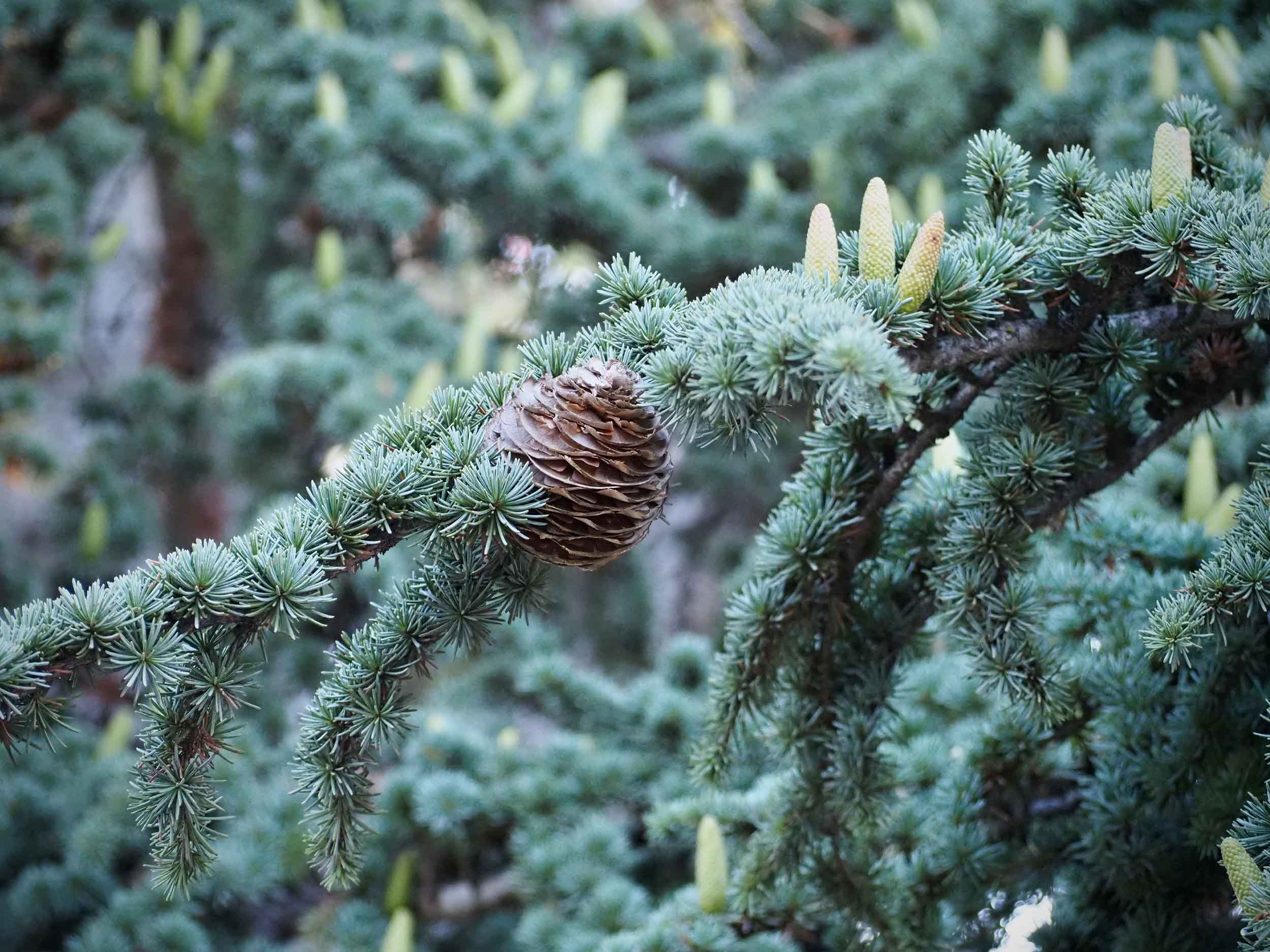
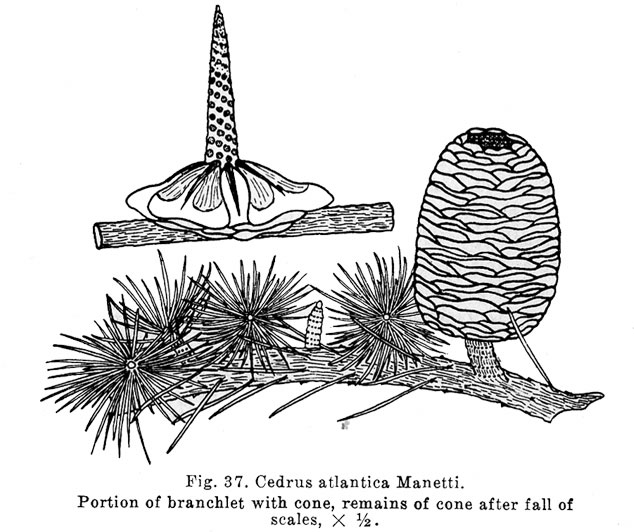
The cedars bear clusters (a dozen or more) of short needles densely grouped onto stubby nubs (short shoots, akin to the little spurs of ginkgo) arranged on the branchlet; towards the ends of the branchlet (the long shoots), the needles are arranged singly and can be ignored for diagnostic purposes. The seed cones are upright and generally barrel-shaped, disintegrating on the branch; the male cones are smaller and dry up after releasing their pollen.
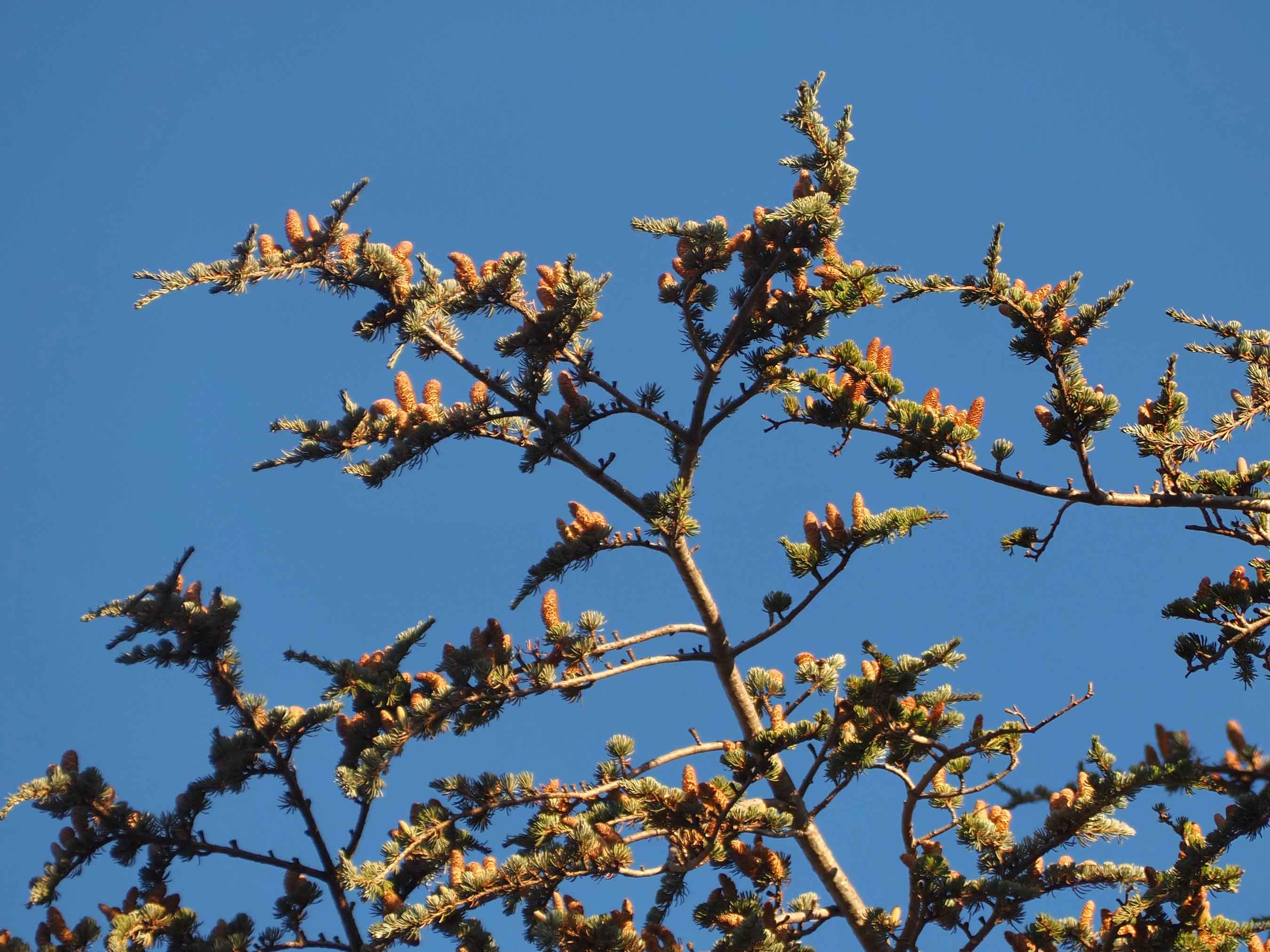
The species are notoriously difficult to tell apart, but the deodar has the longest needles, up to about 2 inches, with a relaxed, looser habit; the leading tip and branch ends tend to droop. Its pollen cones are the longest as well, usually over 2 inches. Atlas cedar has noticeably smaller needles, up to about an inch, often tightly clustered; its branch tips extend out in a stiff, somewhat surprised, manner. Cedar of Lebanon is intermediate in leaf length; sadly, mature examples that display its distinctive horizontal branches are not to be found locally.
Atlas Cedar

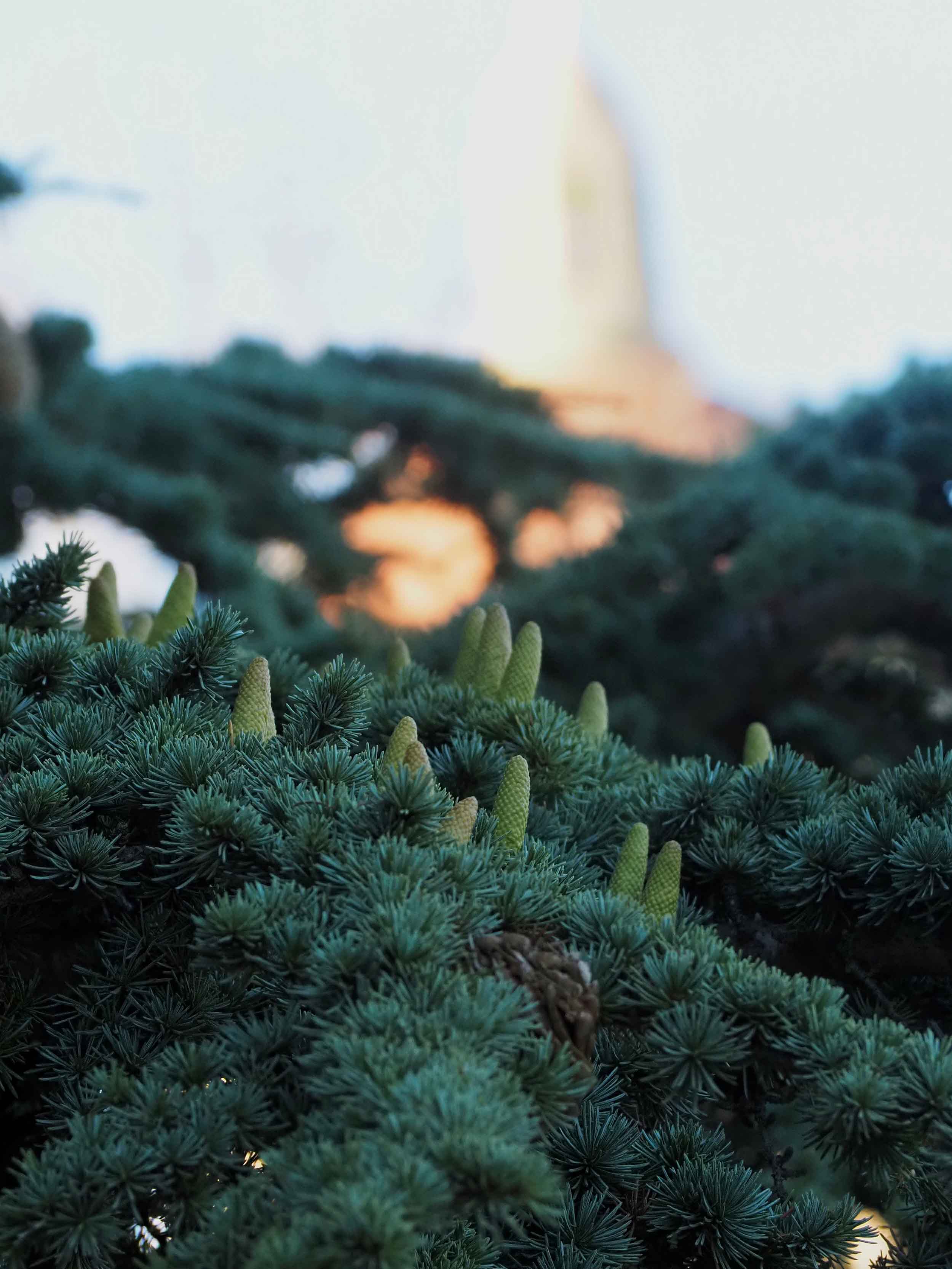
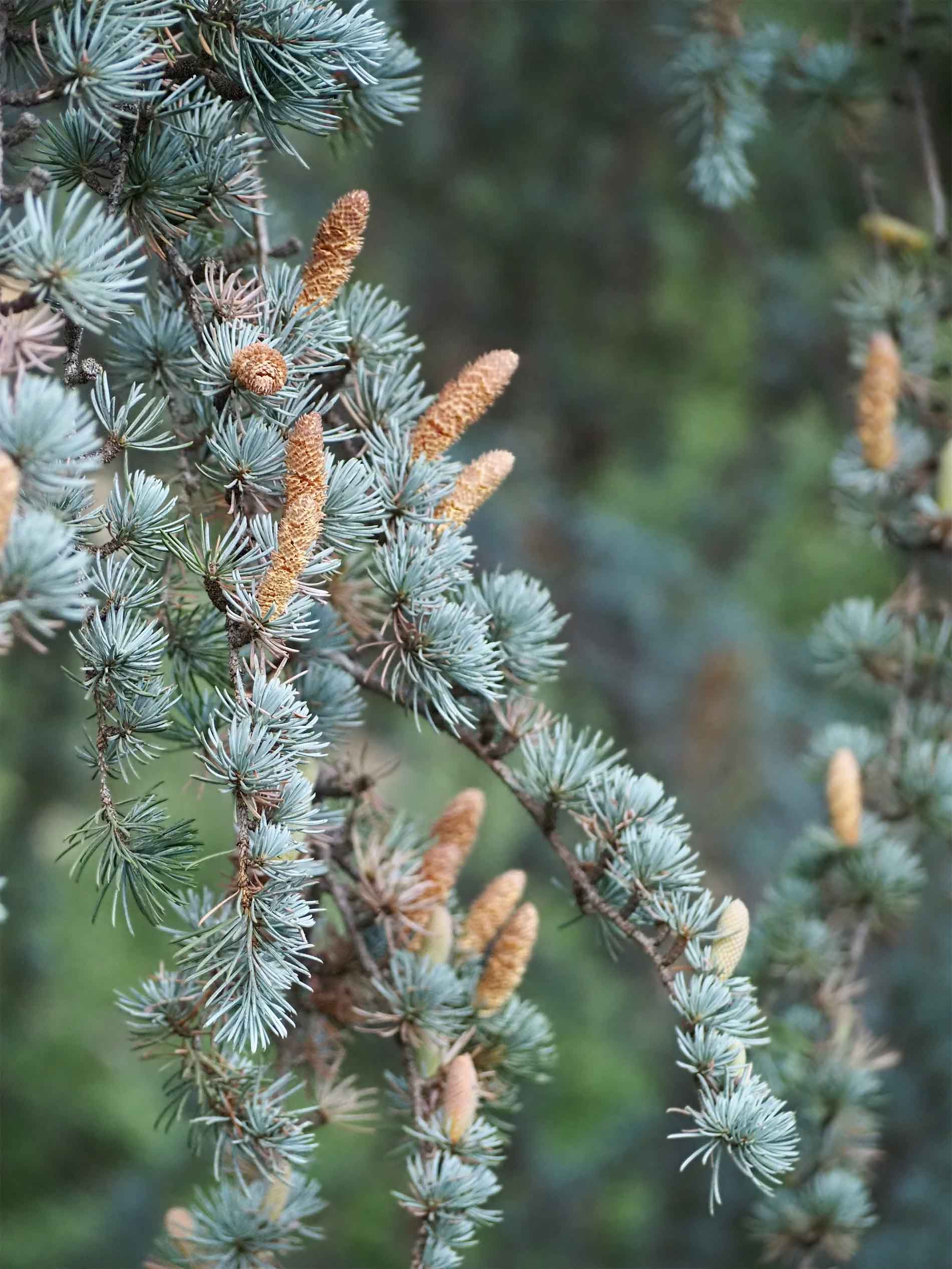
All Cedrus species can have bluish needles, but the Atlas is particularly known on that front, with many bluish-silvery needled varieties collectively called blue Atlas cedar; ‘Glauca’ and similar forms may be generally called the Glauca Group.
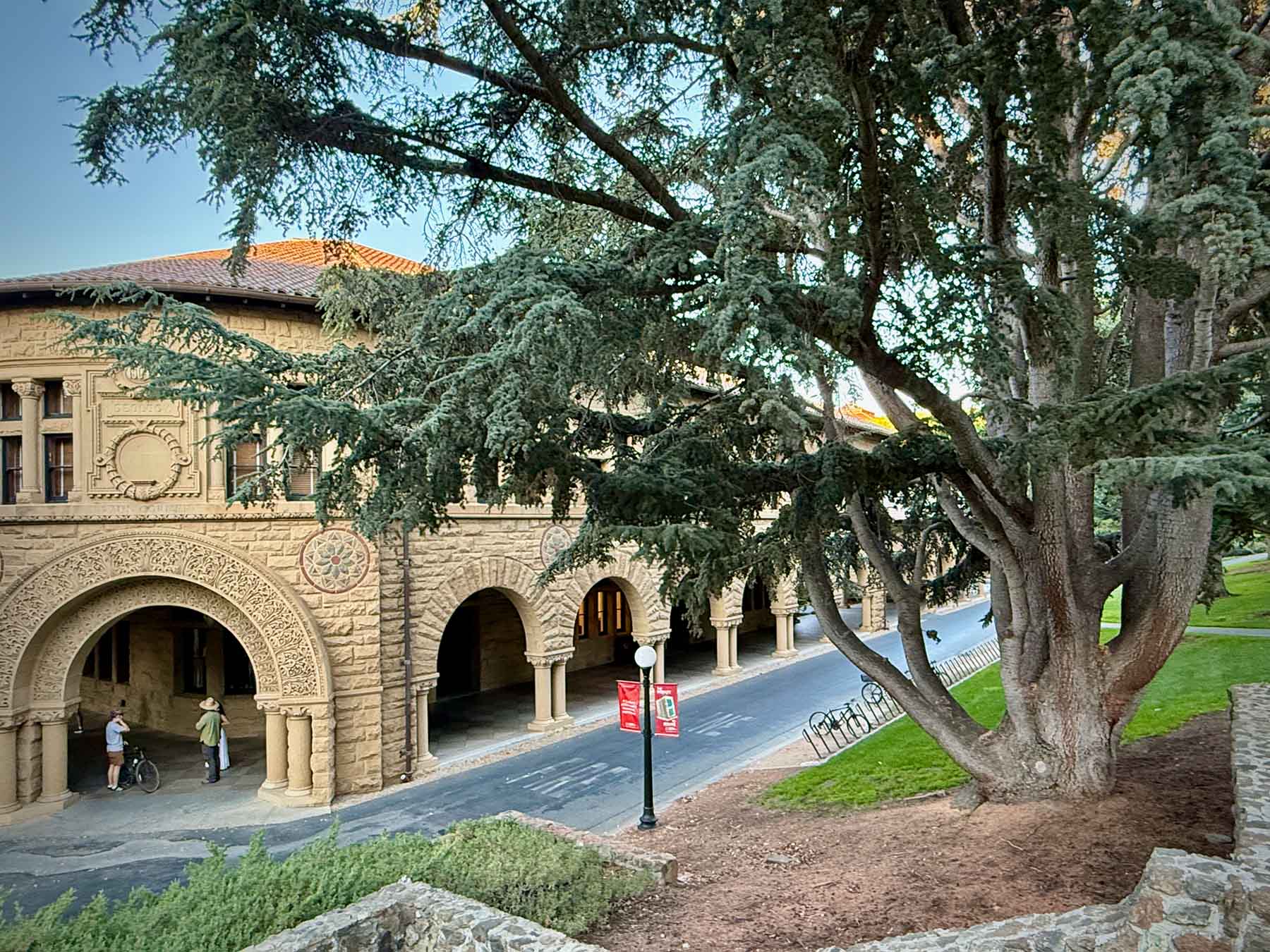
Thomas Church used the species liberally in his 1967 design for the Quad periphery, with groups of his Atlas cedars still towering over the Escondido Mall side and arrayed along the Lomita Mall side; a dazzling blue cultivar flanks the Quad entrance on the west. A tall Atlas grows in Dohrmann Grove at Lasuen Mall, reaching out over Jane Stanford Way; many are crowded together in the Papua New Guinea Garden.
A single blue is southeast of Old Union; several overlook Terman Fountain’s east end. A tall specimen stands in Hoover Tower’s front lawn. Two handsome trees front the Cantor Center; nearby in the Arboretum, a dozen line the path north of the intersection of Campus Drive and Lasuen Street. A remarkable dwarf, pendulous blue Atlas cedar slowly expands along the front of 849 Pine Hill Road.
Pollen cones of Atlas cedar start developing in late summer, earlier than those of our deodars; later in the fall they drop, collecting on the ground below.
“Atlantic” refers to the Atlas Mountains and to the Titan Atlas, who was condemned to hold up the sky. The Atlantic originally denoted only the West African sea near those mountains.
Gallery
About this Entry: Authored Sep 2025 by Sairus Patel. Last updated Sep 2026 (SP).

