

Ceanothus Notes


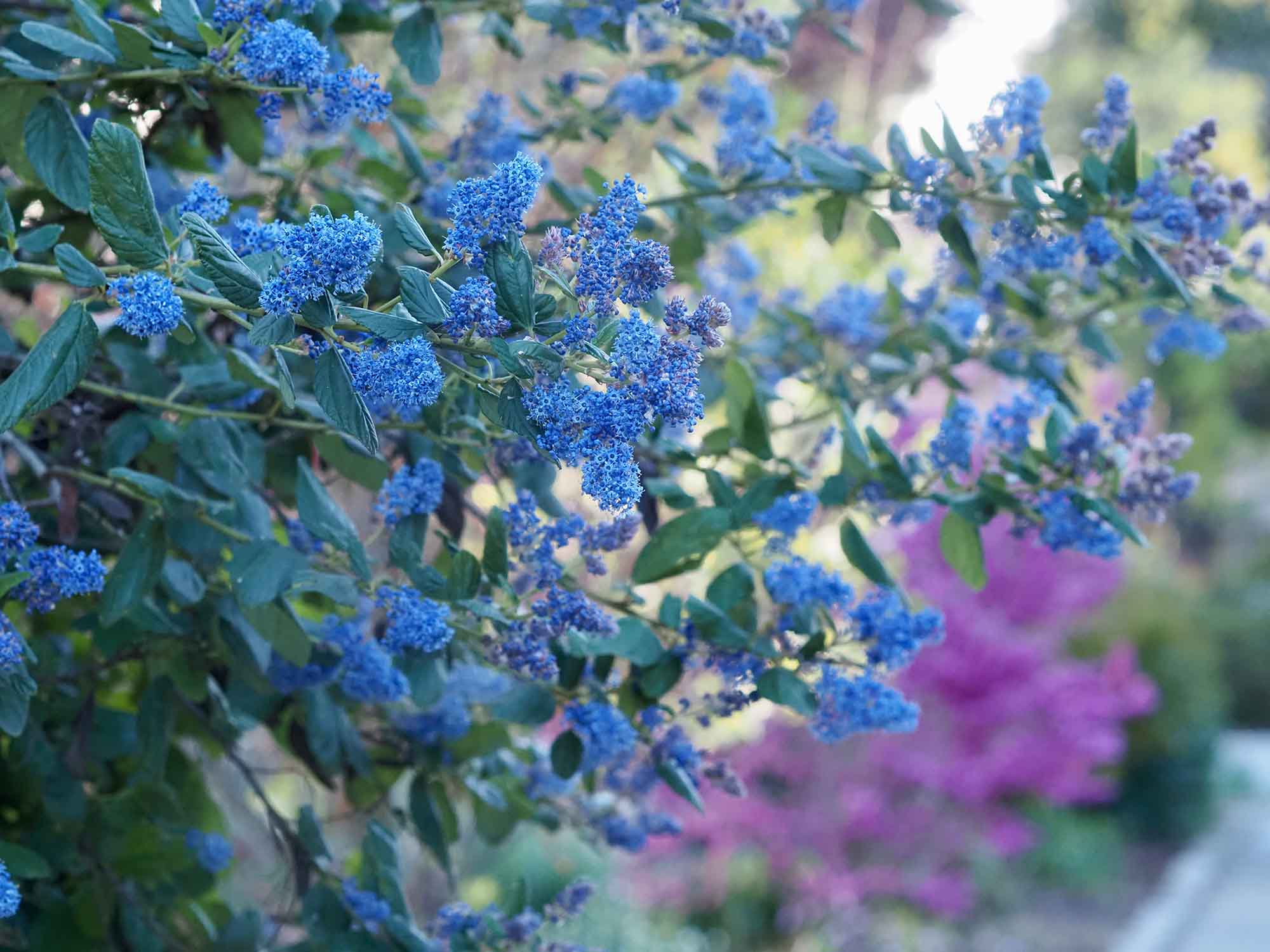
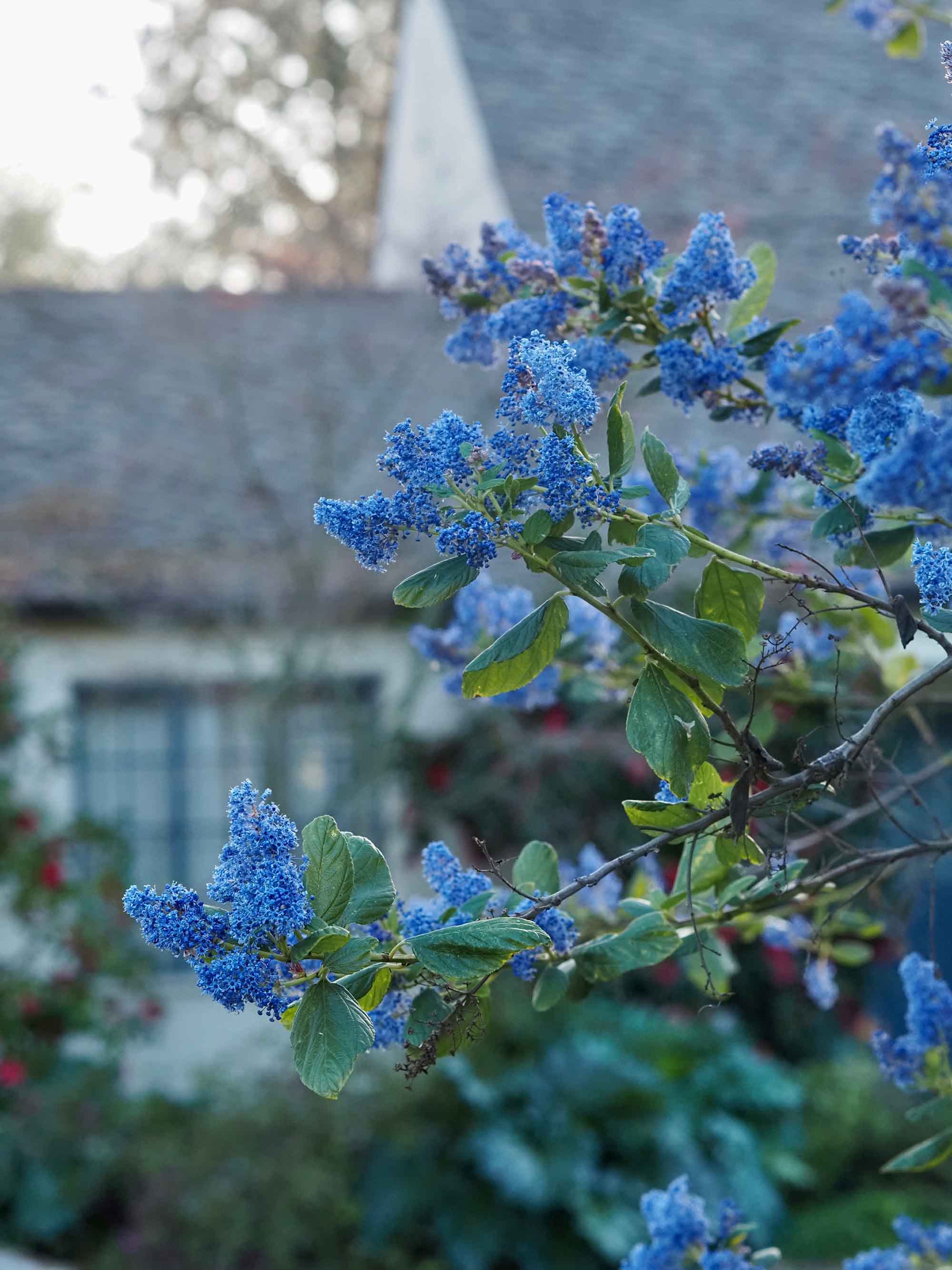
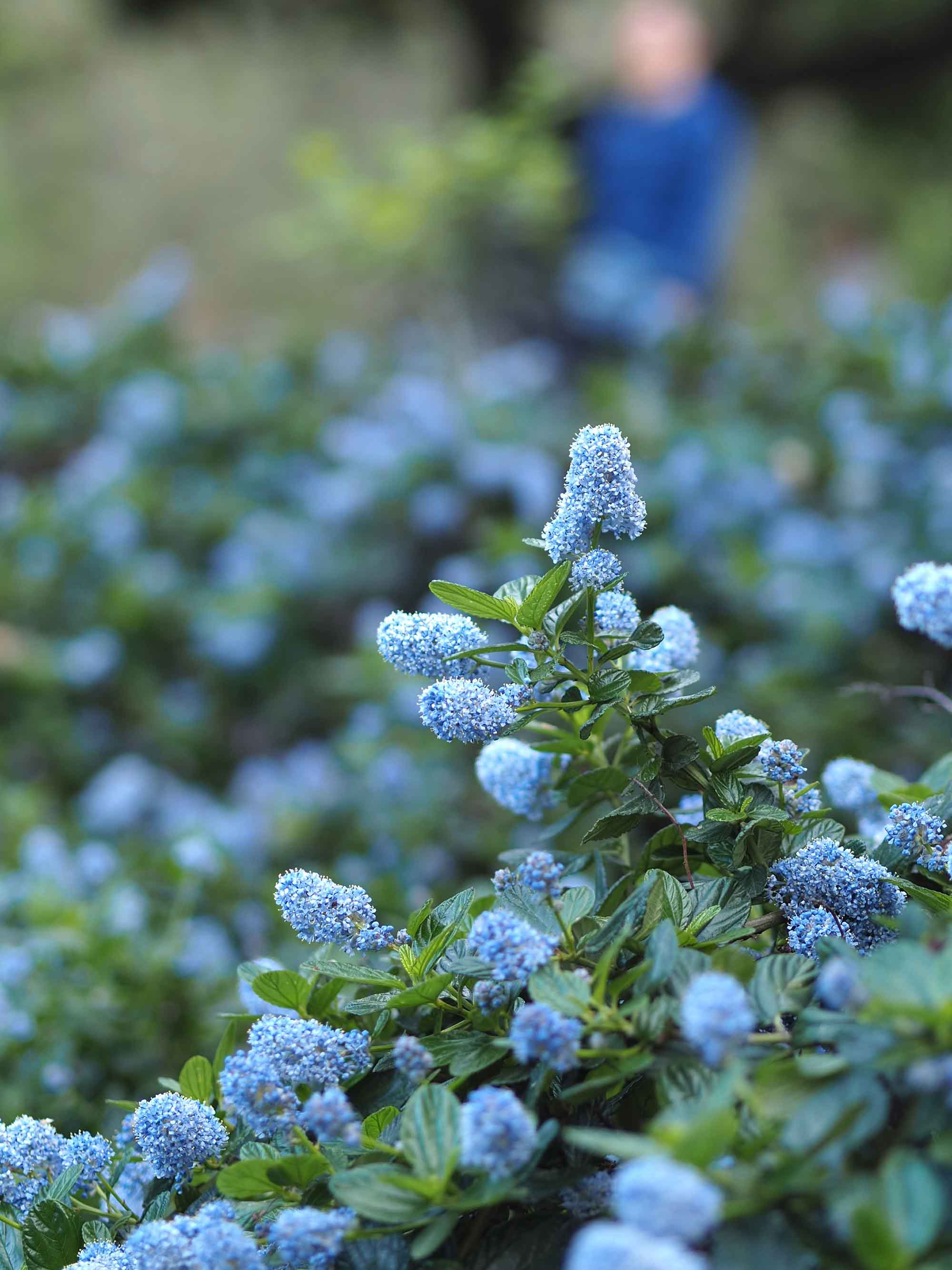
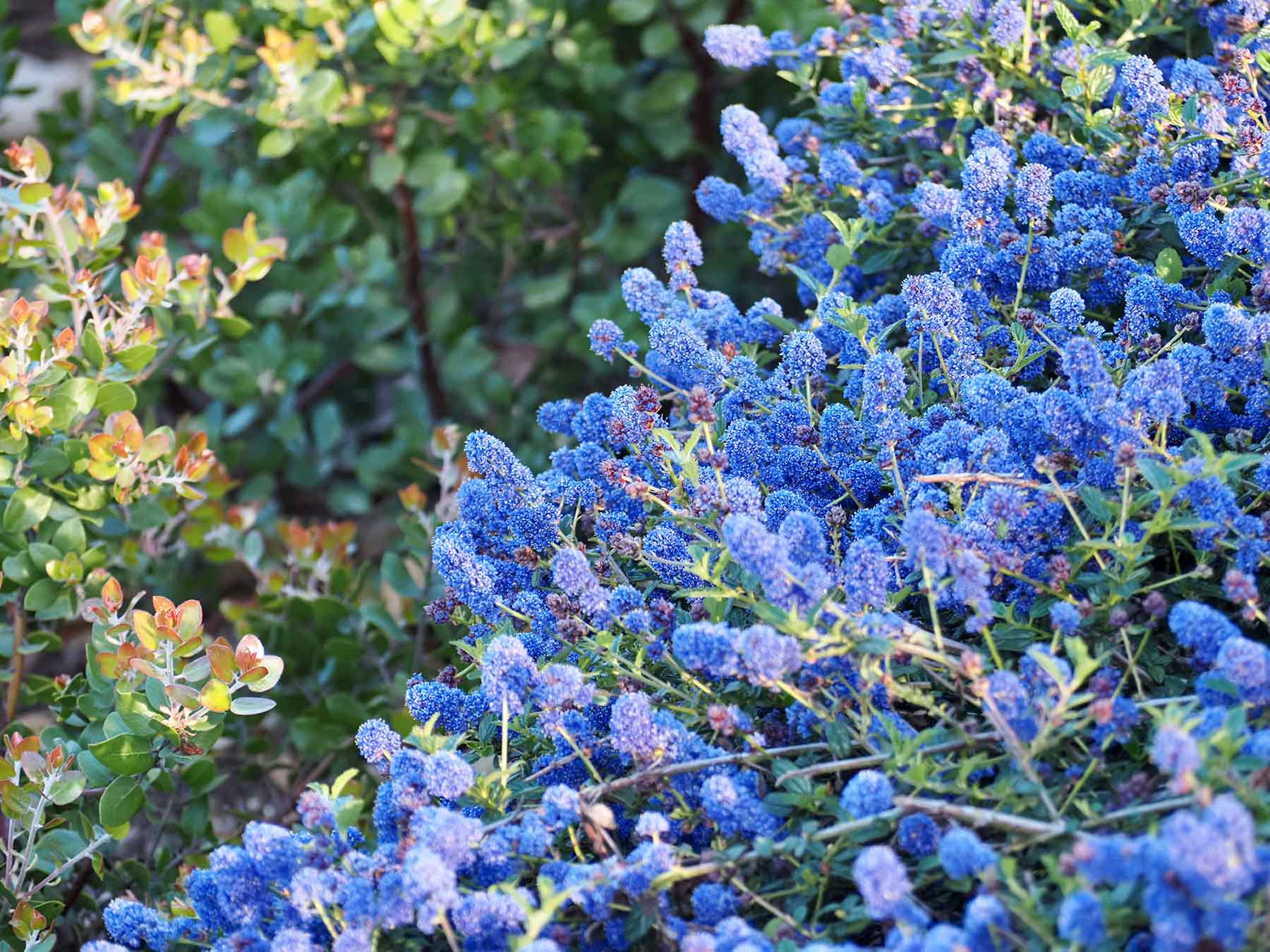
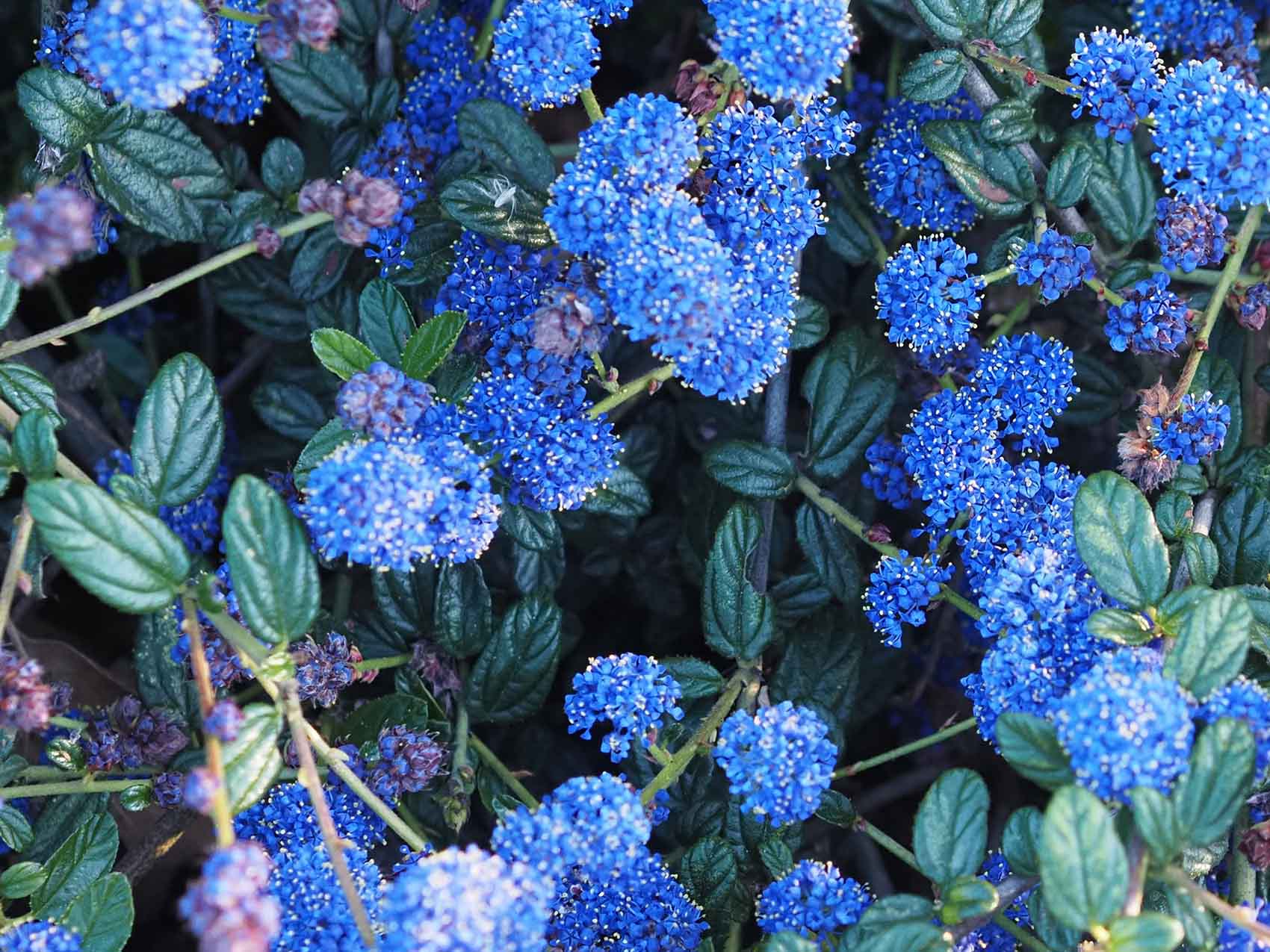
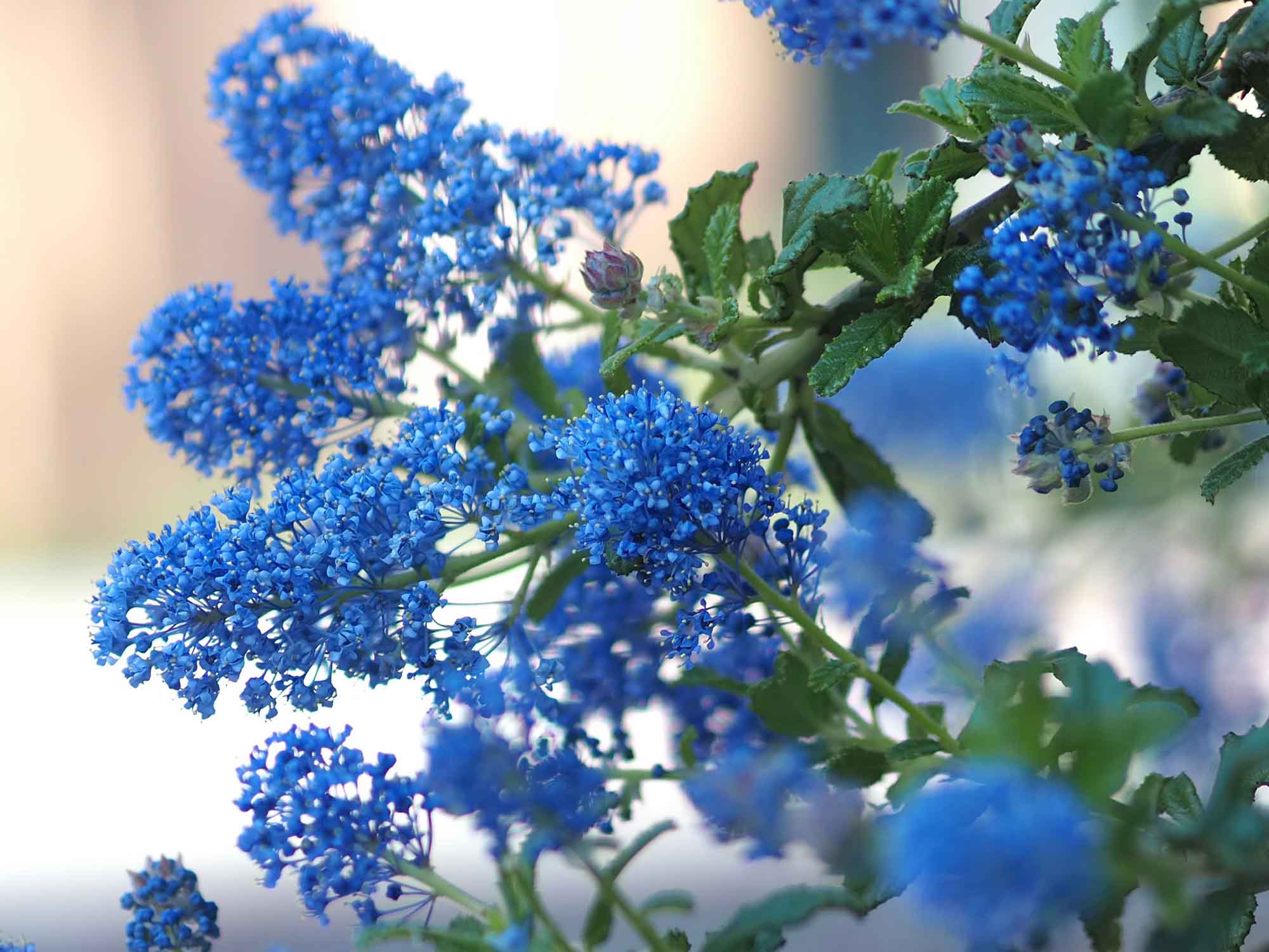
A garden of California native plantings can scarcely be considered complete without at least one of these usually evergreen small trees, shrubs, or groundcovers. Spectacular lilac-like blossoms in every shade of blue, and sometimes in white, appear in March and can last into April.
The genus is native through much of North and Central America but explodes in diversity in California, where dozens of species have evolved. Still, the distinction of the first species named goes to C. americanus, from eastern North America and known as New Jersey tea: a beverage made from its (caffeine-free) leaves and roots was prepared by indigenous groups and used as a tea substitute during the Revolutionary War. (Coffee-berry, Frangula californica, is in the same family; native tribes used its fruits to brew a coffee-like beverage, also caffeine-free.)
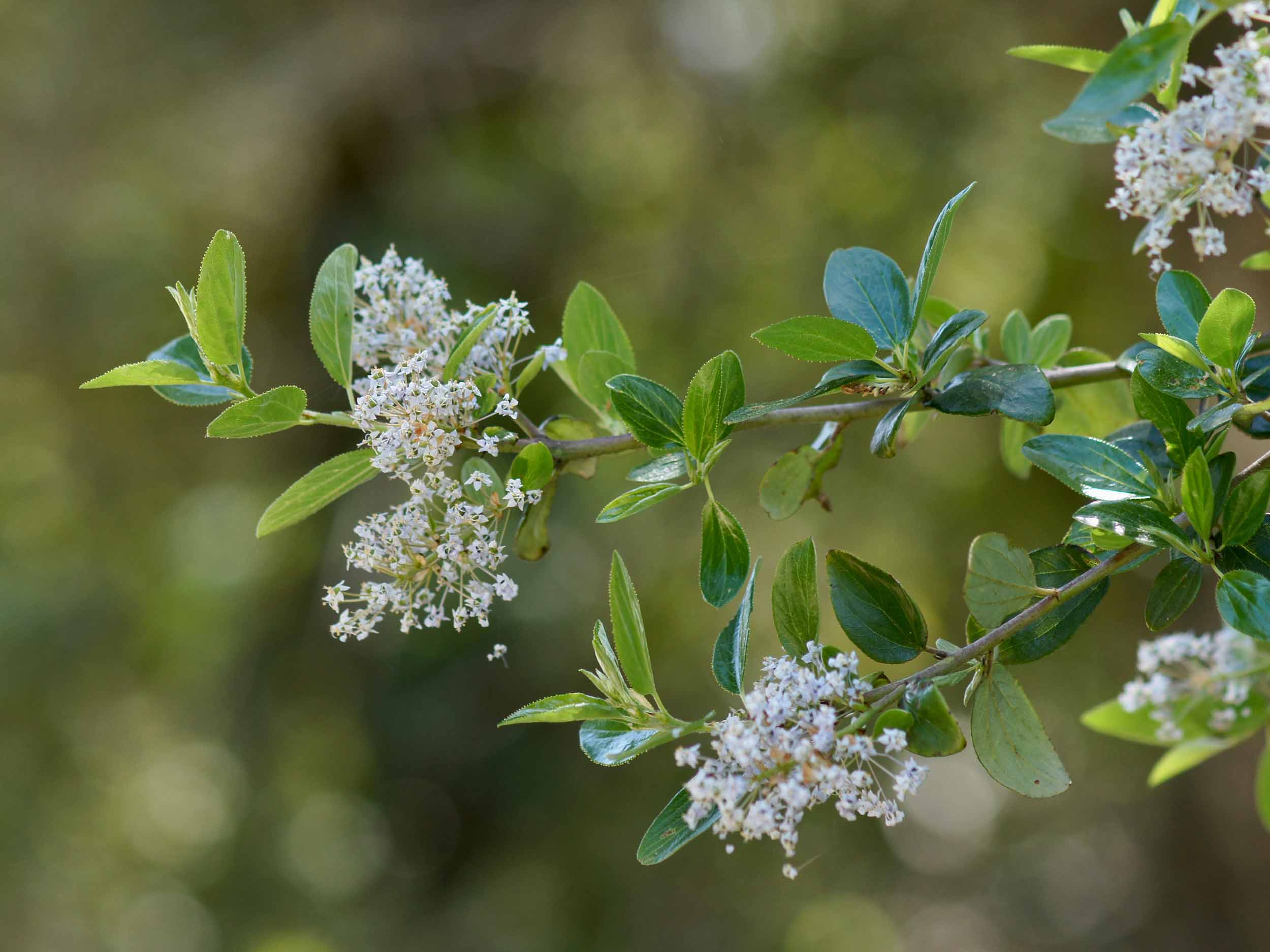
White-flowered buckbrush (C. cuneatus var. cuneatus), which can develop dramatically fluted trunks with age, and the very pale blue–flowered Jim brush (C. oliganthus var. sorediatus) are native to Jasper Ridge; neither is planted on main campus.
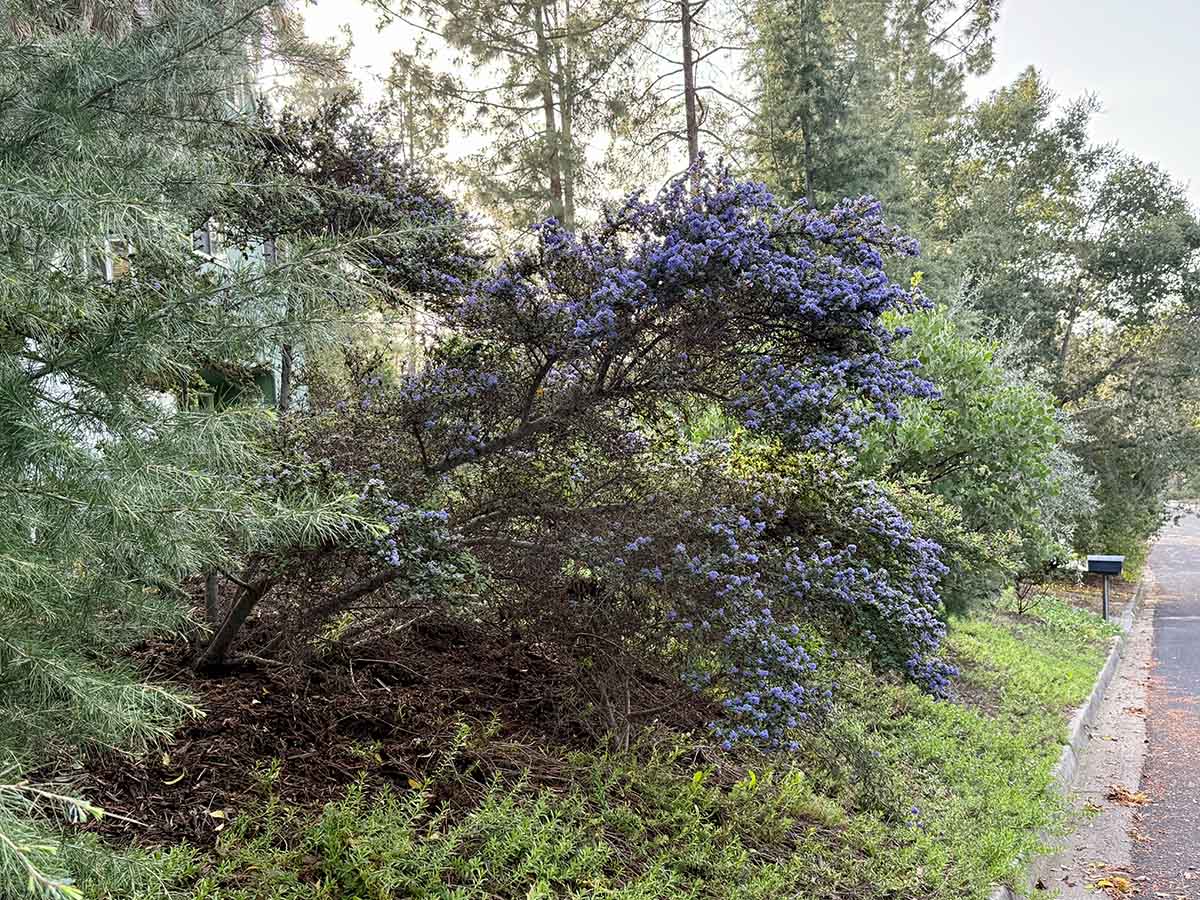
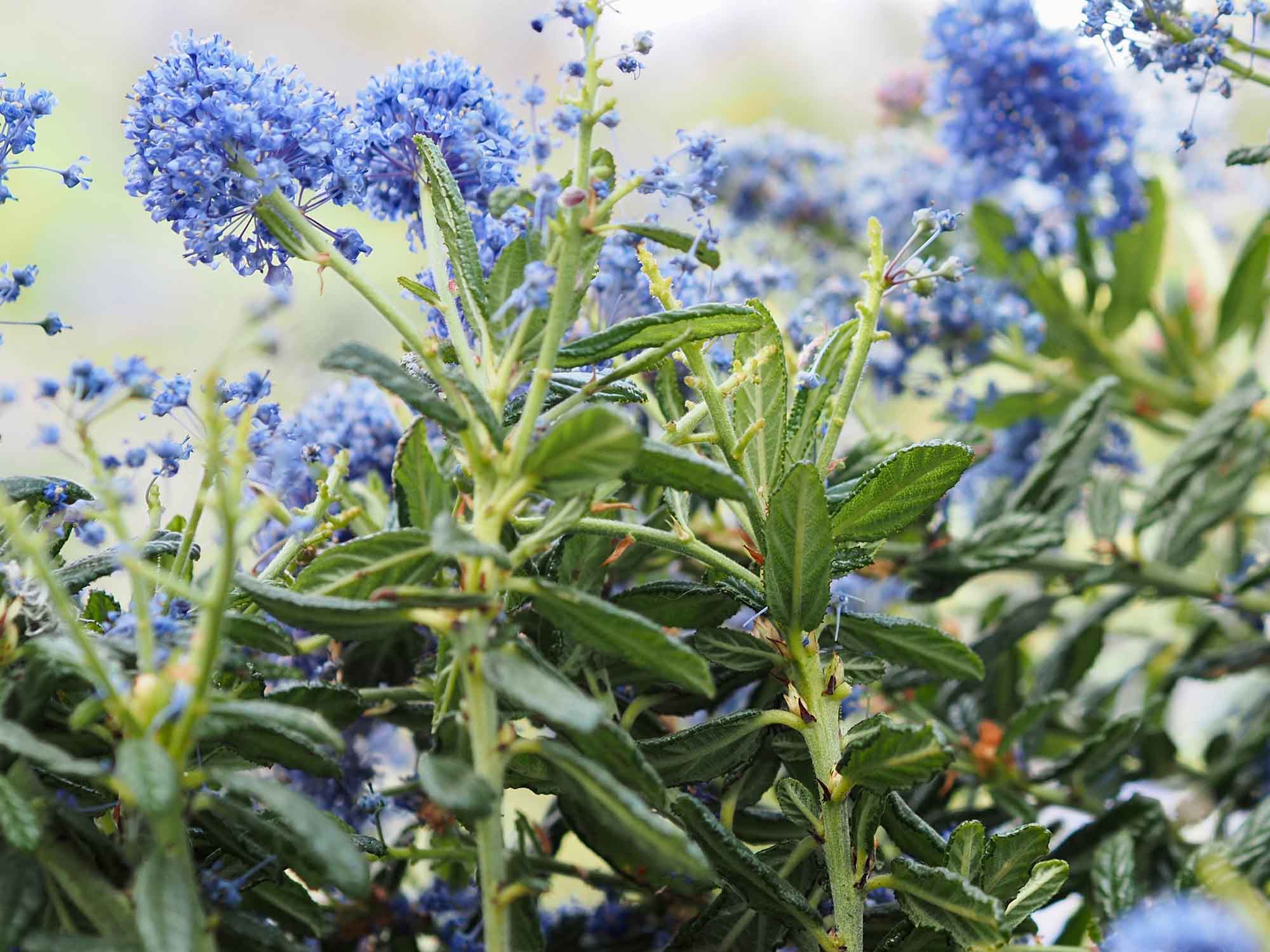
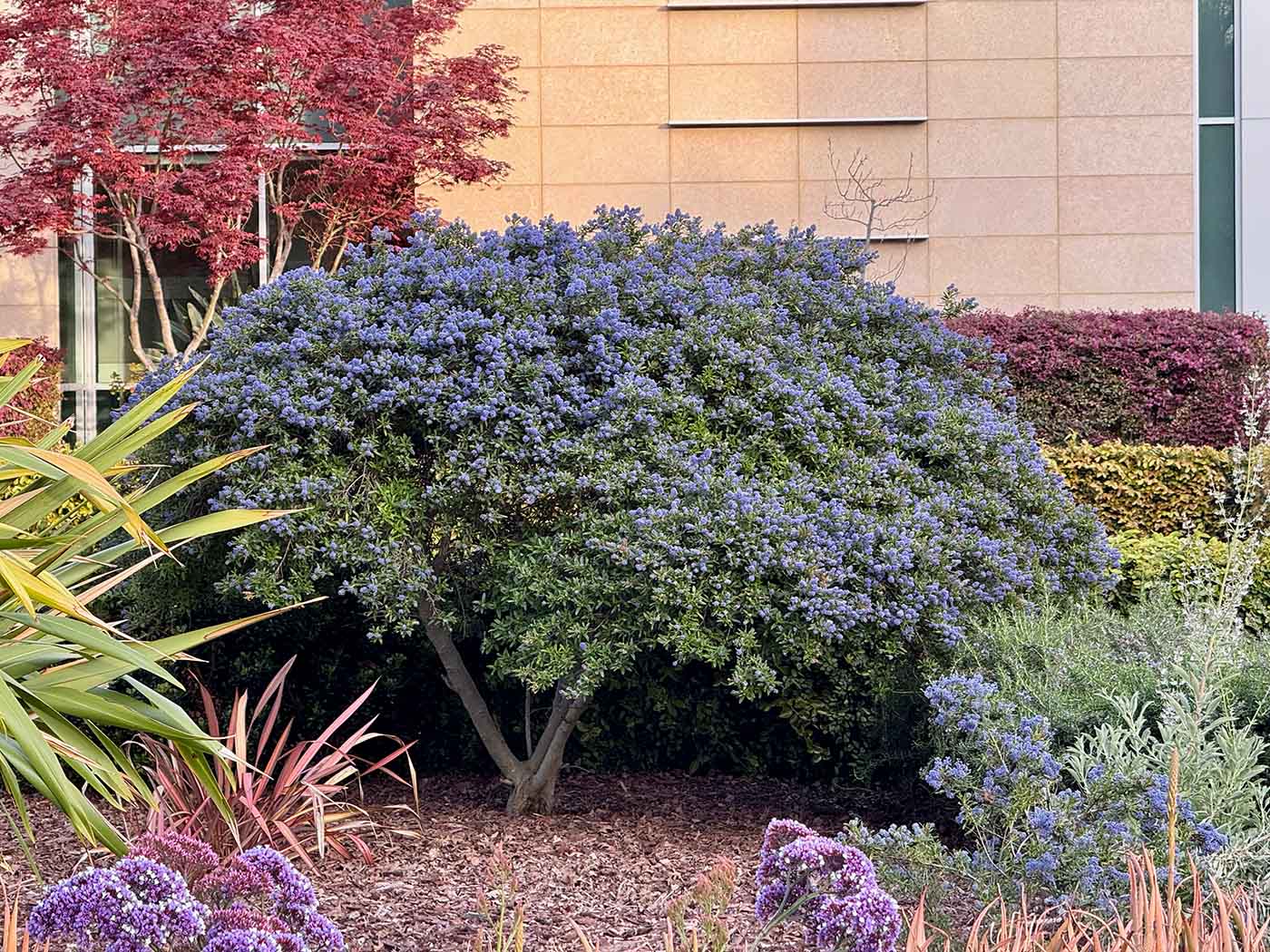
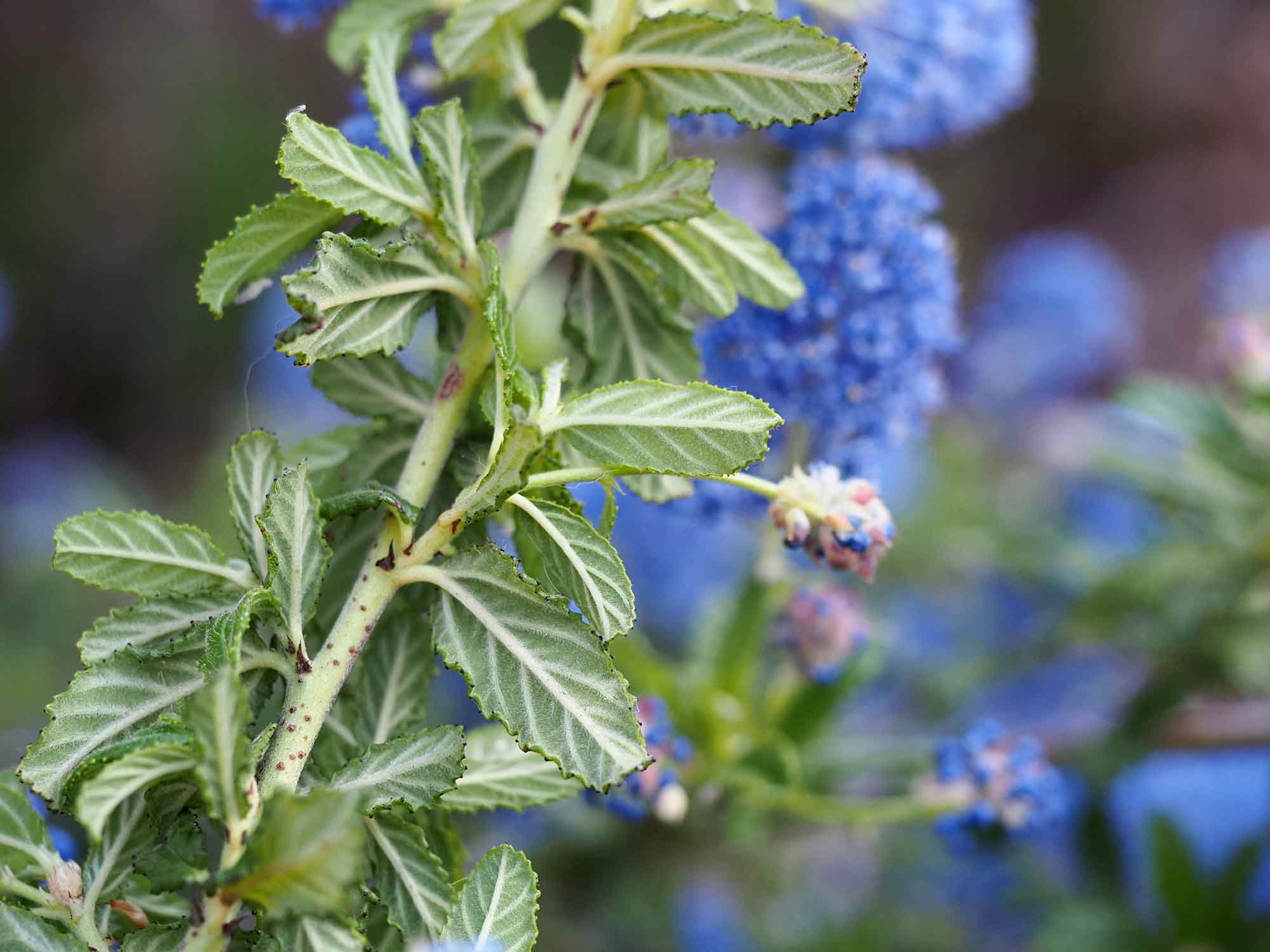
‘Ray Hartman’, a hybrid of C. arboreus and C. thyrsiflorus var. griseus is the most popular tree form, with flowers of bluebird blue and glossy elliptical green leaves with paler undersides and three distinct veins rising from the base. See it along Salvatierra Street: on the right at 593, on the left at 708, and as a row of upright street trees at 635, a first for campus. Two young plantings are on the right at 1117 California Avenue in the Stanford Research Park (2025).

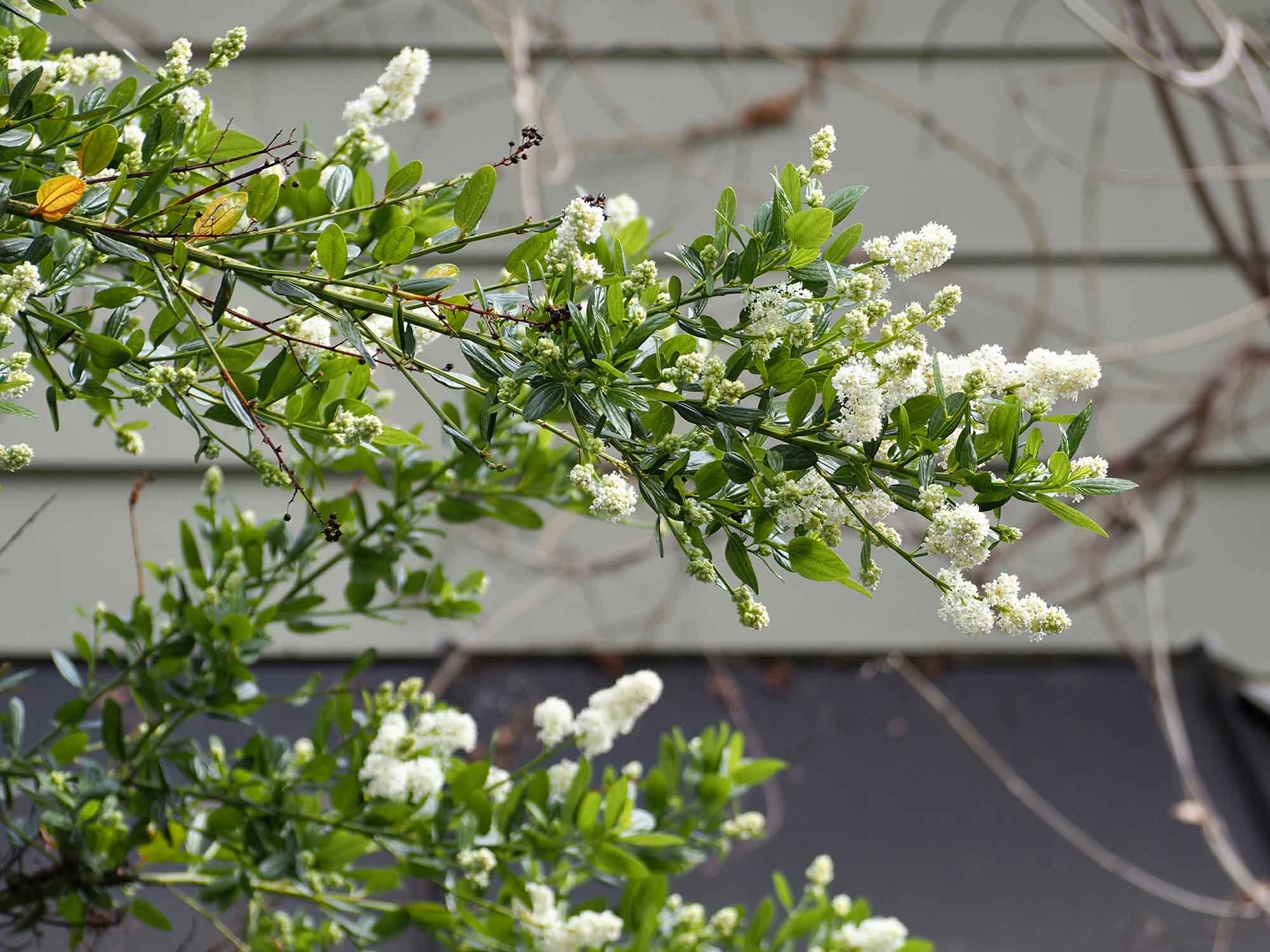
C. thyrsiflorus var. thyrsiflorus ‘Snow Flurry’ is another small tree or large shrub; the flowers are white. Specimens on the left corner of the house at 1515 California Avenue have rapidly grown to 10 or so feet with substantial greenish trunks. One is next to a ‘Ray Hartman’ at the north tip of Frenchman’s park (2006). Two shrubby specimens are in the Waterwise Garden on Raimundo Way opposite Wing Place.

C. thyrsiflorus var. griseus ‘Yankee Point’ is the most popular ceanothus on campus, a vigorous ground cover that mounds to 2 or 3 feet and spreads to 8 feet. Its glossy dark green leaves, similar to those of ‘Ray Hartman’, are smothered in clusters of flax-blue flowers. Find it planted along Jane Stanford Way opposite the Quad, in front of McDonald Hall and Schwab Residential Center, at the north end of Meyer Green, and in numerous other campus landscapes and home gardens.
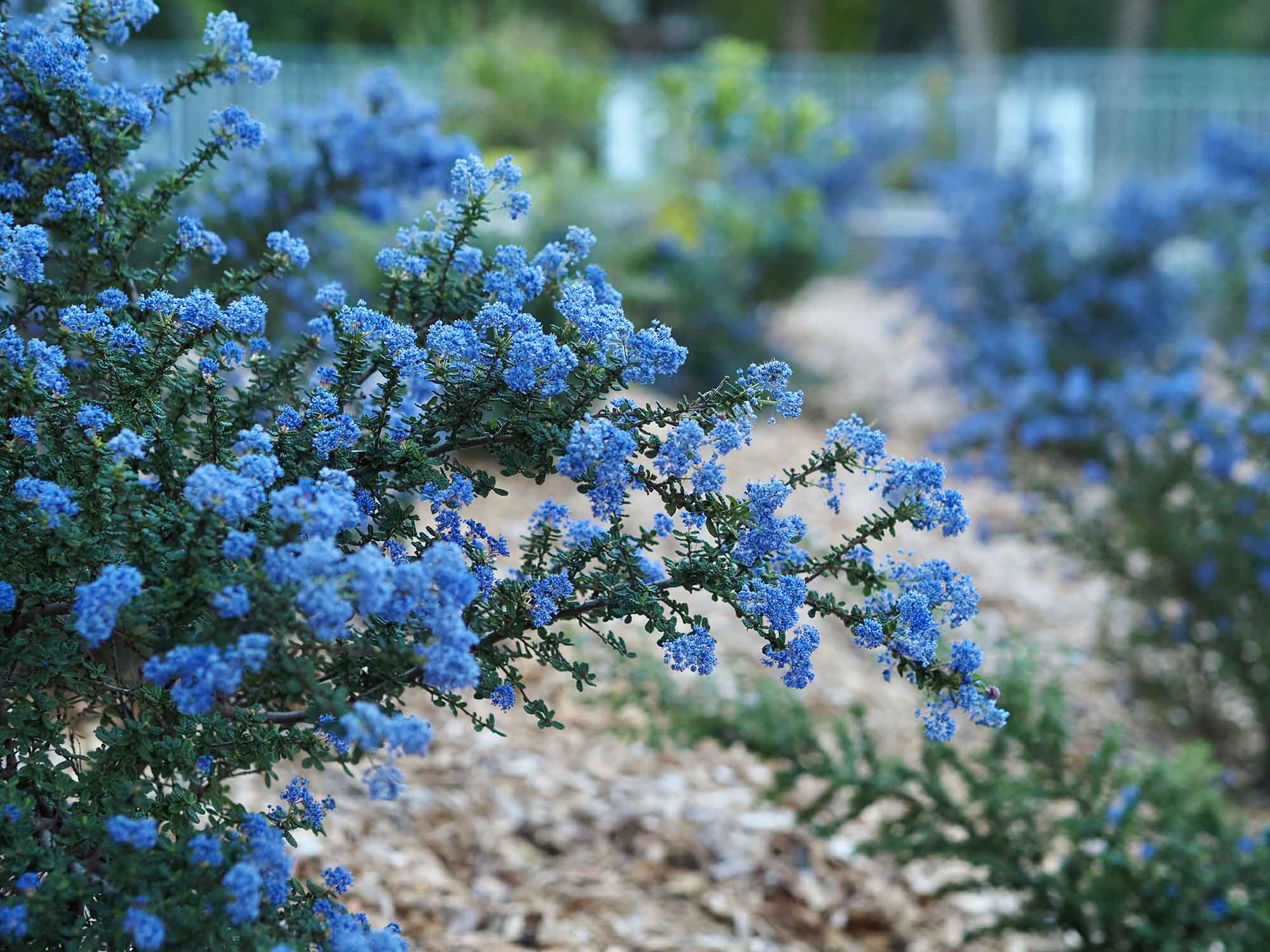
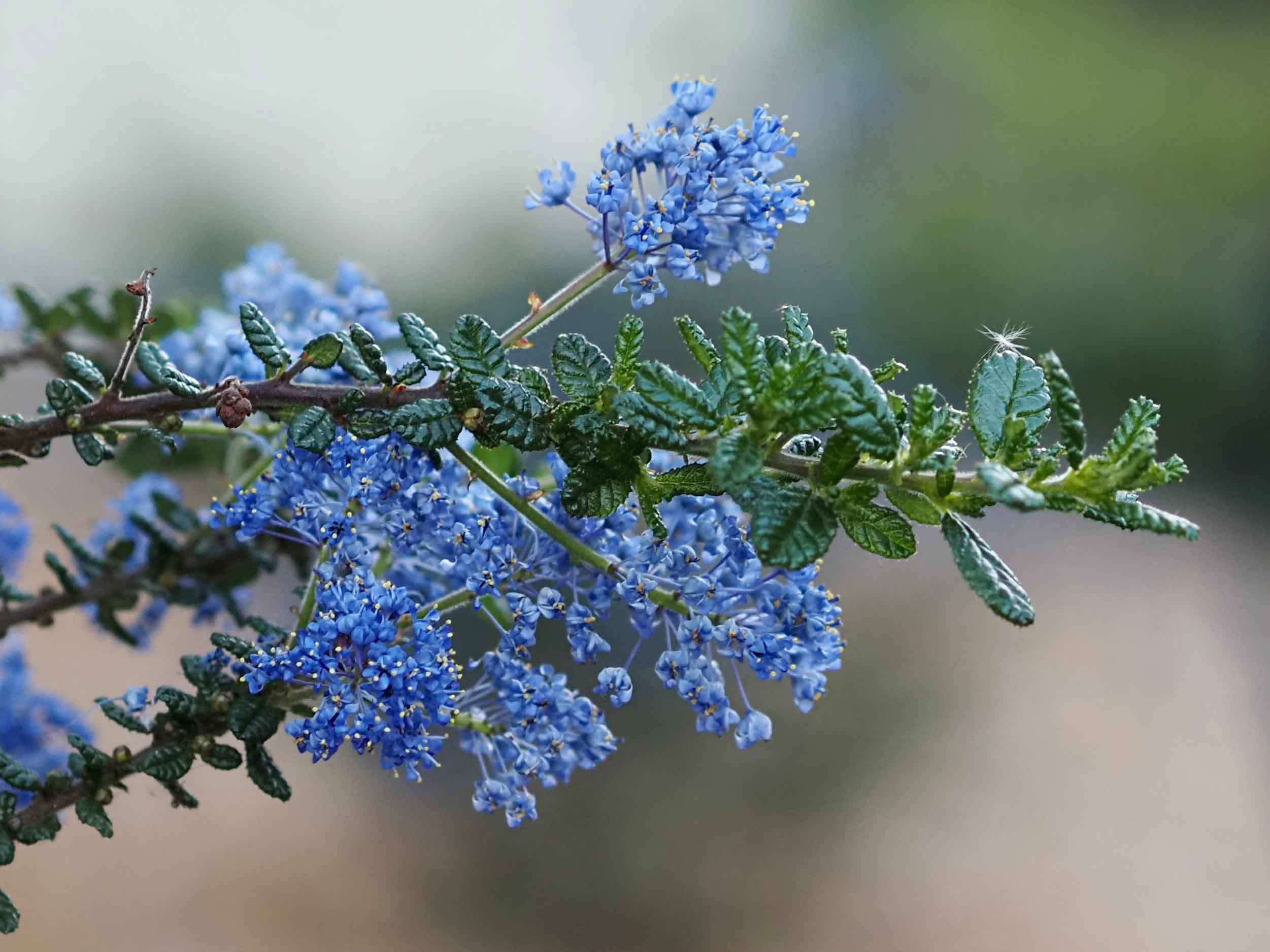
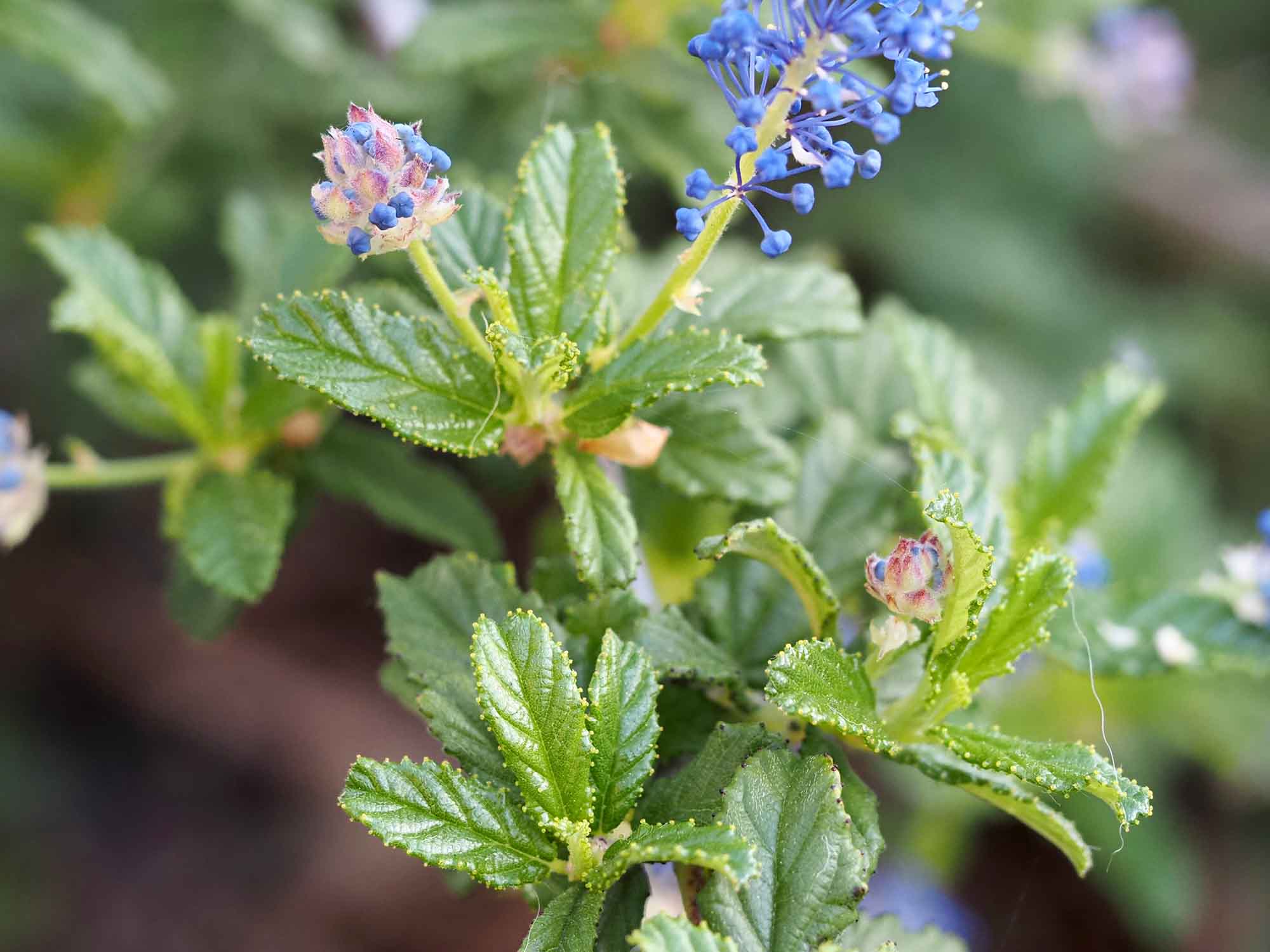
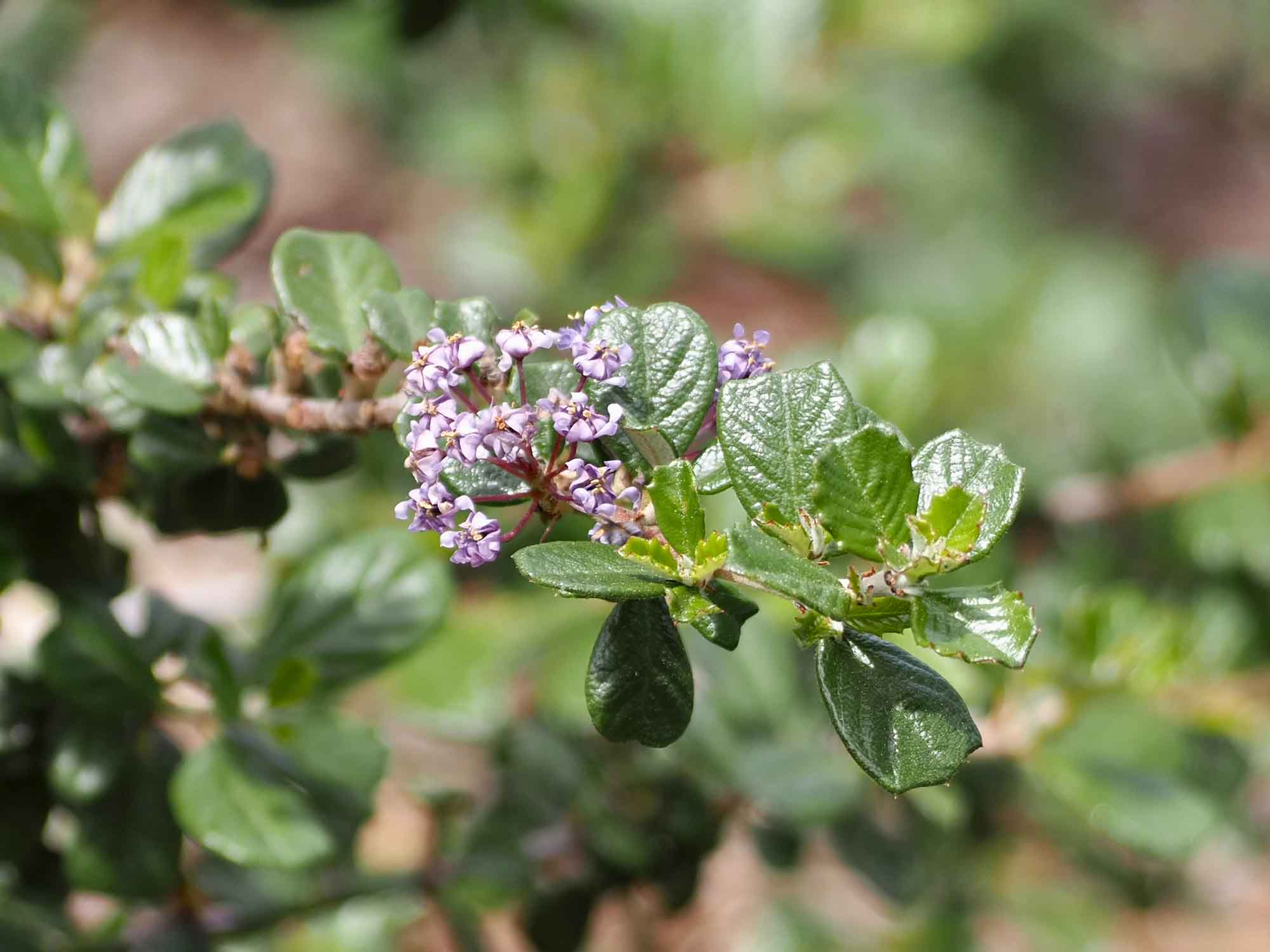
‘Dark Star’, a hybrid of C. impressus and C. papillosus, is a dense shrub up to about 5 feet tall, with flowers of the richest cobalt blue. Tiny dark leaves show a quilted effect from the impressed veins. Campus’s largest is in front of 920 Mears Court; several more are on the right of the driveway. Examples surround the bike parking on the right side of 780 Welch Road. Several line the parking strip on Stanford Avenue near the Dish entrance. ‘Concha’ is another hybrid selection of similar size; find it at 975 California Avenue.
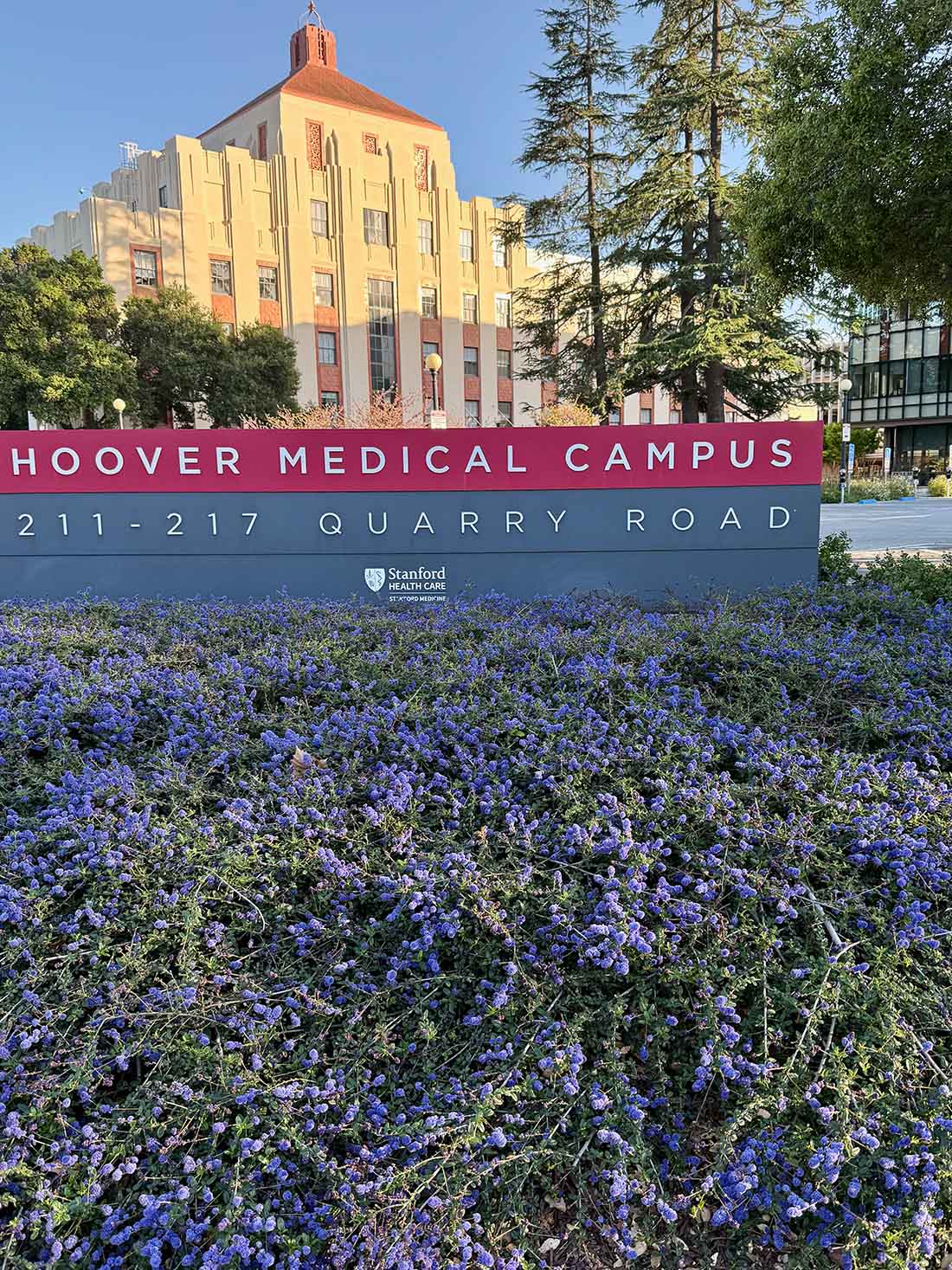
‘Joyce Coulter’, a low spreading shrub with small, dark green leaves and deep blue flowers, can be seen on Arguello Way just south of Buckeye Lane. ‘Centennial’, another low groundcover, is mounded around the sign on the south corner of Quarry Road and Palo Road. C. maritimus ‘Valley Violet’ is the smallest of our cultivated ceanothus, with tiny oppositely-arranged leaves; see it on Cottrell Way, on the left at 957 and on the right of the driveway at 908.
‘Dark Star’, ‘Joyce Coulter’, ‘Ray Hartman’, and ‘Yankee Point’ are introductions of the Saratoga Horticultural Research Foundation.
Gallery

Related material: Stanford Grounds Plant Information Sheet. List No.14, p.2.
About this Entry: Authored Apr 2025 by Sairus Patel. Last updated Aug 2026 (SP).

