

Camellia
 The camellias
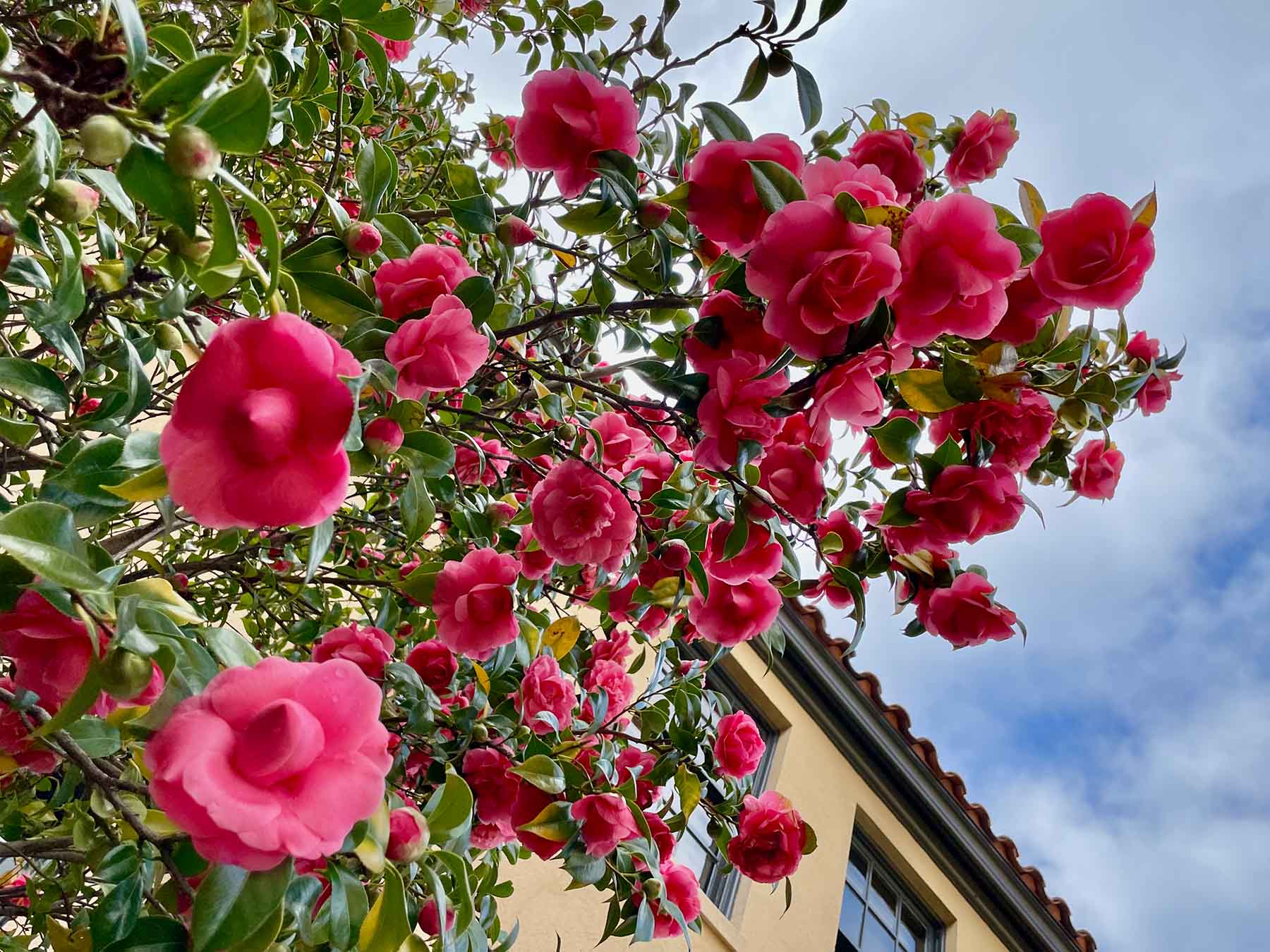
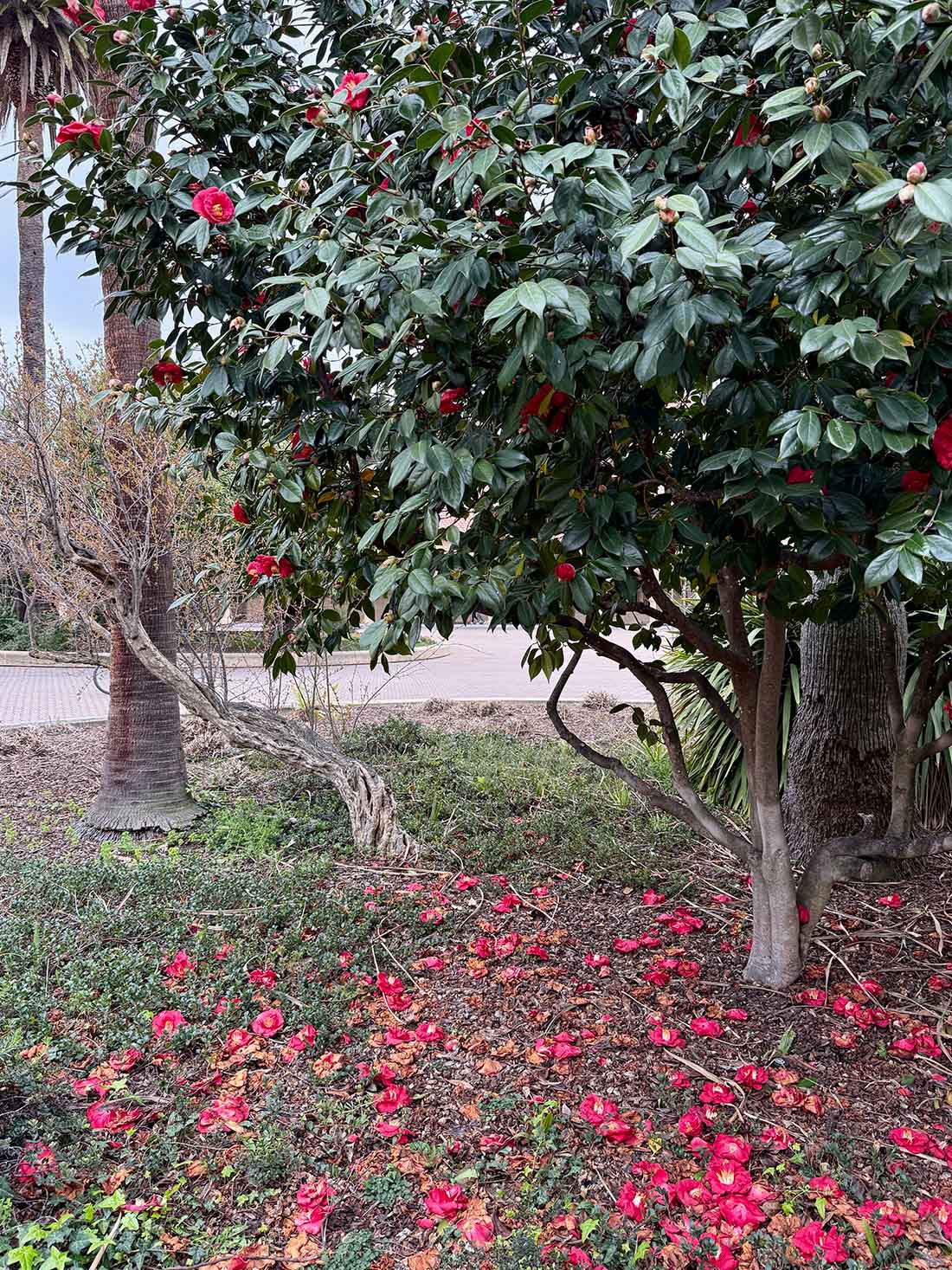
Glossy deep green leaves and an extended season of exceptionally showy blooms distinguish the popular horticultural species and cultivars of this tropical and subtropical Asian genus.
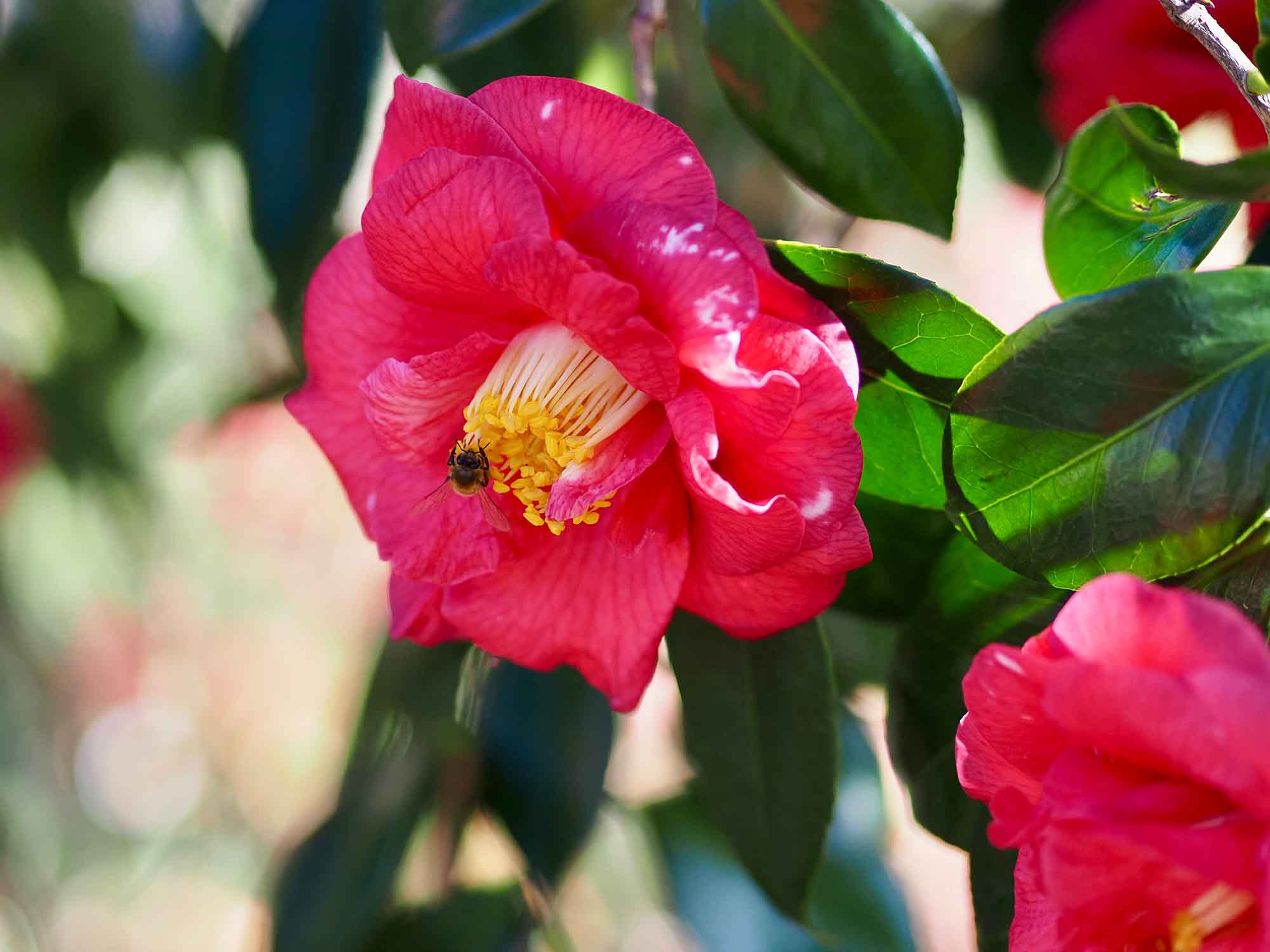
C. japonica, from eastern Asia, is the most commonly planted, and deservedly so. An individual plant can be in flower for months. It can grow into an elegant small tree with smooth gray bark, but is seldom allowed to do so. As a tree, with time and some attention, it can provide a charming canopy under which a table for two can easily be accomodated. A resplendent multistemmed specimen in the outer northeast circle of the Inner Quad, planted in 1985, is an 1877 cultivar from France, ‘Adolphe Audusson’. It blooms from December to March. The semi-double flowers have three layers of glowing dark red petals. From the center emerges a prominent cylinder of creamy stamens, suffused in red at the base and tipped with golden anthers; petal-like stamens are occasionally present. A few flowers show bits of of white variegation, but you have to look for it. (Variegation is the result of a virus, and can be effected by using a virus-infected rootstock.)
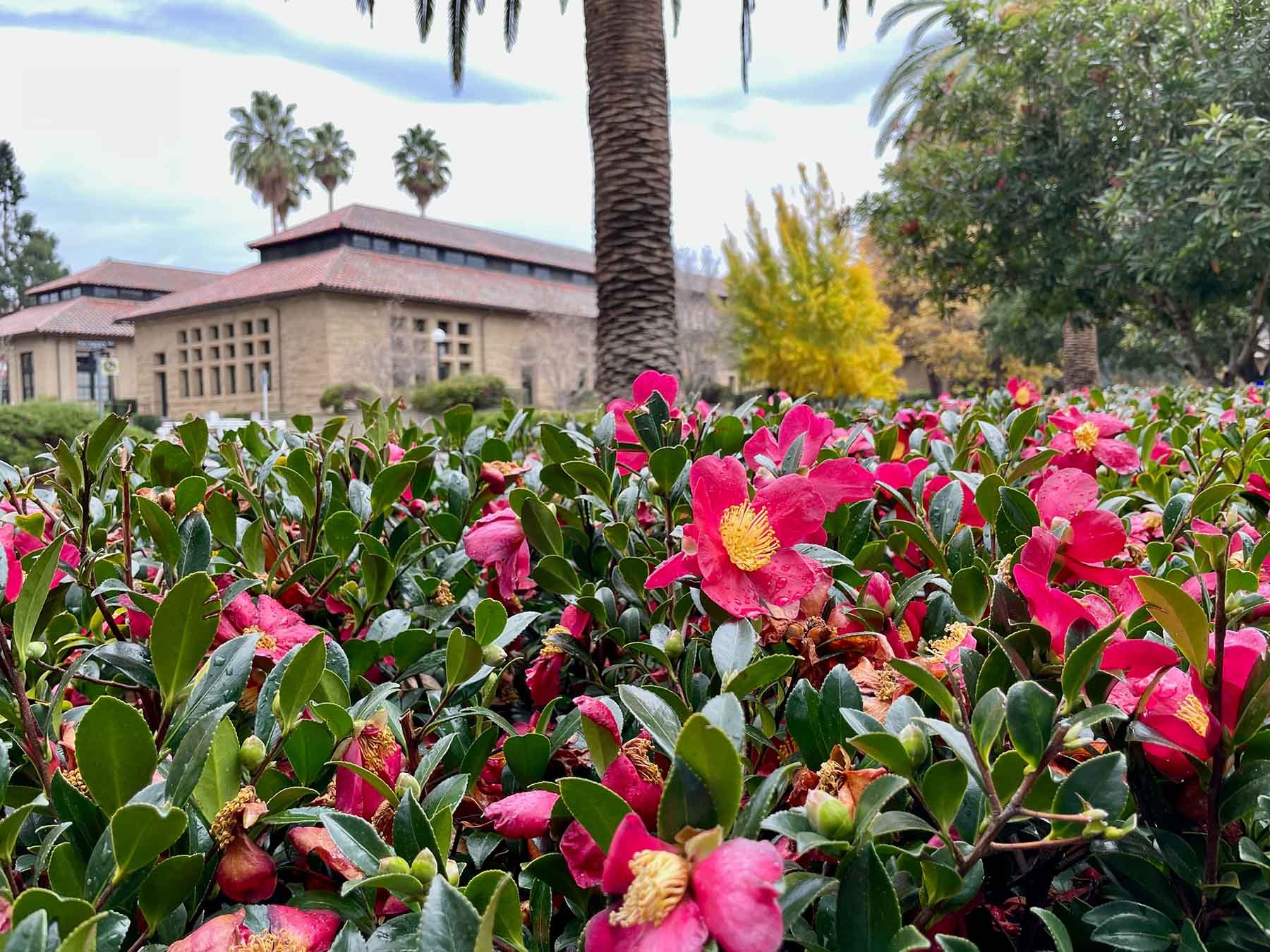
The Japanese native C. sasanqua has generally smaller leaves and flowers. ‘Misty Moon’, a 1980 introduction from the fabled Nuccio’s Nurseries in Southern California, is in the outer southeast circle of the Inner Quad, also planted in 1985. It blooms from around October to January. The semi-double flowers have light lavender-pink petals surrounding golden stamens. Popular ‘Yuletide’ with scarlet flowers and yellow stamens is behind Memorial Church along Escondido Mall and, yes, blooms around Christmas.
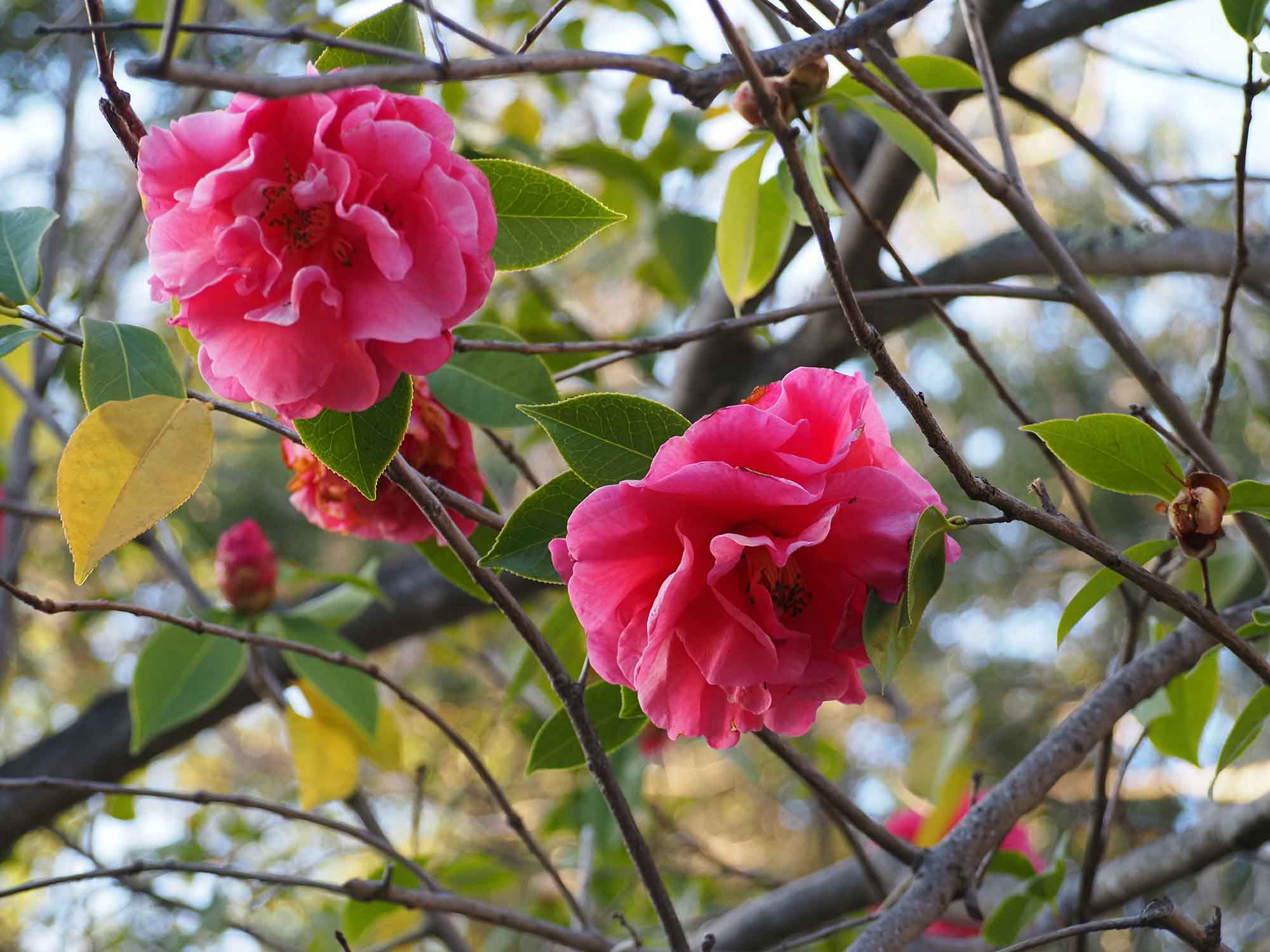
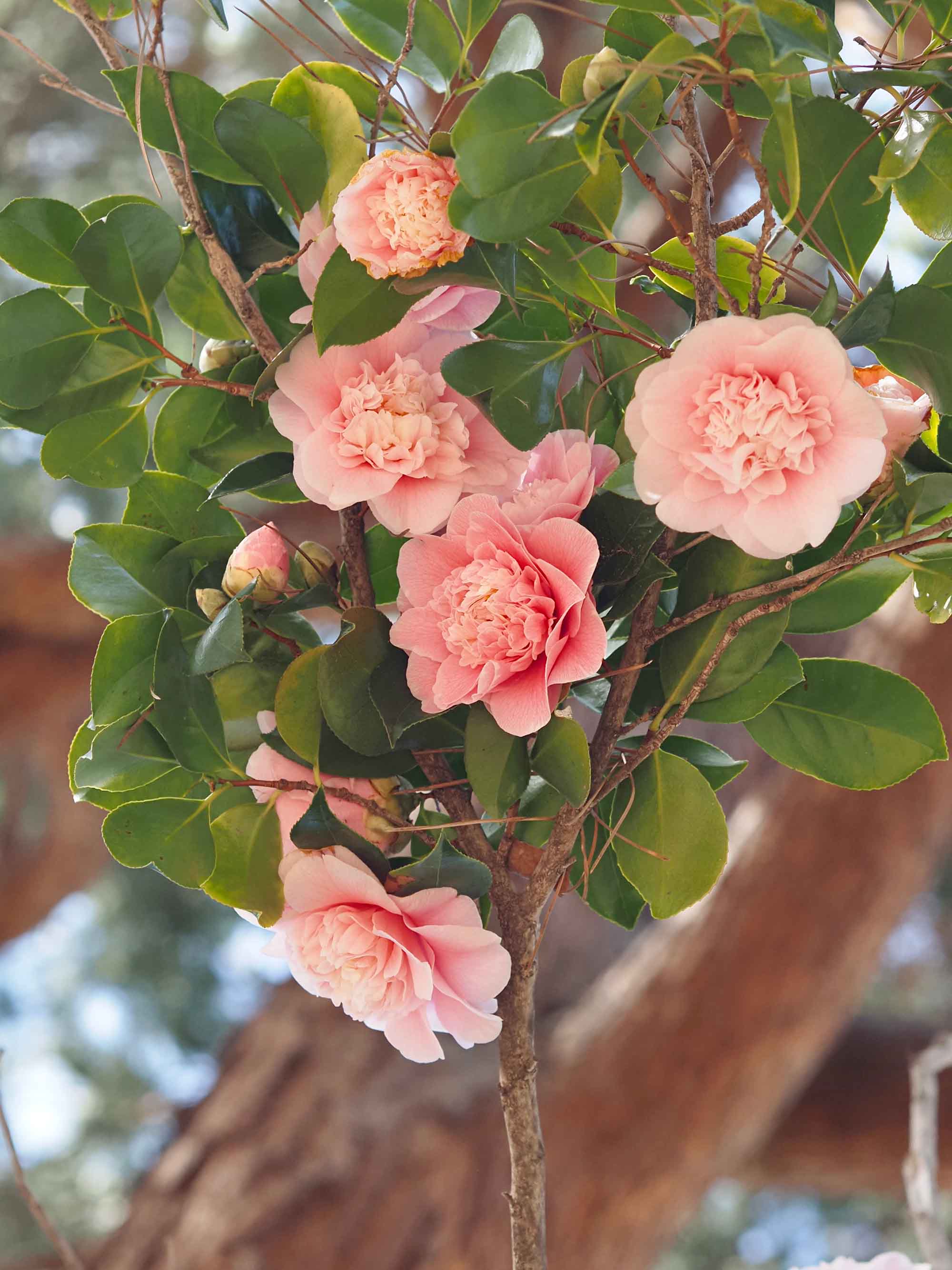
C. reticulata, native to China, is the tallest of the camellias common in horticulture, though it can have a rather gangly form. Remarkably large flowers more than make up for this occasional lack of grace. A 14-foot specimen with deep pink double flowers stands at the south edge of the Amy Blue Garden, which is on the west side of the back of Memorial Church. The camellias in this area, i.e. behind the east bench of the Garden, were donated to Stanford in 2017; they were from the garden of the late Marjorie O’Malley, a camellia aficionado. Others from this gift line the pathway on the east side of the back of the church; here can be found a shorter shrubby C. reticulata with white flowers next to the tulip tree (Liriodendron tulipifera).
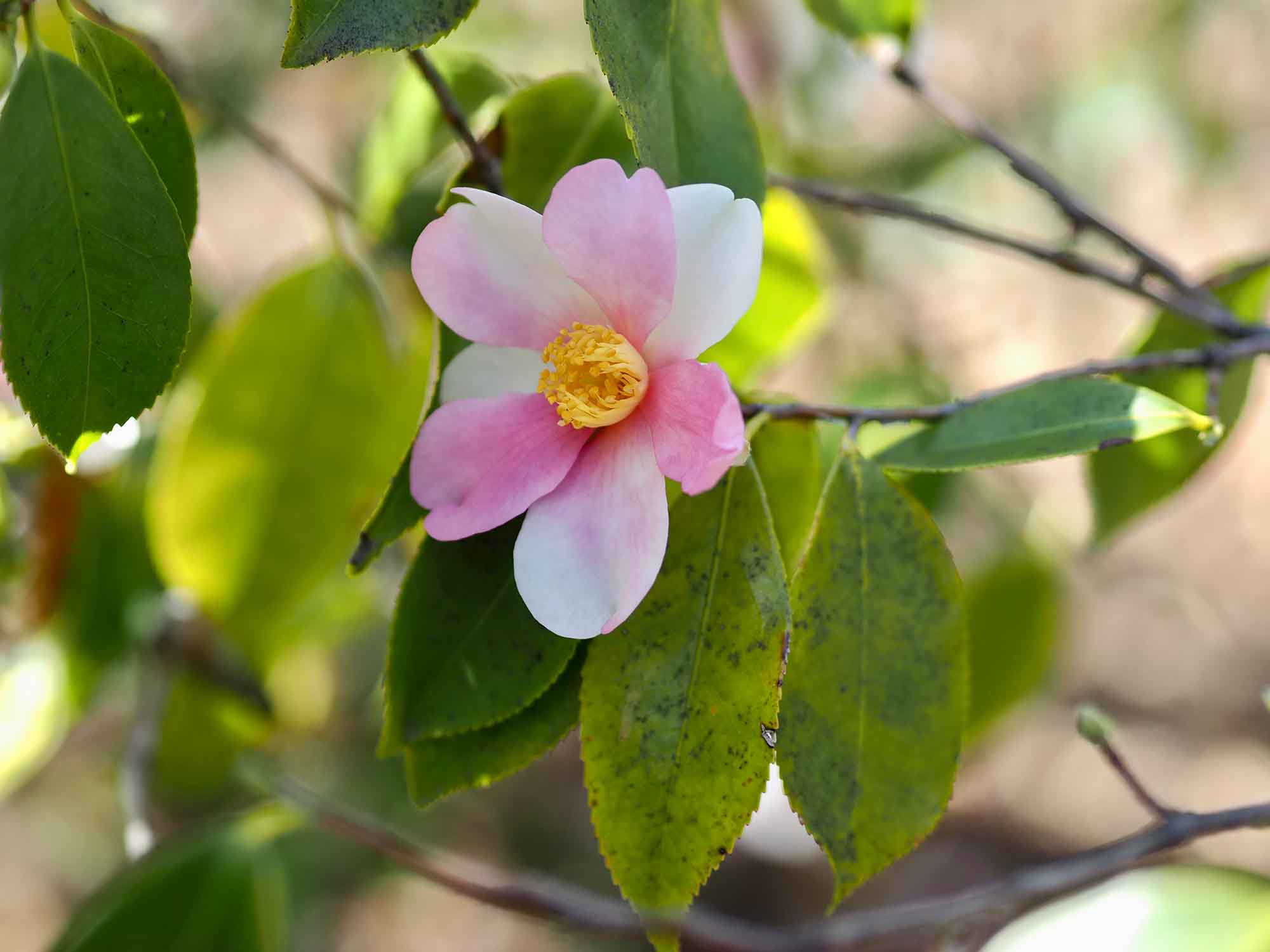
Camellia hybrids abound in horticulture. ‘Yume’ has pink and white petals, often alternating; a short specimen is next to the pink C. reticulata.
C. sinensis, the plant from which tea is traditionally made (typically using the leaf buds), has been considered for planting near the O’Malley collection by the local camellia society; it’s unclear if the plan was carried out. It grows in local home gardens; you can cultivate your own favorite, such as ‘Darjeeling’, for a truly personal cuppa.
Gallery
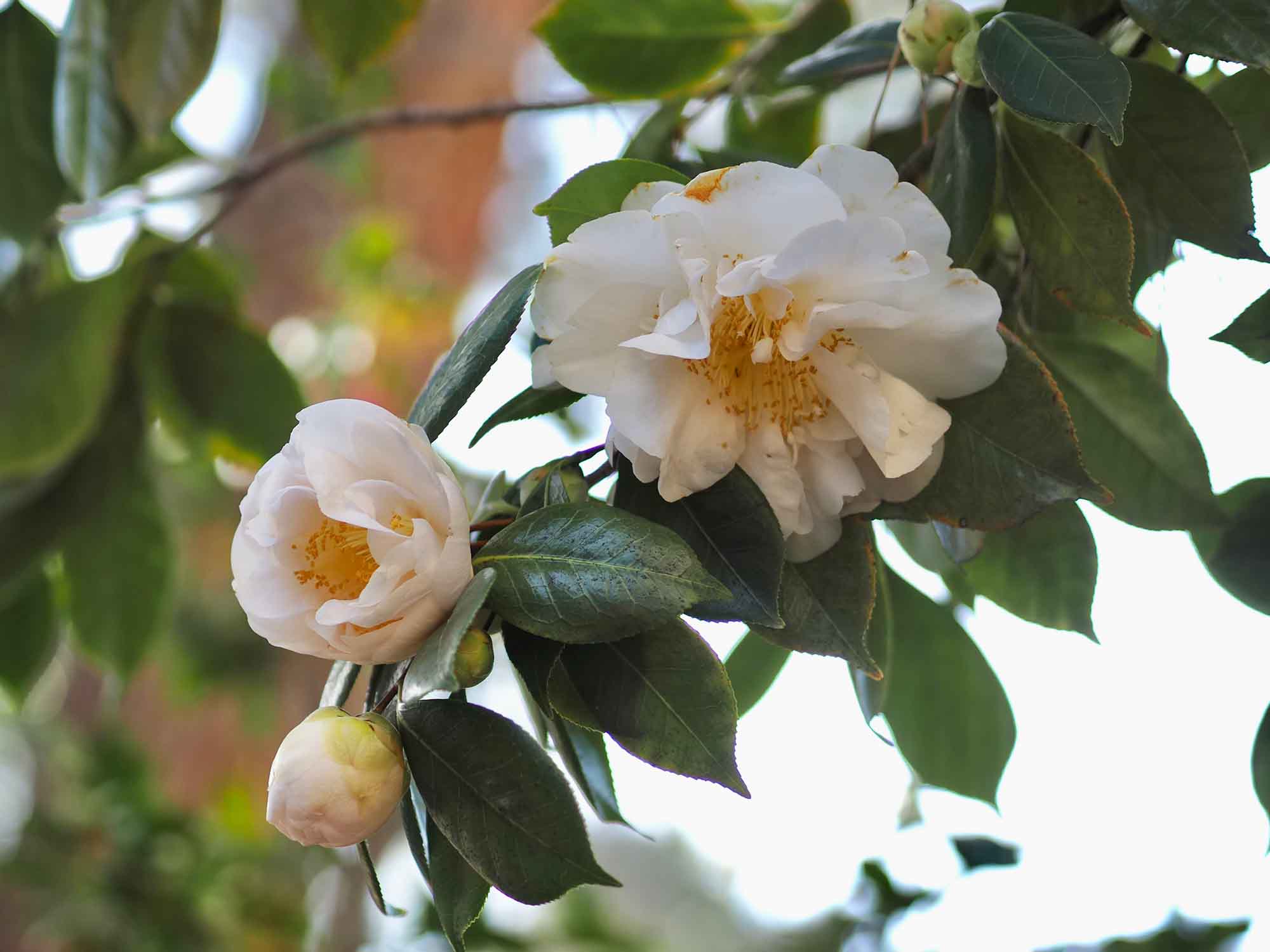
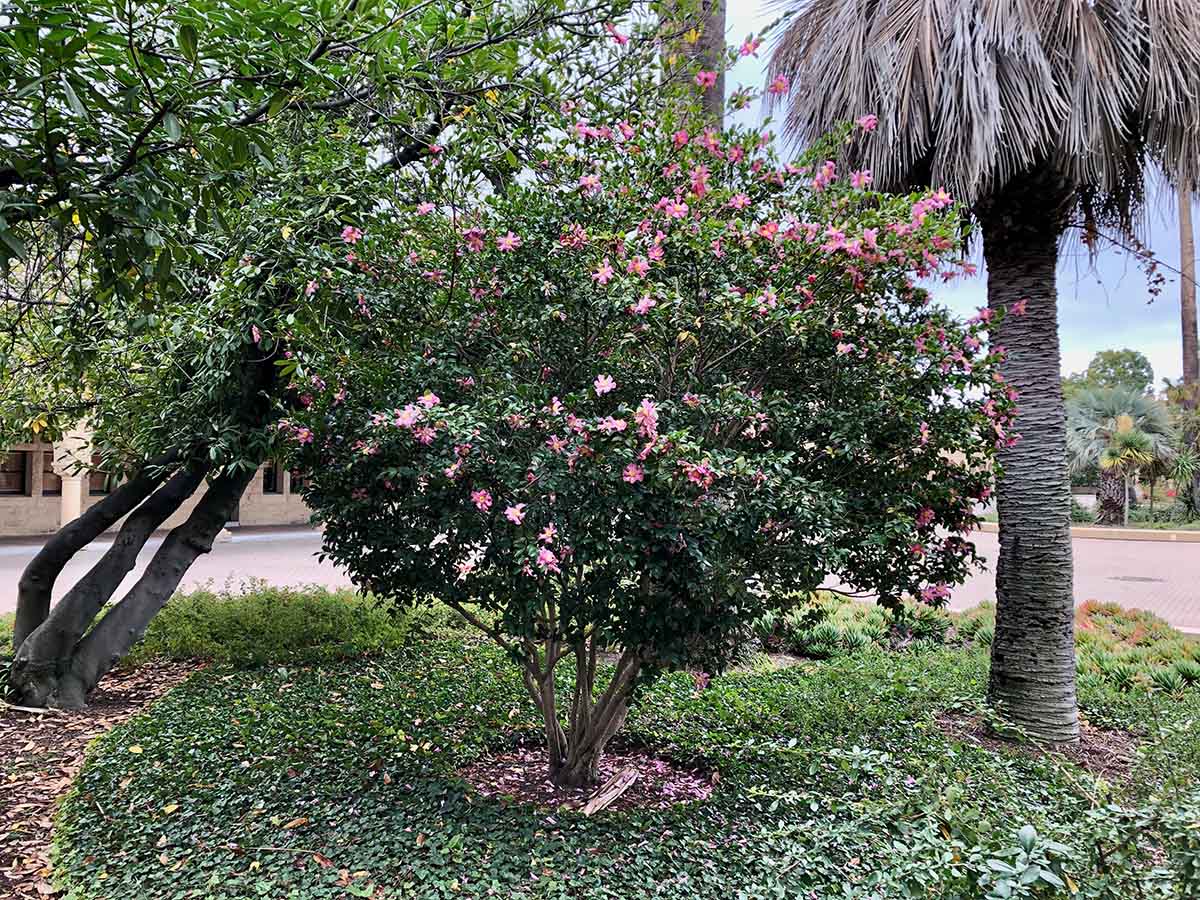
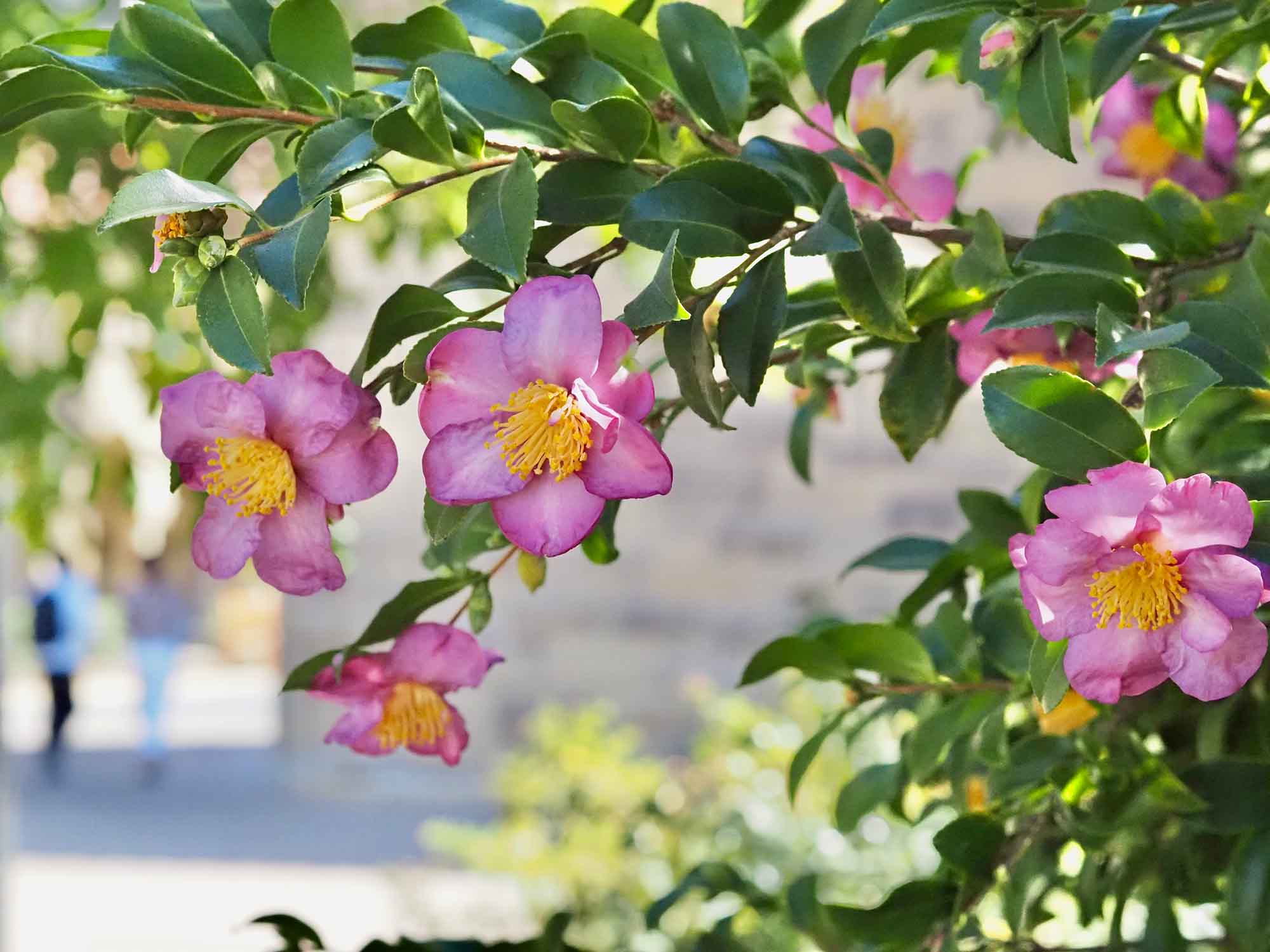
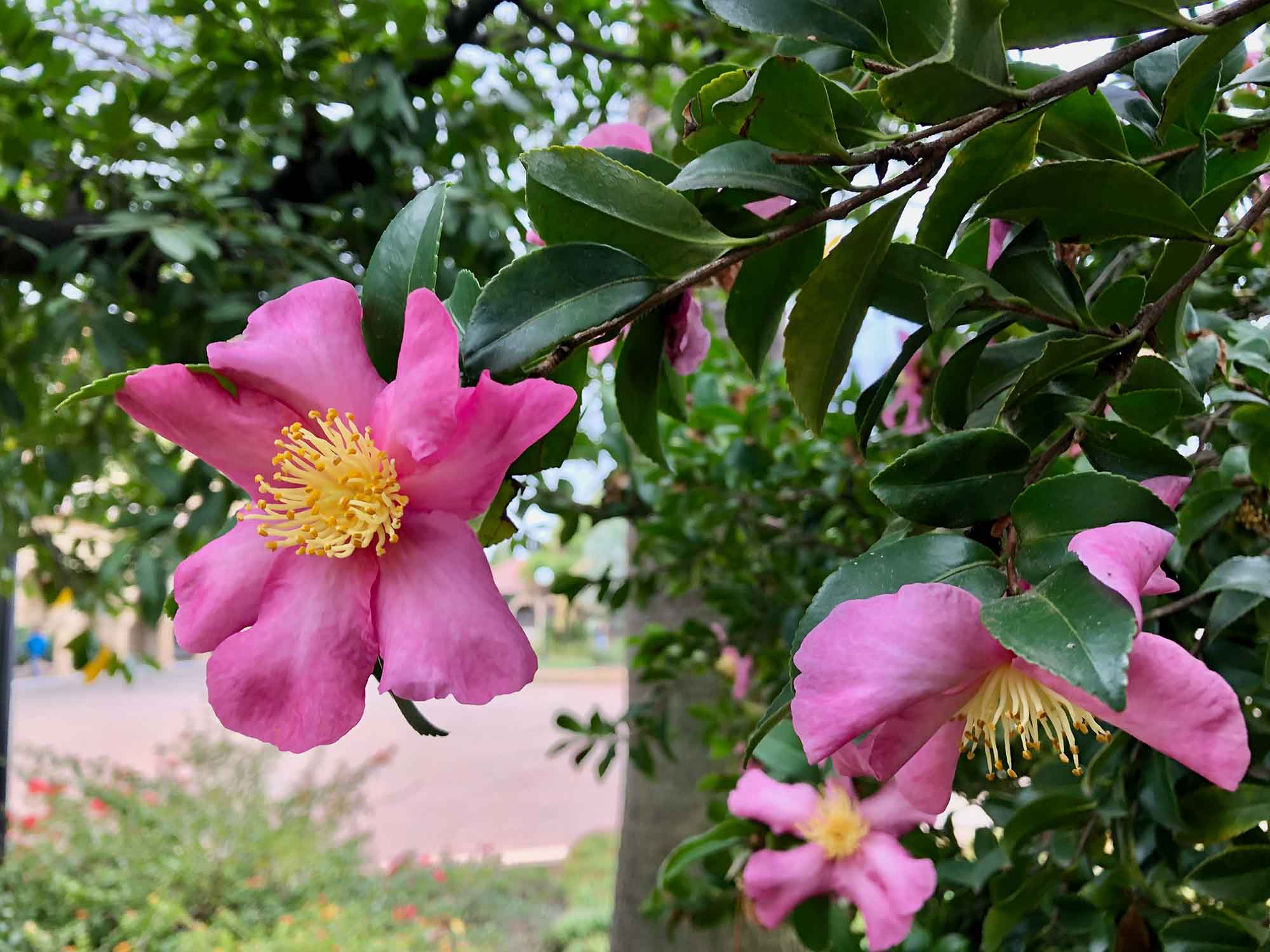

Name derivation: Camellia – After Georg Joseph Kamel (1661–1706), Jesuit missionary and naturalist.
- Main References for New Tree Entries.
- Fong, Herb. 2025. Pers. comm. (Re. year of Inner Quad camellia planting.)
- Peña, Michael. 2005. “Rare, storied camellias to replace lawns near Memorial Church.” Stanford Report, March 2.
- Tuffli, Barbara. “A Half-Century of Camellias Find a New Home.” 2008. Pacific Horticulture, April. “Stanford University had also indicated an interest in some of Marjorie’s camellias, so a decision was made to plant a group of them near the Memorial Chapel on the Stanford campus.”
About this Entry: Authored Mar 2025 by Sairus Patel.

