

Acer campestre
 field maple
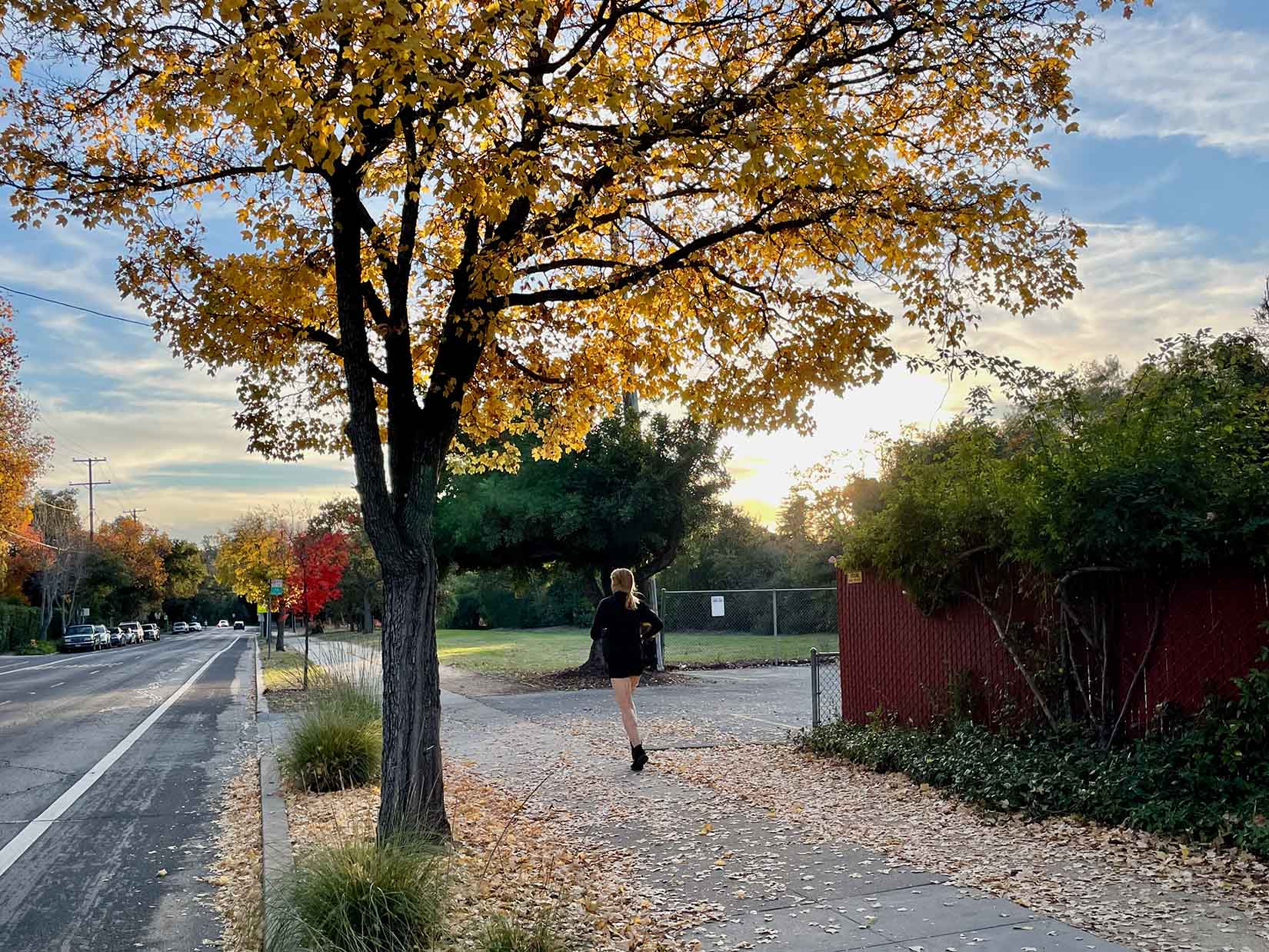
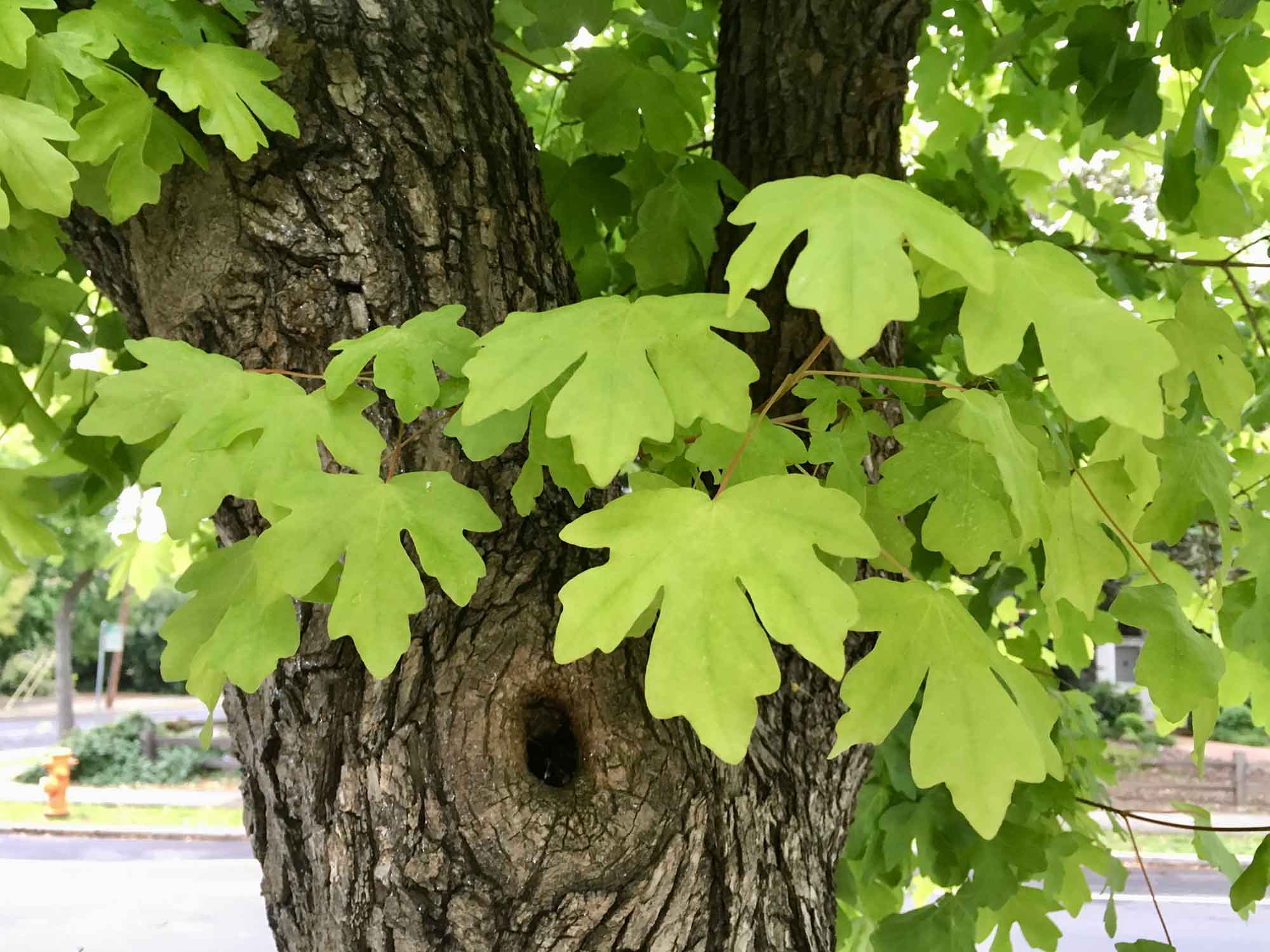
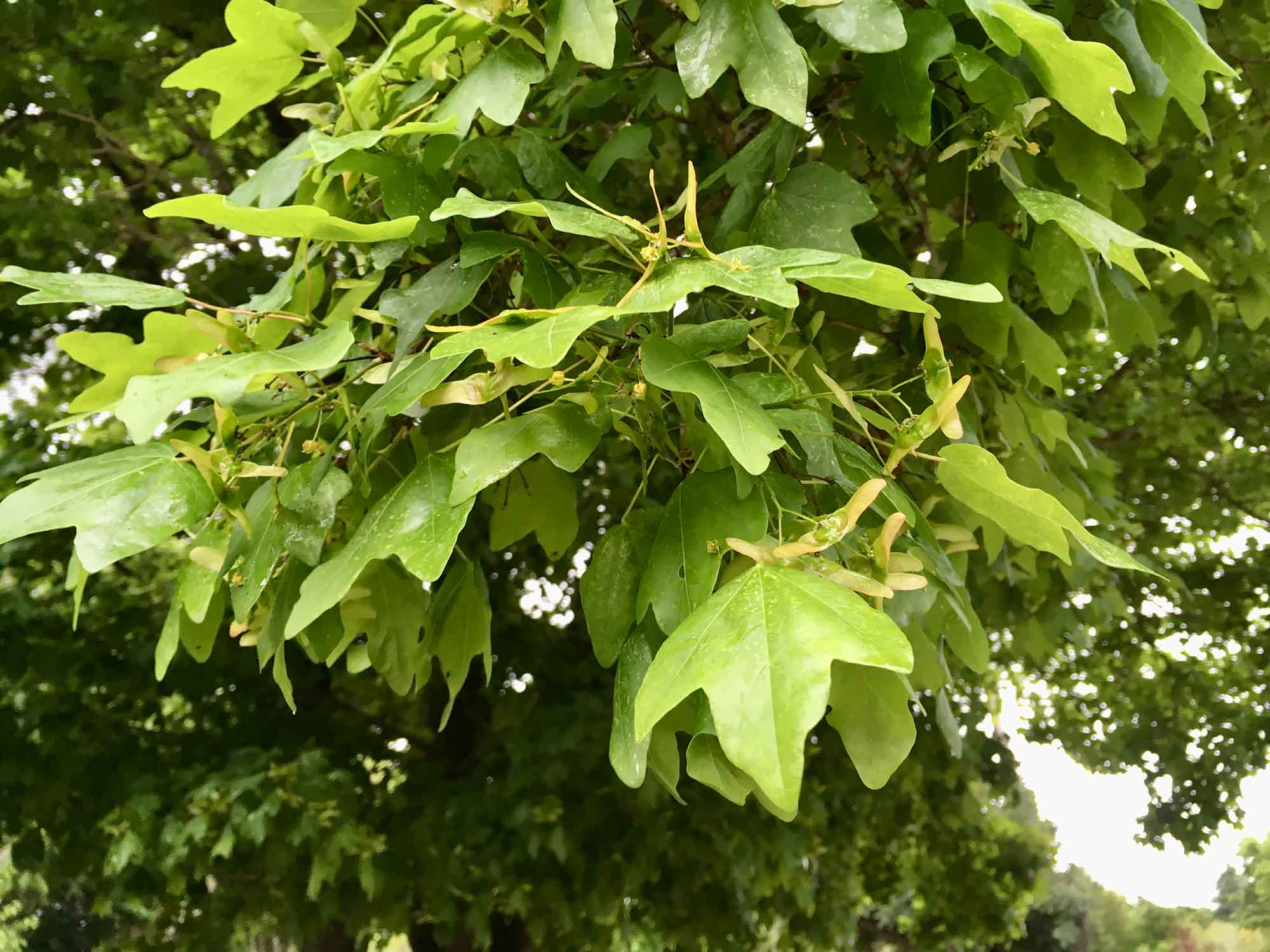
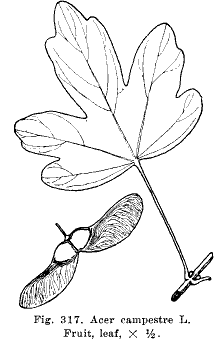
The easiest of Stanford’s maples to identify, with leaves of three or five pleasantly rounded lobes, the ends of which may themselves show a gentle shoulder on either side. The two wings of the keys are splayed open in a straight line rather dramatically, like a ballet dancer doing a side split in the air, sometimes even flexing just beyond 180 degrees.
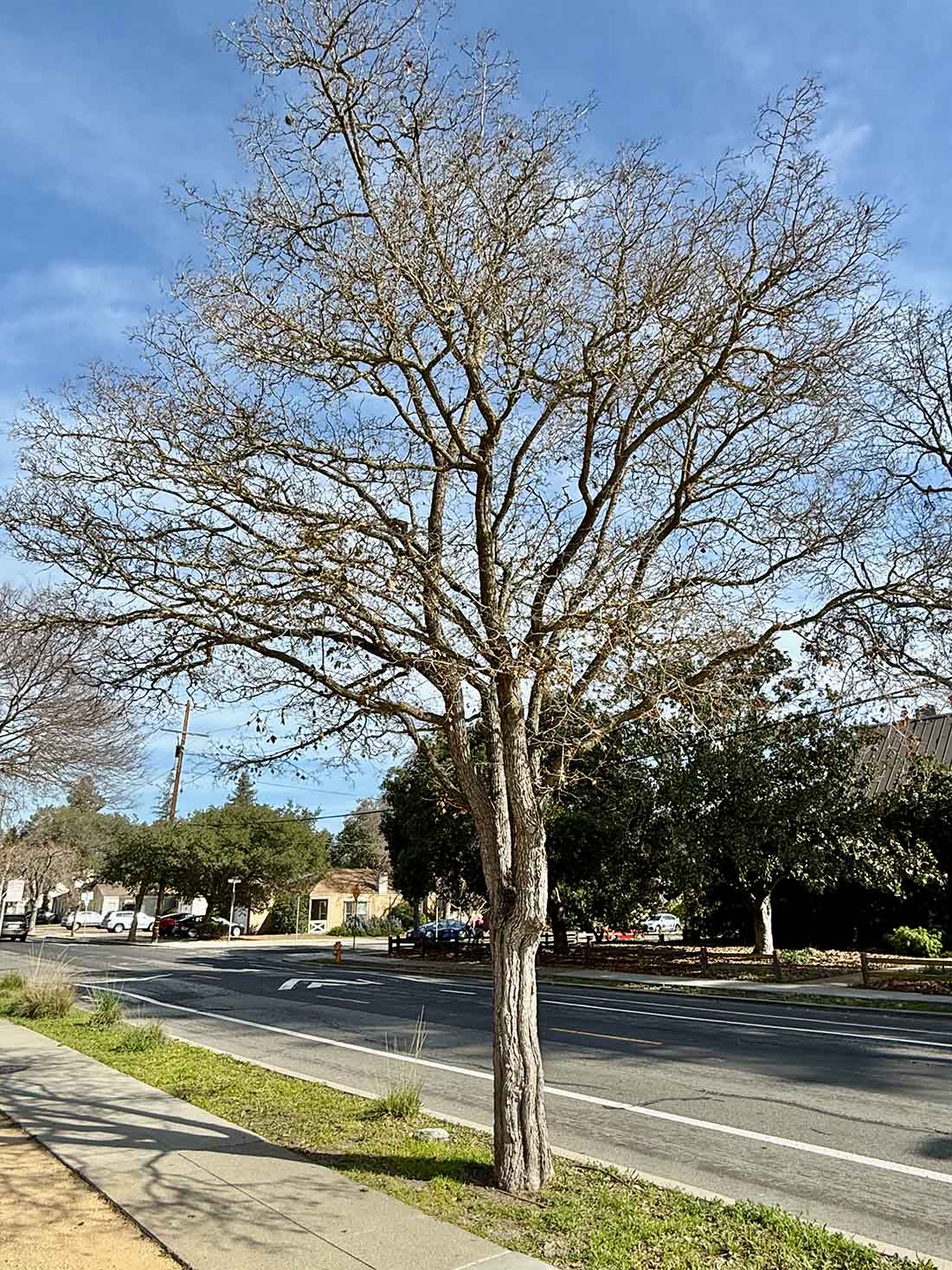
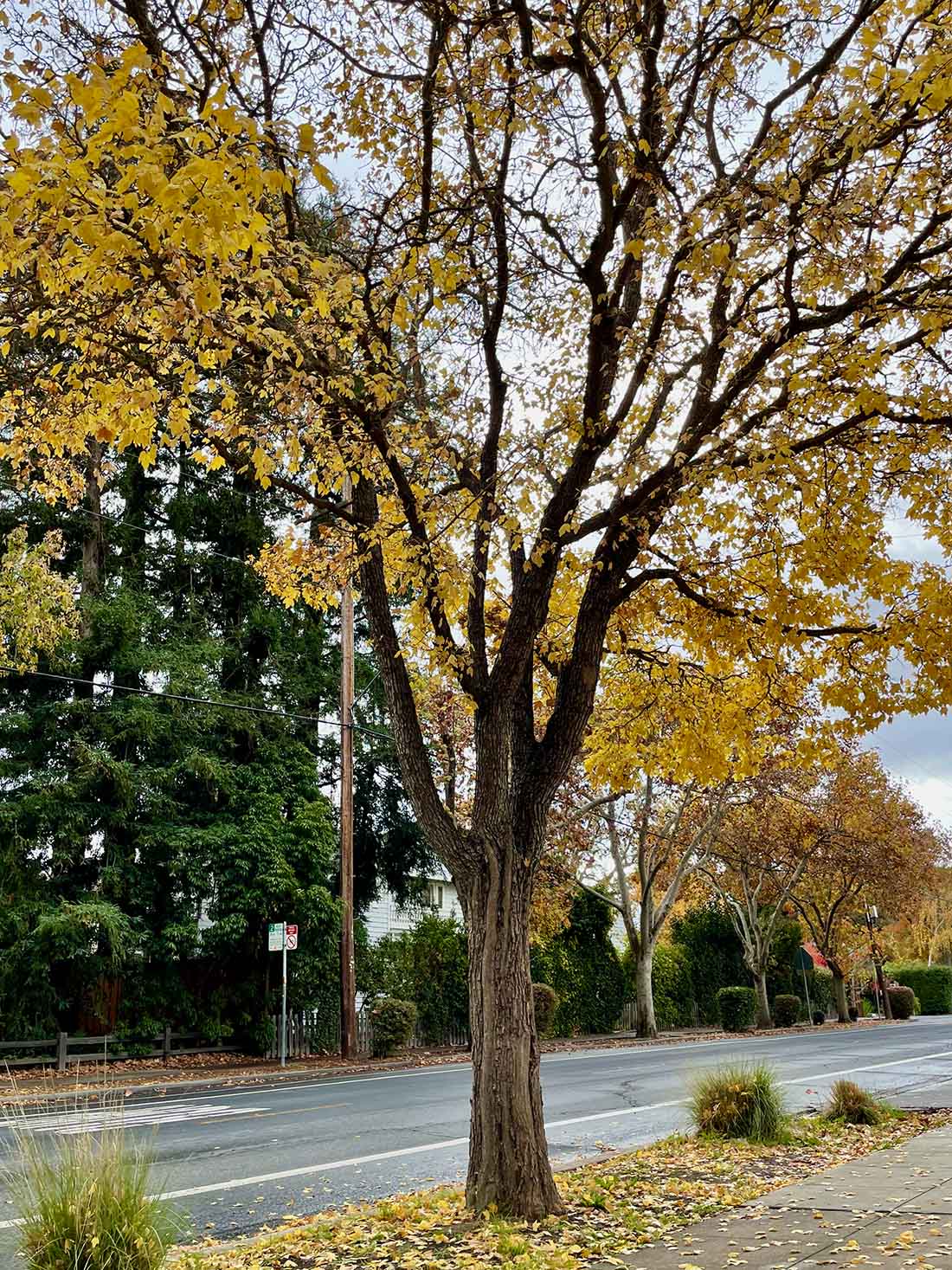
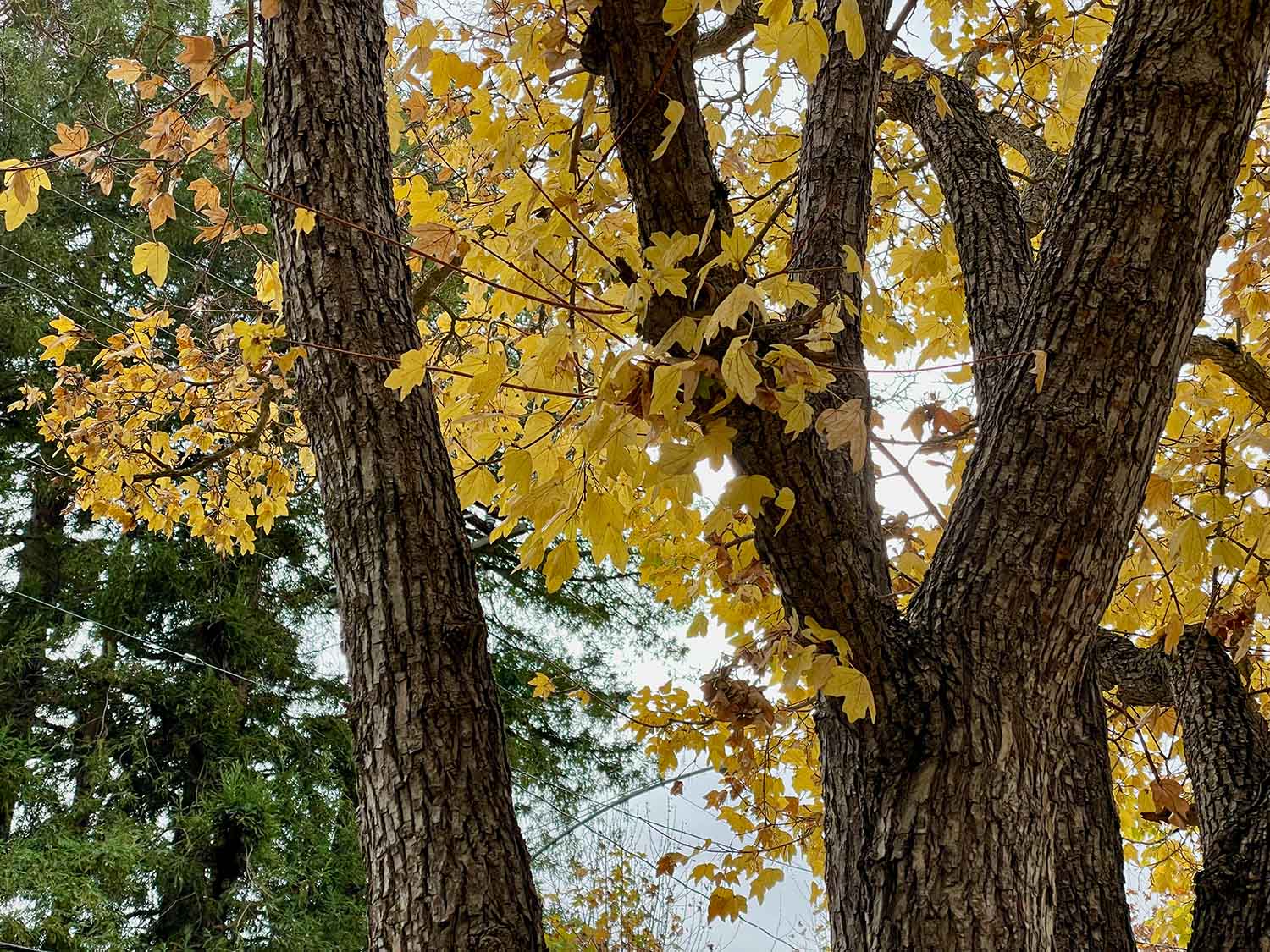
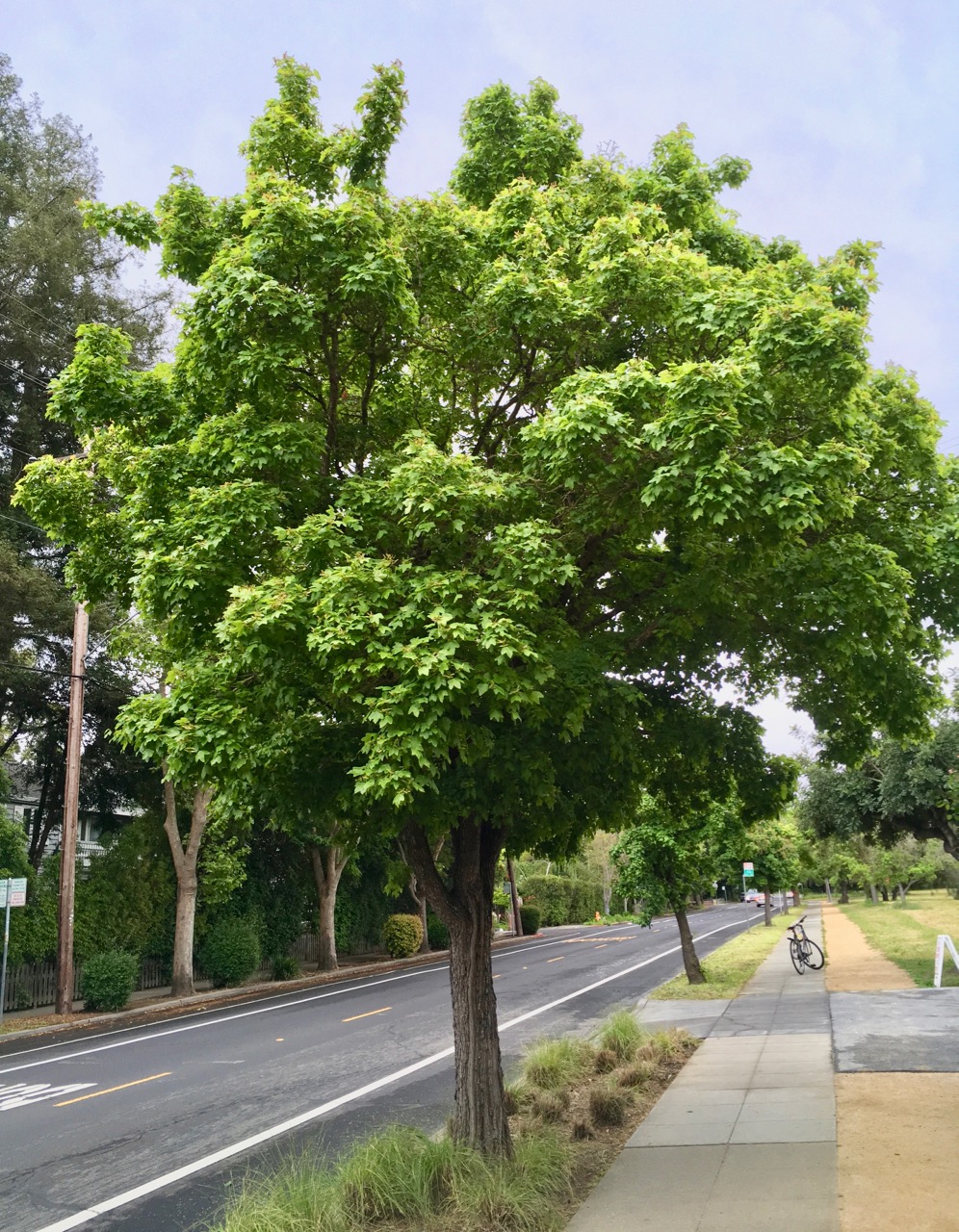
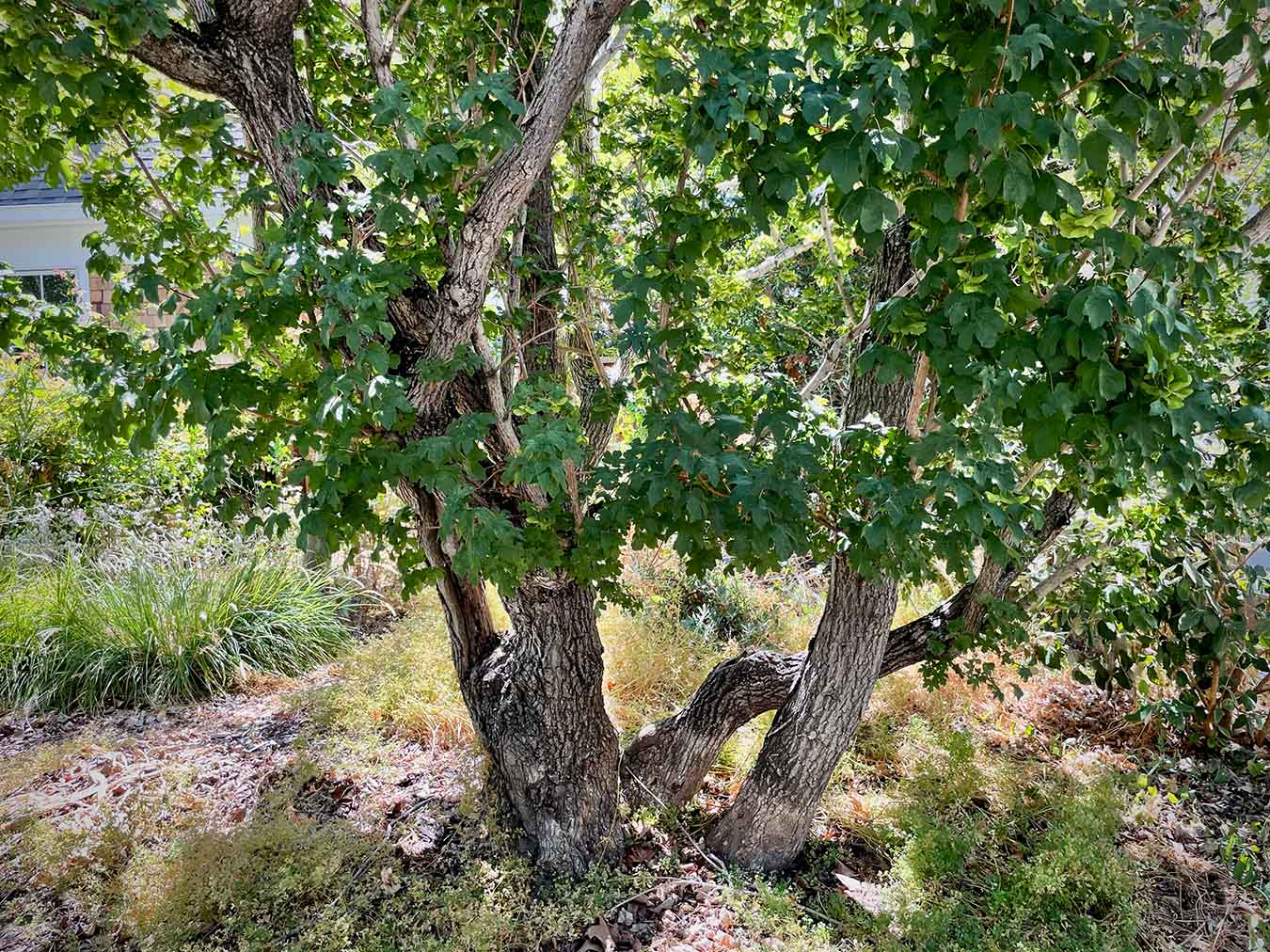
Campestre means the countryside or fields – also giving us our words “campus” and “campaign” – and this woodland tree is today most familiar in the British Isles (where it is the sole native maple) as part of a hedgerow or field boundary. In a striking coincidence, our only specimens are scattered along the eastern boundary of campus, Stanford Avenue, evidently survivors of a formerly more extensive planting: three stand between Bowdoin Street and Escondido Road (one with a marvelously fluted trunk), and one remains of a few near 2039 Dartmouth Street. A multi-trunked specimen grows on the right at 1015 Stanford Avenue, with an isolated survivor standing opposite it, behind 315 Olmsted Road. Prominent burls occur on some of our trunks – which, on older trees in Britain, can be the result of the enthusiastic work of woodpeckers tapping for the sugary sap.
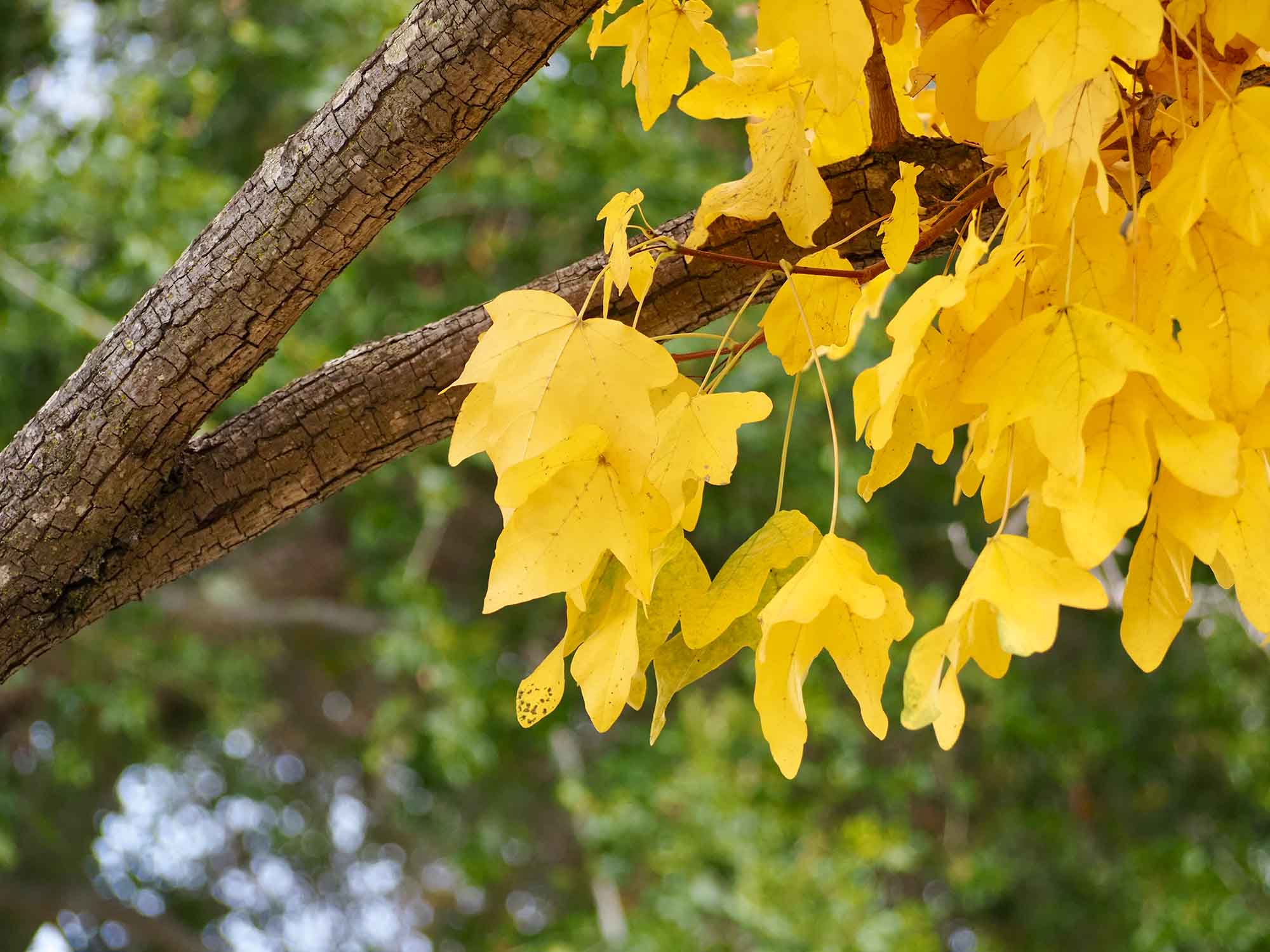
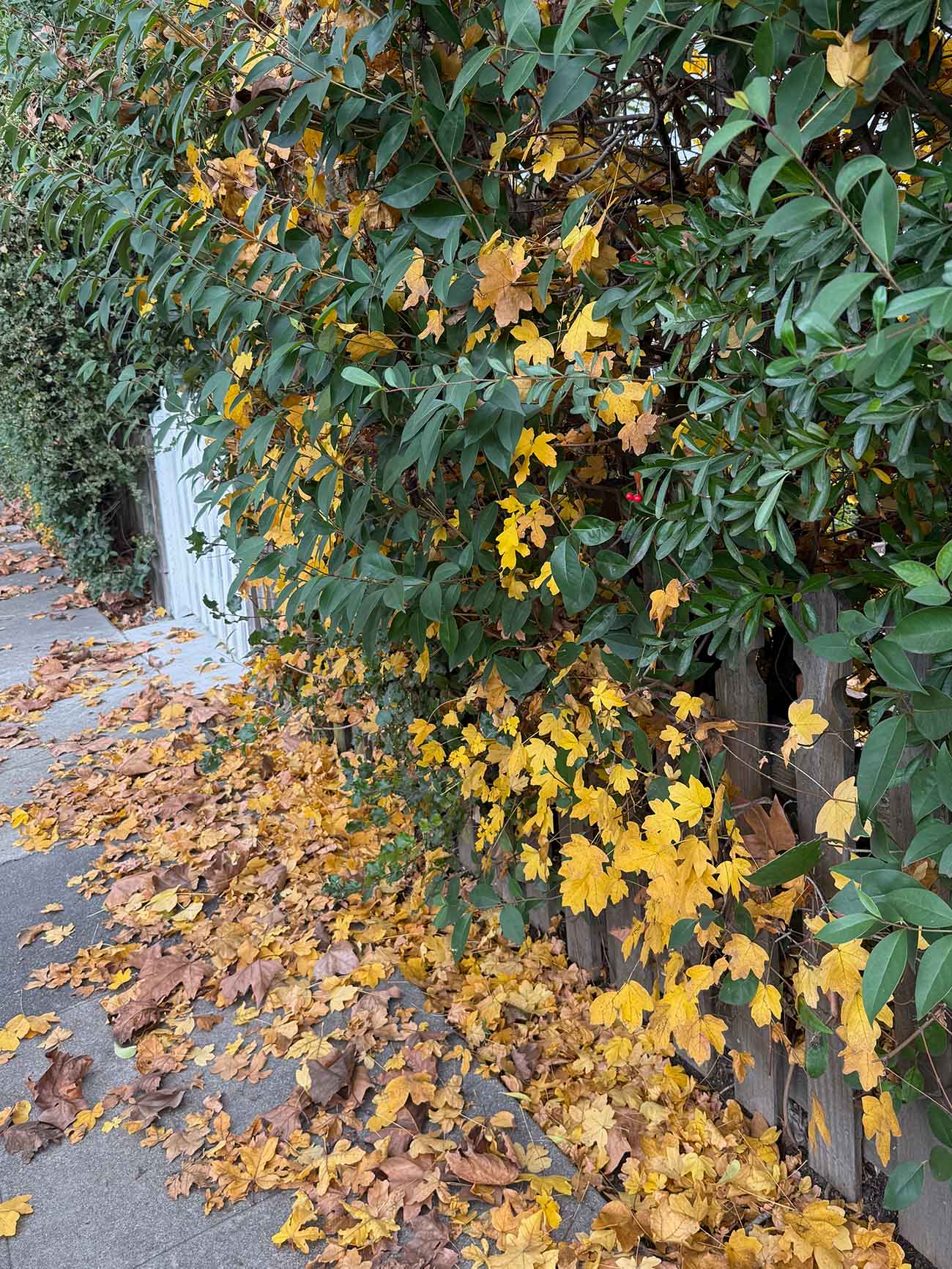
As a nod to its other name, hedge maple, the field maple has self-seeded into the already mixed-shrub hedge at 1425 Stanford Avenue, making itself known in late November by its rich gold color. Nearby, it is maintained as a small hedge to the right of the steps at 2050 Hanover Street.
Gallery
- Main References for New Tree Entries.
- Ogilvy, Richard, and Susan Ogilvy. 2013. Overleaf. Richmond, Surrey: Kew Publishing.
About this Entry: Authored Feb 2026 by Sairus Patel.

